Find the flight line first
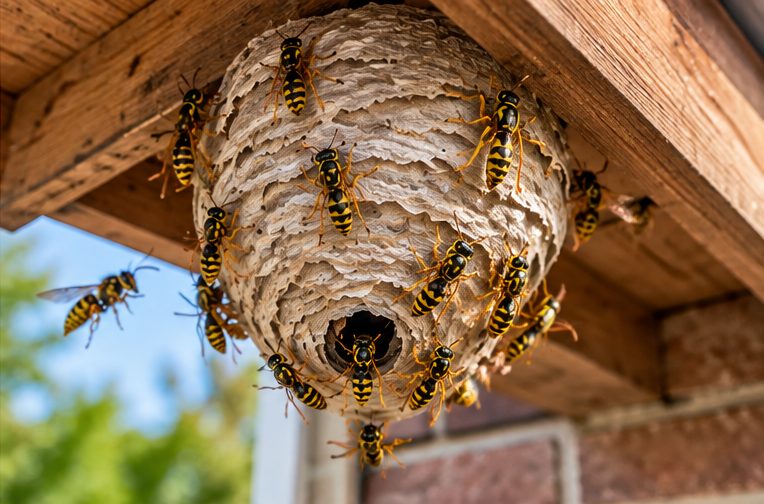
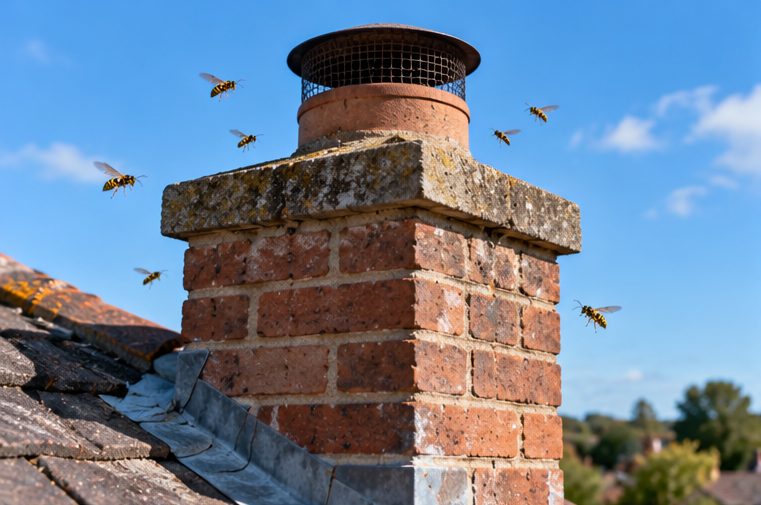
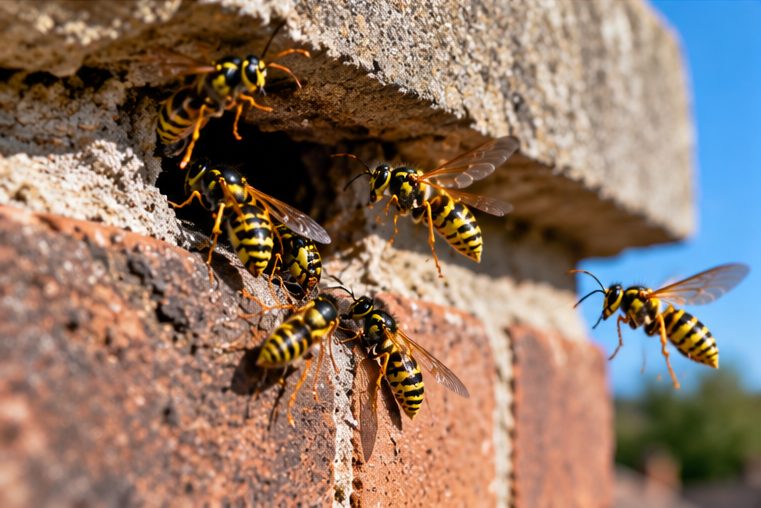
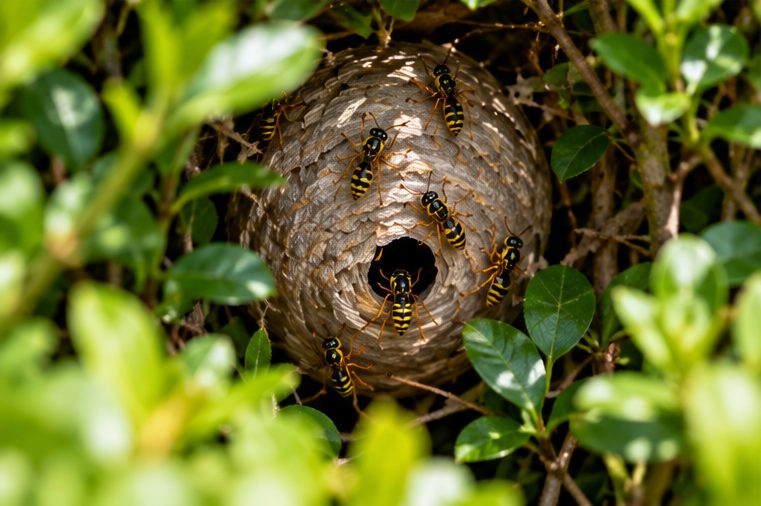
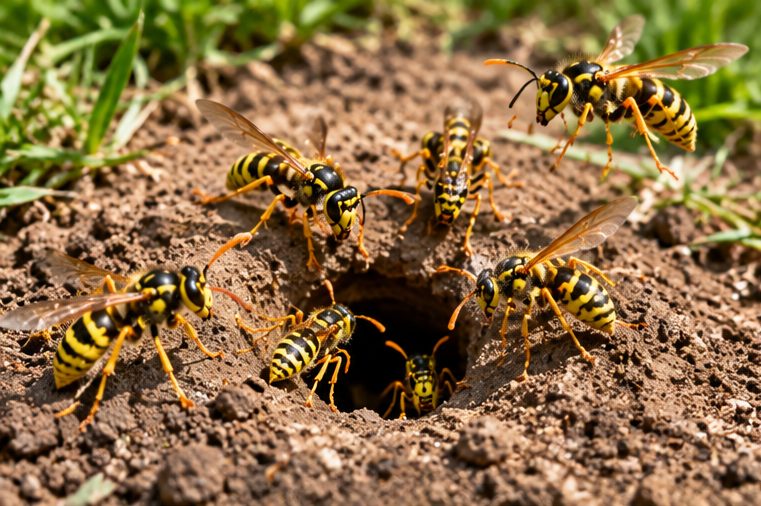
It is the repeated coming and going that gives a nest away long before you see it directly. Watch from a safe distance on a mild afternoon for wasps returning again and again to the same spot on the roofline or in the garden.
Eaves on the stucco terraces
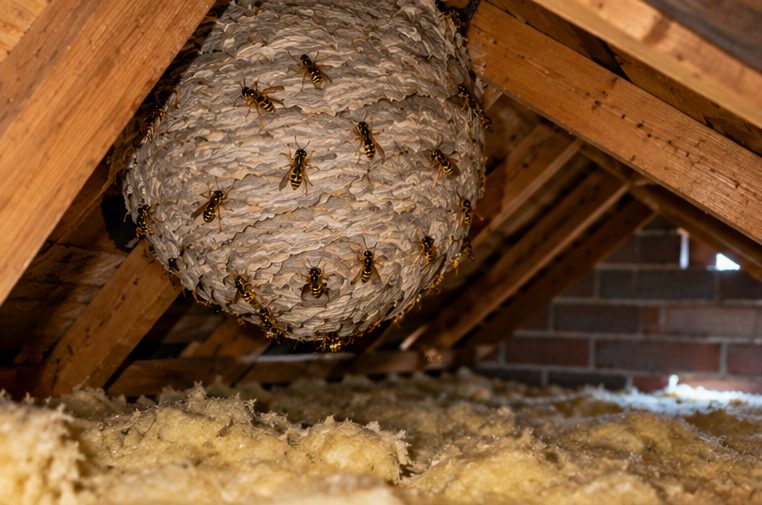
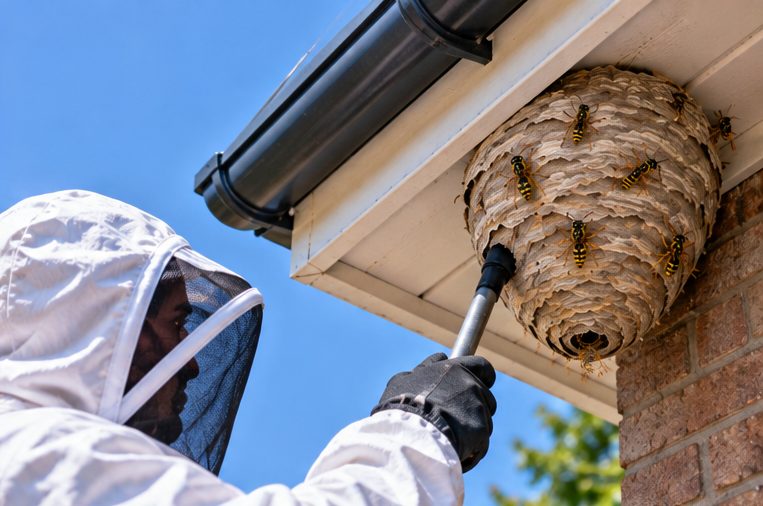
The tall stucco terraces of Kensington, Chelsea and Notting Hill give a queen plenty of gaps to choose from where the fascia meets the roof, and a nest built high up in a terrace like this is rarely one to tackle from a ladder yourself.
Communal and private gardens
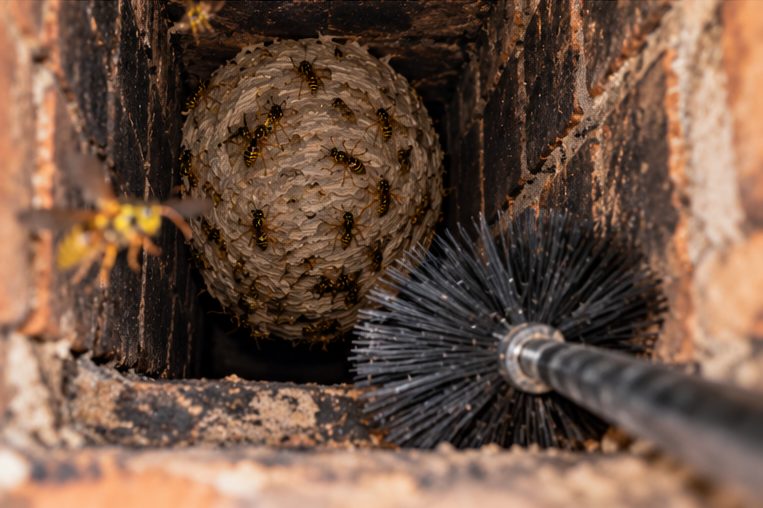
The borough's private communal gardens and Holland Park's mature grounds offer sheds, arbours and dense planting that go undisturbed for weeks at a time, which is exactly what a young colony needs to establish unnoticed through the spring.
What to do today
- Keep children and pets away from the flight line
- Keep windows shut on the side of the building where the nest is
- Leave the entrance open and the nest untouched
- Clear sweet drinks and fallen fruit from the garden, which draw wasps in late summer
Why late summer feels worse
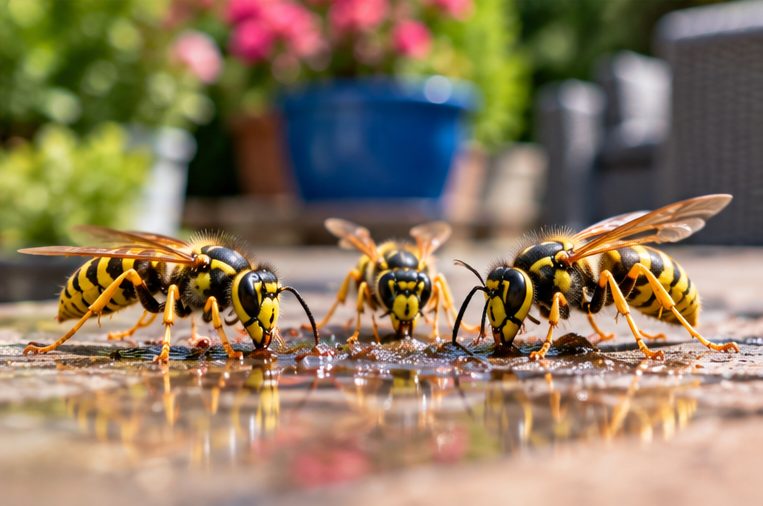
By August and September a colony has reached its full size for the year, but the queen has largely stopped laying, so there is less of the sugary secretion the workers normally feed on. They go looking for sugar themselves instead, which is why bins and drinks in a garden square suddenly attract far more attention.
Booking wasp nest removal in Kensington and Chelsea
A standard wasp nest removal in Kensington and Chelsea is a £90 fixed price, guaranteed: if the nest is still active within 30 days we come back at no extra cost, and that applies equally whether the nest turns up near Kensington - where grand white stucco terraces and mansion blocks around the High Street and the museums - or anywhere else nearby, so book wasp nest removal and tell us roughly where the entrance is, with the full terms on the Kensington and Chelsea wasp nest removal page.