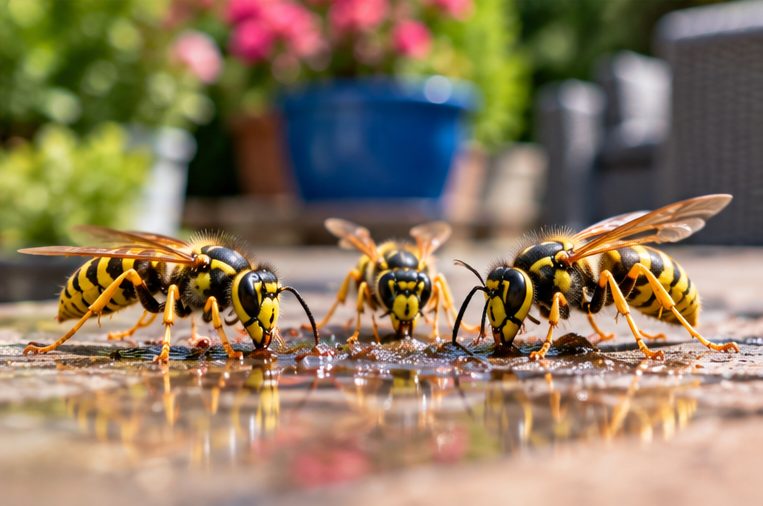
Look at the insects
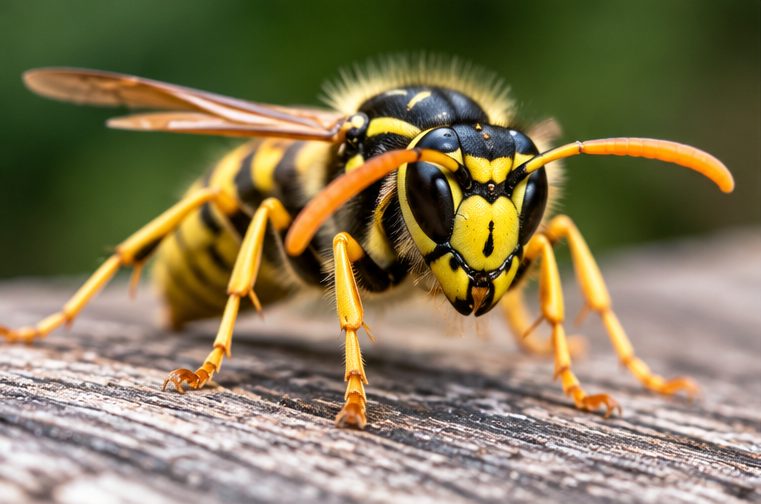
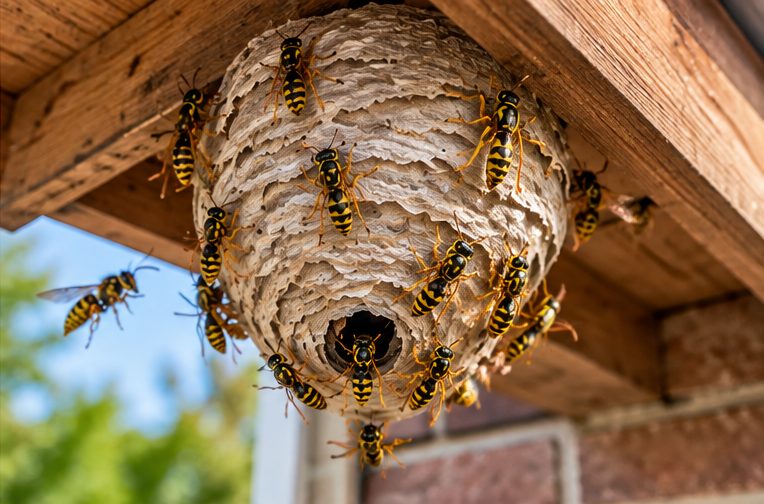
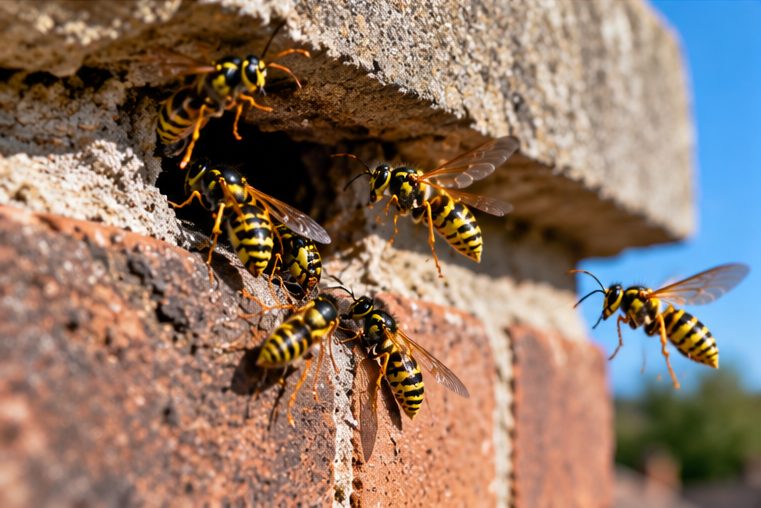
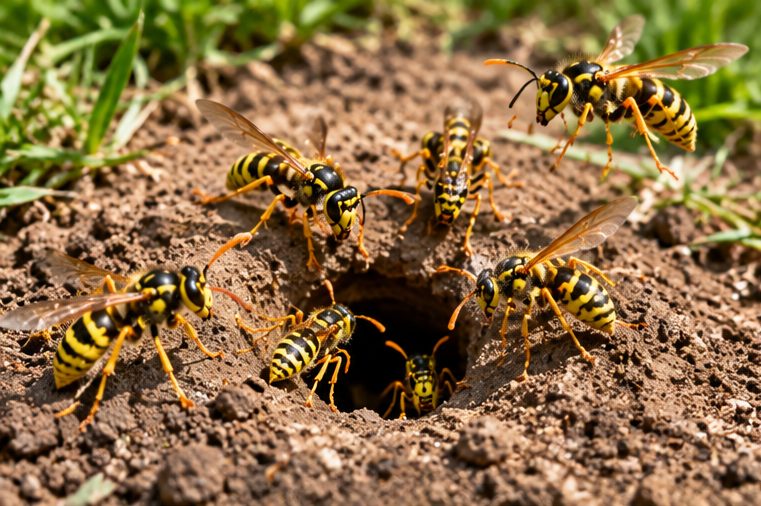
- Wasps: smooth, shiny, bright yellow and black, with a narrow ‘waist’ and legs that dangle in flight
- Honeybees: slimmer, brown to amber, slightly fuzzy
- Bumblebees: round, very hairy, often with a white or ginger tail
- Hornets: much larger than wasps, with brown and yellow markings rather than black and yellow
Look at the nest
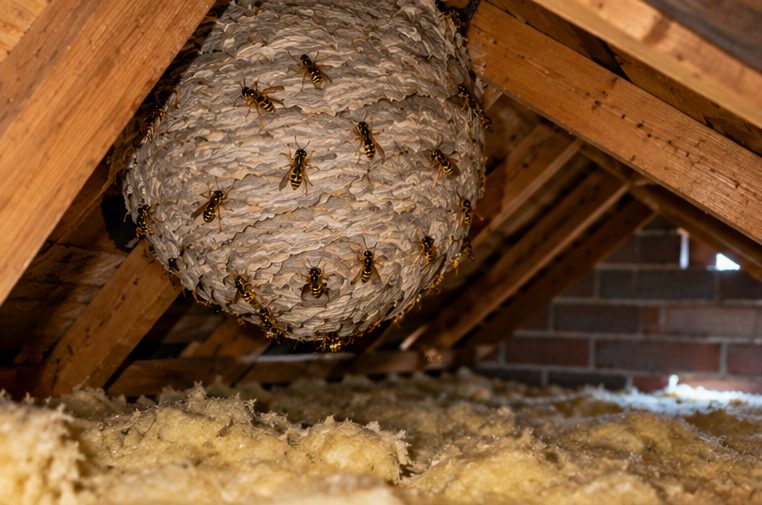
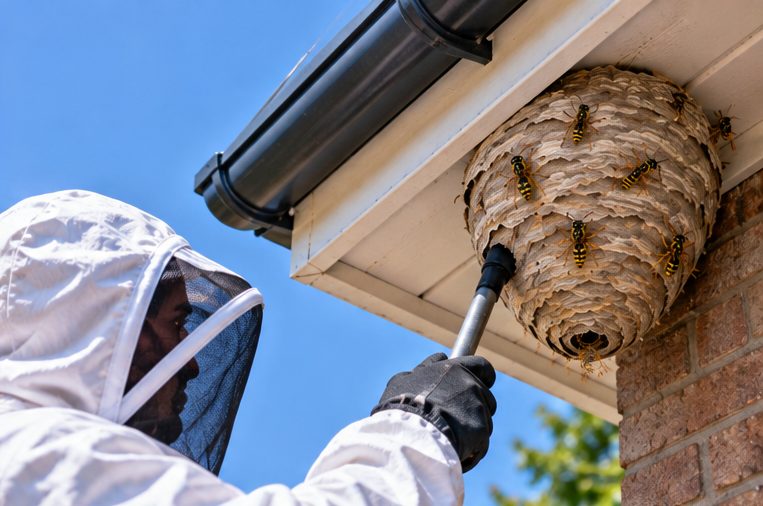
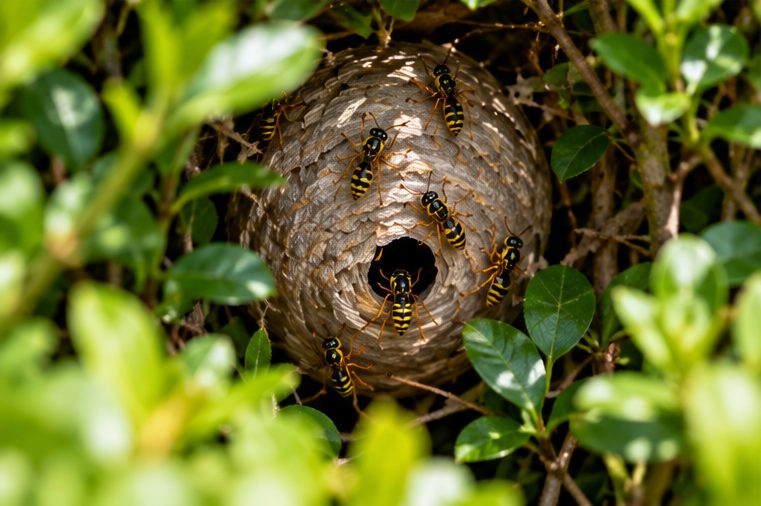
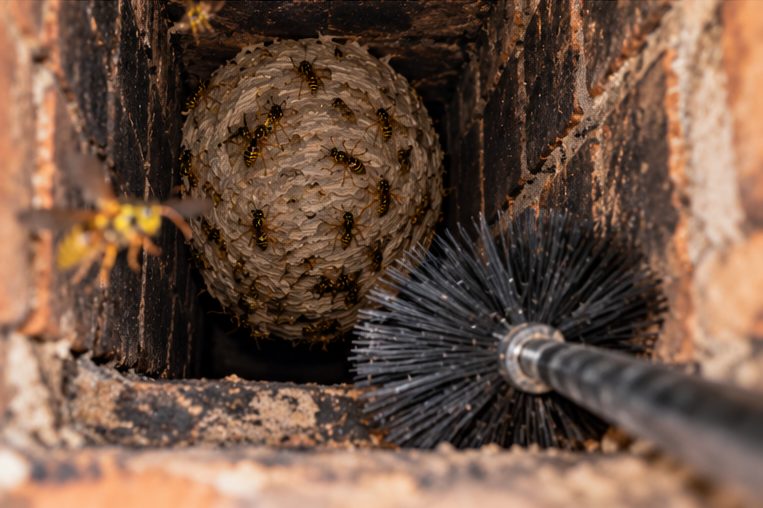
A wasp nest is papery, grey or beige, with a swirled, layered surface and usually a single entrance near the bottom. Honeybees build sheets of waxy comb, and a wild colony in a wall or chimney shows as a mass of bees crowded round the entrance. Bumblebees make a small, untidy nest, often in old bird nest material, a compost heap or loft insulation.
Look at the behaviour
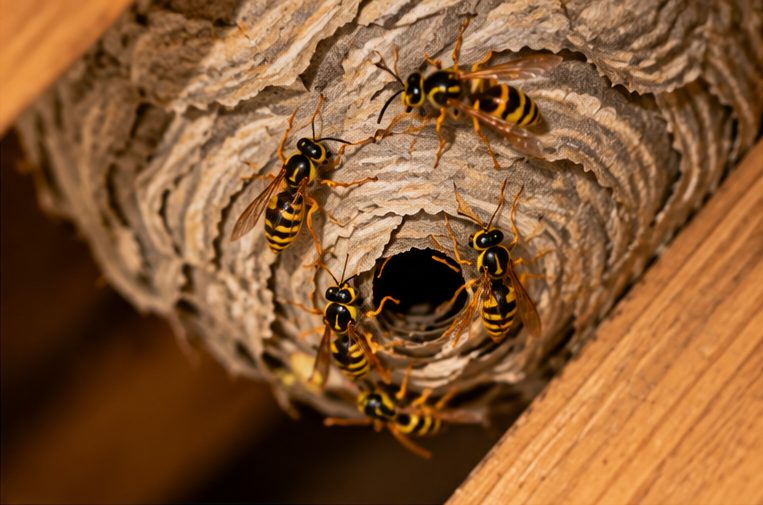
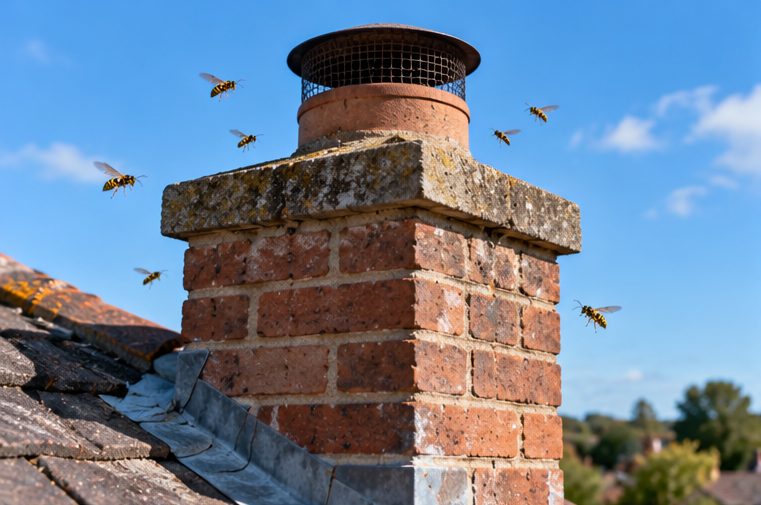
Wasps fly fast and straight into the nest. Bumblebees are slower, heavier and bumble about. Tree bumblebees are known for a cloud of males hovering round the entrance in early summer — alarming to watch, but they have no sting and are rarely defensive.
Look at the calendar
Tree bumblebee and many bumblebee colonies are busiest in late spring and early summer and are usually finished by July. A busy nest in August or September is much more likely to be wasps — see why wasps are more aggressive in late summer.
If it is bees
Bumblebee nests are best left alone where possible; the colony dies out naturally within a few weeks. A honeybee swarm hanging from a branch or fence can often be collected by a local beekeeper — the British Beekeepers Association has a swarm collector search. Solitary bees in mortar or lawns are harmless. We do not treat honeybees.
Hornets
The European hornet is native and less aggressive than its size suggests. The Asian hornet is an invasive species: it is slightly smaller, darker, with yellow legs. If you think you have seen one, report it through the Asian Hornet Watch app and do not approach the nest.
Where each one nests
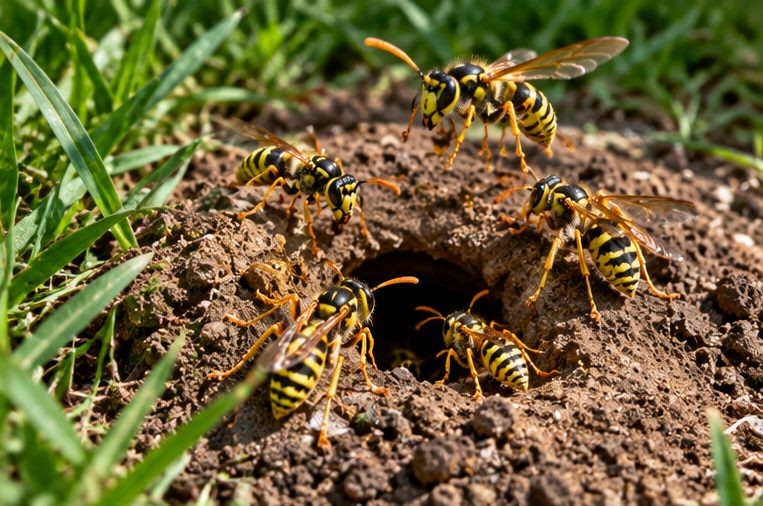
Both wasps and bees use eaves, bird boxes and wall cavities, so the location alone does not decide it. For the wasp shortlist, see where wasps build nests around houses. Ground holes in a lawn in spring are often mining bees; a busy single hole in summer is covered in wasp nests in the ground.
Still not sure?
Take a photo of the insects at the entrance from a safe distance, and attach it or describe it when you send an enquiry. If it is wasps, wasp nest removal in Brent is £90 fixed price per standard nest, and if the nest is still active within 30 days, we come back at no extra cost.