What a queen is looking for
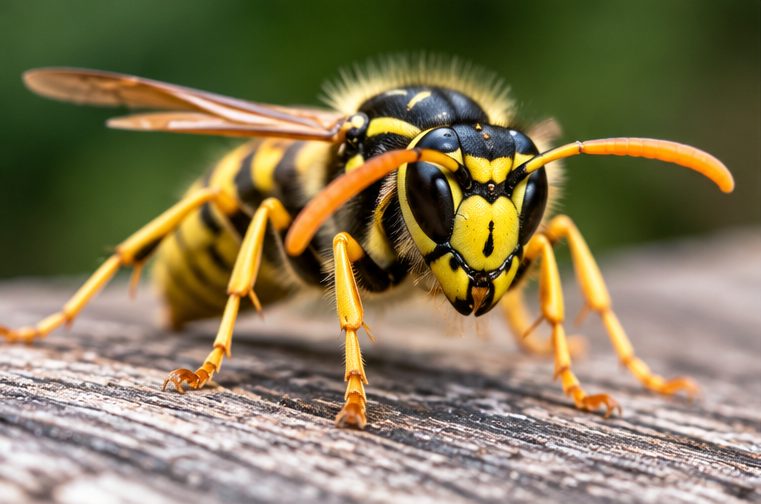
Each nest is started in spring by one queen working alone. She needs a sheltered cavity or overhang with a small, defensible entrance, protection from rain, and a surface she can hang the first cells from. Warmth helps, which is why south- and west-facing walls and roof spaces are popular.
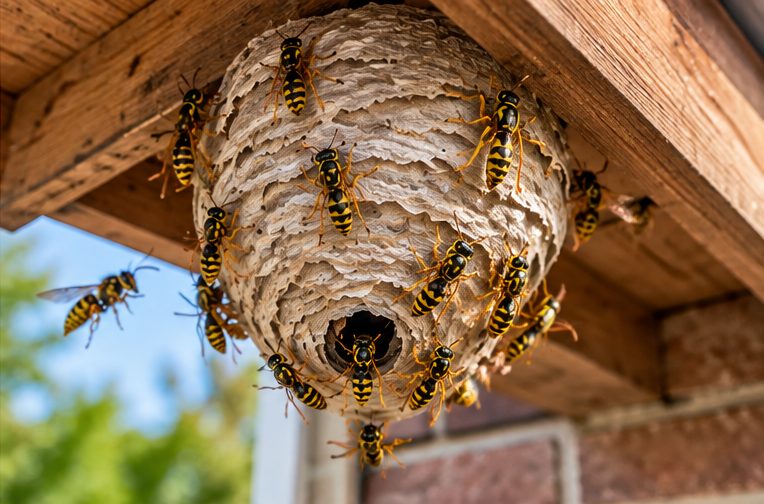
Roof edges, soffits and under tiles
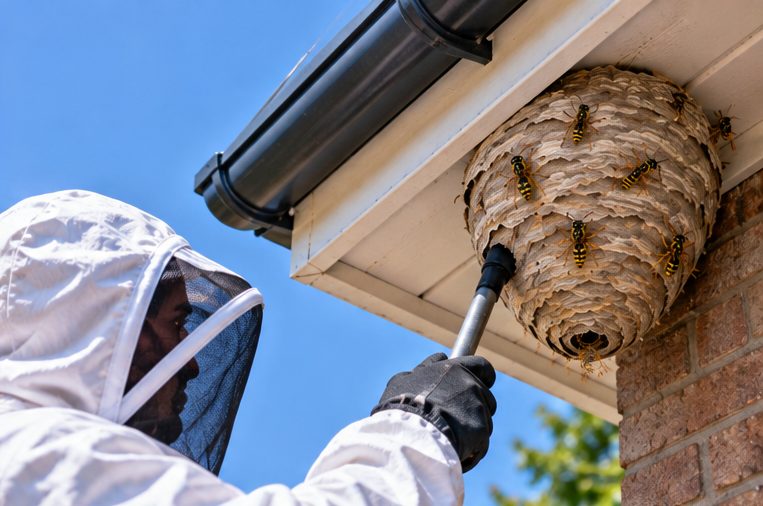
Gaps behind fascia boards, broken soffit vents and lifted or slipped tiles are the most common entrances on houses. The interwar semis of Kingsbury, Preston and Kenton have long runs of timber eaves where joints open up with age.
Chimneys and flues
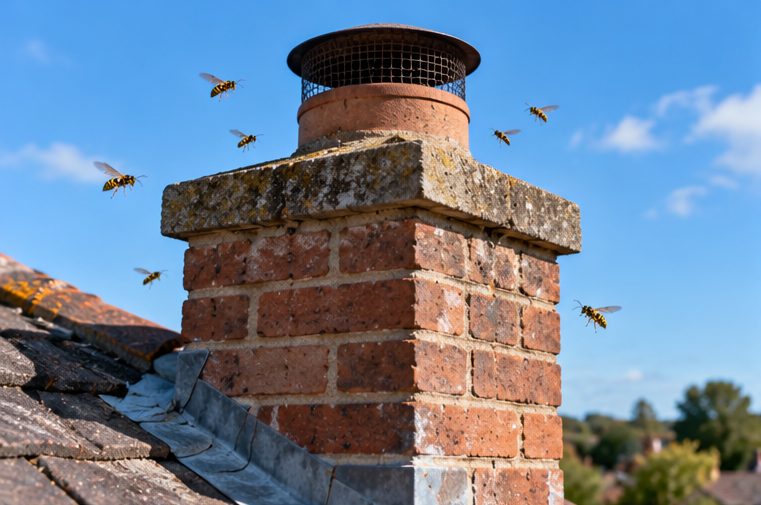
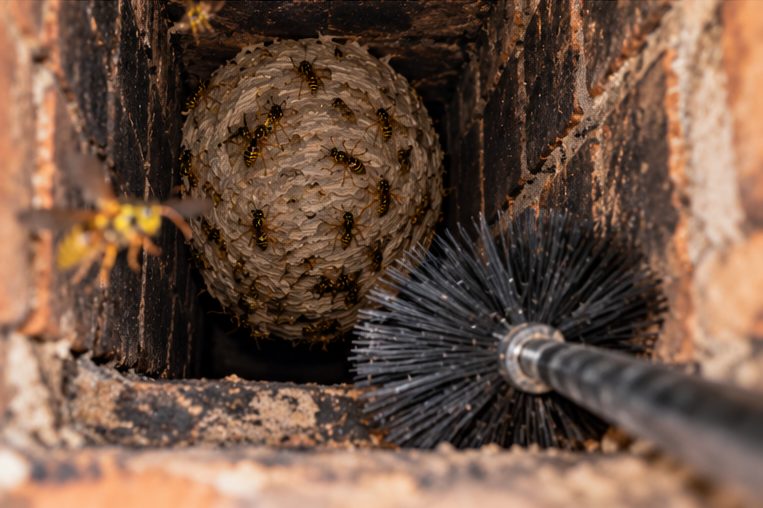
A chimney that is capped at the top but no longer used is dry, dark and rarely disturbed. Wasps get in through gaps in the pots, flashing or brickwork and build inside the stack or flue. Nests here are often noticed only when wasps start appearing in the fireplace.
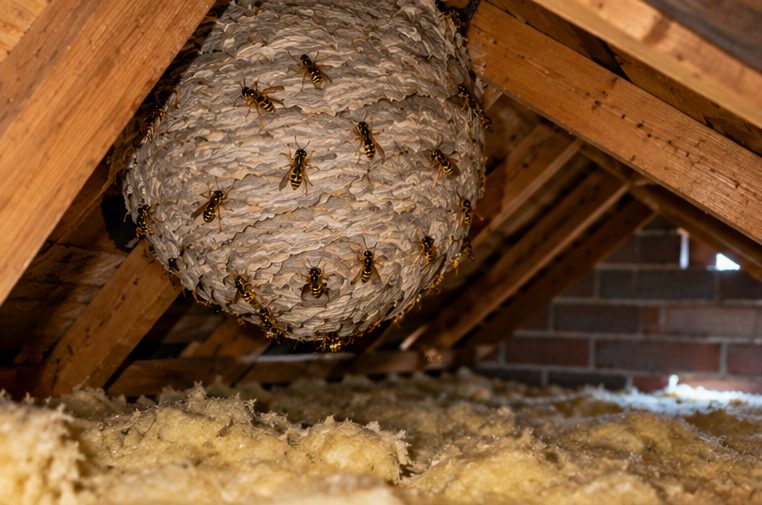
Lofts
Once through the roof edge, many queens carry on into the loft and hang the nest from a rafter or build it into the insulation. See wasp nests in the loft.
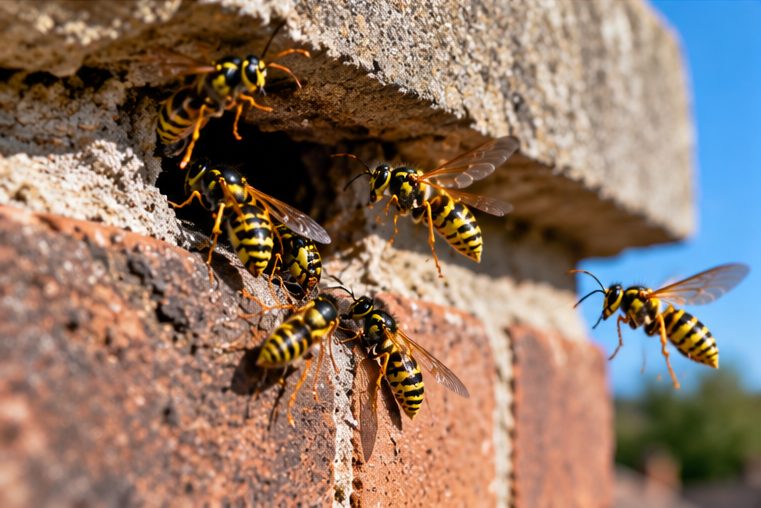
Air bricks, wall cavities and gaps in mortar
Older terraces, like many around Kensal Green and Harlesden, have air bricks and worn pointing that lead straight into a wall or under-floor void. More on this in can wasps nest inside walls.
Sheds, garages and outbuildings
The underside of a shed roof, the corner of a garage, a stored lawnmower box or a stack of plant pots all offer shelter. Garden buildings that are opened only occasionally are ideal — and the nest can be large by the time the door is opened.
Bird boxes, hedges and bushes
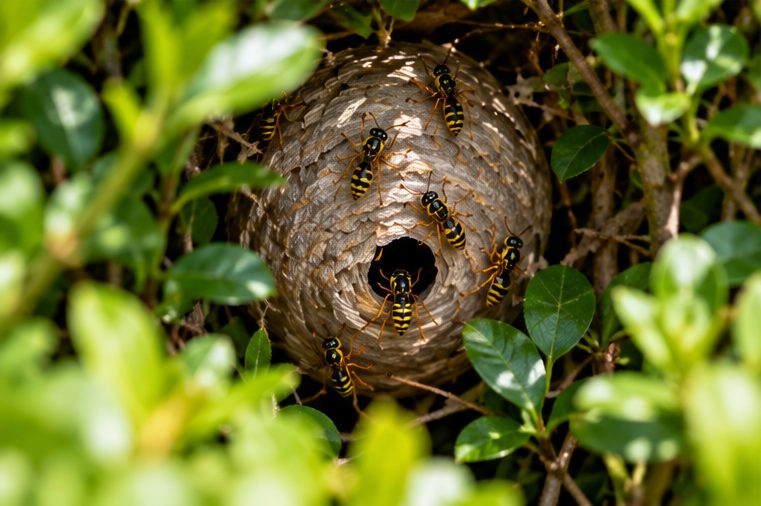
An empty bird box is almost the perfect size for a queen to start in. Dense hedges and shrubs also hold exposed nests, which are easy to cut into by accident with a hedge trimmer. Bird boxes on the family houses around Sudbury are a regular example. Bumblebees use bird boxes too, so check what you have first.
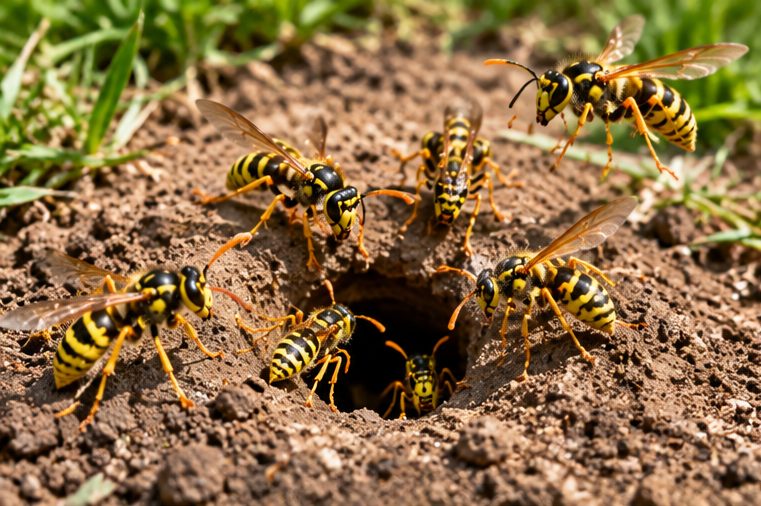
In the ground
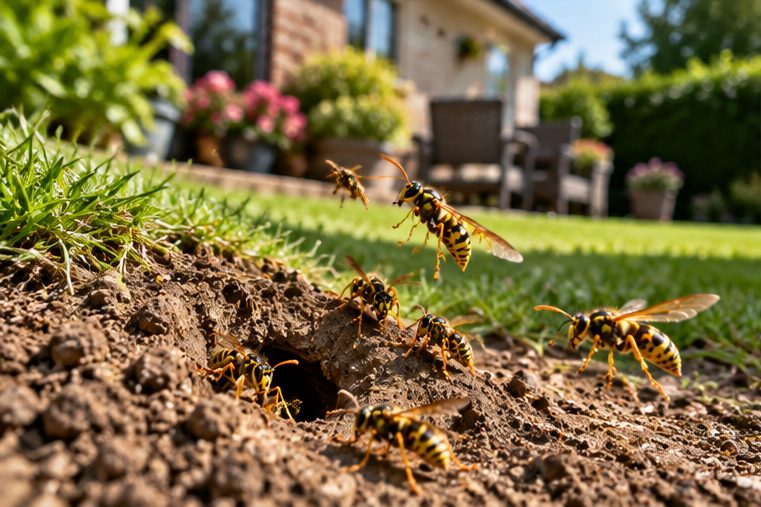
Old rodent burrows, hollows under paving slabs and gaps under decking are used for ground nests. They are easy to miss until someone mows over one. Read wasp nests in the ground.
Balconies and flats
In blocks of flats, wasps use gaps behind cladding, around balcony fixings and in window frames. Flats in Wembley several floors up still get nests, because the queen simply flies to the gap.
Getting it dealt with
Wherever the nest is, wasp nest removal in Brent is £90 fixed price for a standard nest. It is guaranteed: if the nest is still active within 30 days, we come back at no extra cost. Tell us the location when you book and send a photo if you can.