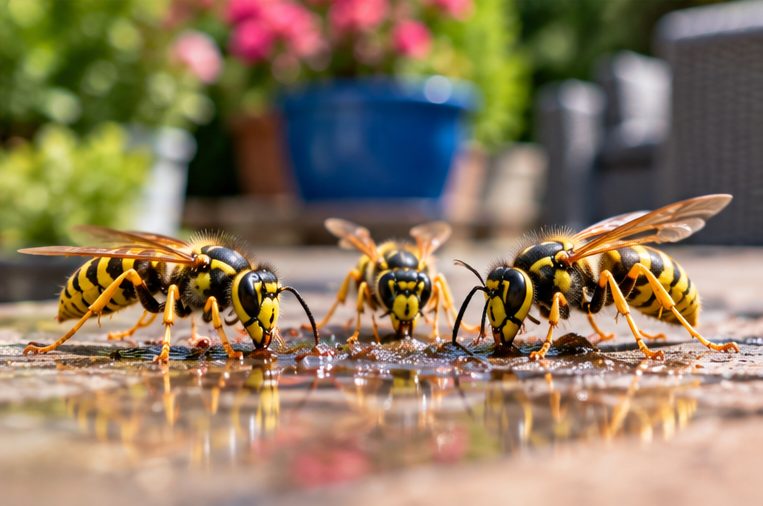
How wasps get into a wall
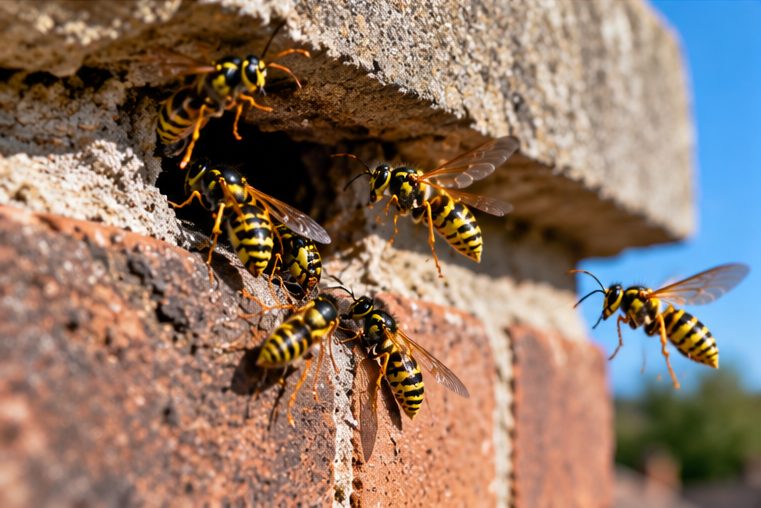
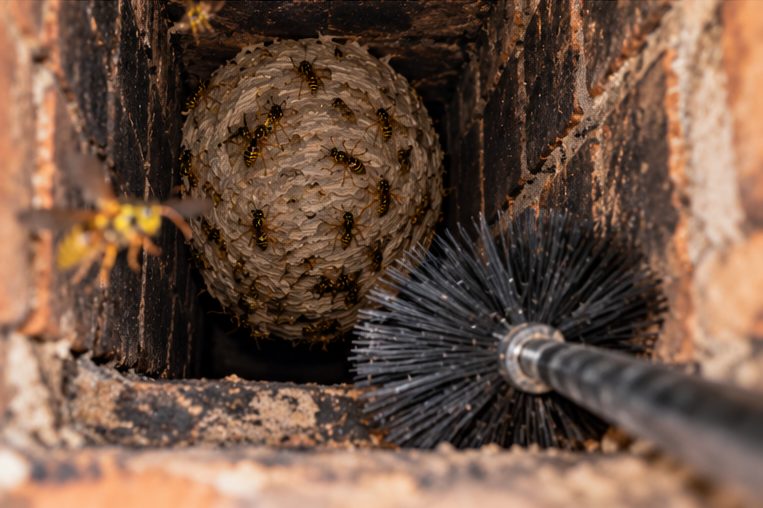
The entrance is usually a single small hole: a missing chunk of mortar, the grille of an air brick, a weep vent above a window, or the gap around a pipe, flue or cable where it passes through the brickwork. Inside, the cavity or under-floor void gives the colony plenty of room.
Signs the nest is in the wall
- Wasps landing on the brickwork and walking into one hole
- A papery rustling heard through an inside wall, often worst in a quiet bedroom
- Wasps appearing indoors near sockets, switches, skirting boards or pipework
- A damp or darker patch developing on plasterboard, in rare cases where the nest has grown against it
Air bricks and older terraces
Air bricks ventilate the space under timber floors and are a common entry point in Victorian and Edwardian terraces, such as many streets around Kensal Green, Willesden and Harlesden. The same gaps that let wasps in can let rodents in — see stopping rats entering through air bricks.
Why you should not seal the hole
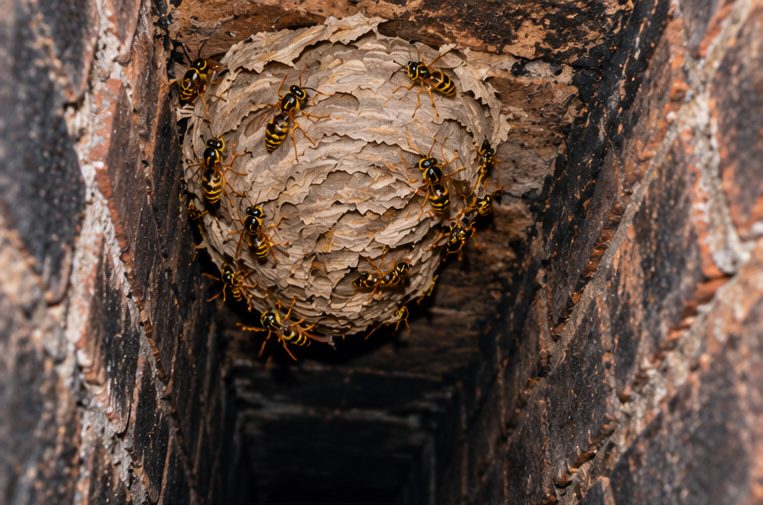
Filling the entrance with expanding foam, mortar or tape does not kill the colony. The wasps inside keep building and search for another way out, and inside a wall that can mean chewing through plasterboard into a room. The hole should be left open until the nest is dead.
Wasps chewing through indoors
If wasps are coming through a small hole in an inside wall or ceiling, cover that spot with tape or a piece of card taped down firmly, keep the room closed, and do not open up the wall to find the nest. Then book a visit and tell us exactly where they are appearing inside and outside.
Treating a wall nest
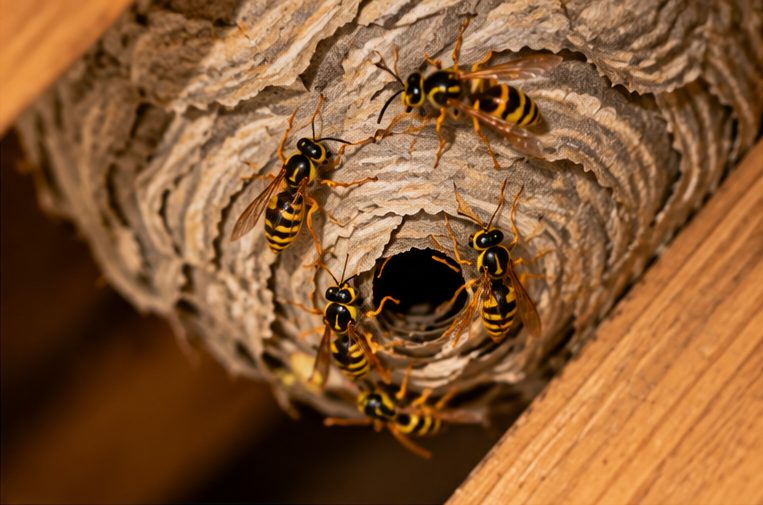
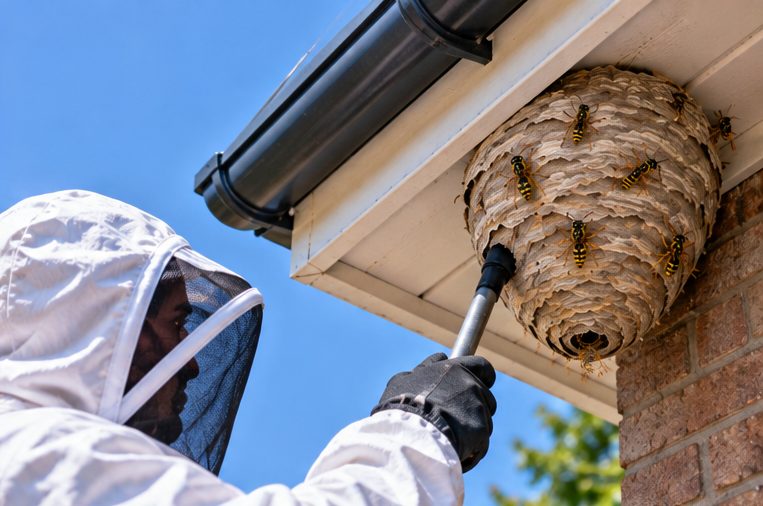
A wall nest is treated through its entrance, so there is normally no need to remove bricks or plaster. It is £90 fixed price as a standard nest, guaranteed: if the nest is still active within 30 days, we come back at no extra cost. Read about wasp nest removal in Brent for the full service.
After the nest is dead
Leave the entrance open for a while so that returning wasps come into contact with the treatment. Once there has been no activity for some weeks — the winter is ideal — repointing the mortar or fitting a fine mesh behind an air brick grille reduces the chance of a queen using the same hole next spring. More in will wasps return after treatment.