Watching before searching
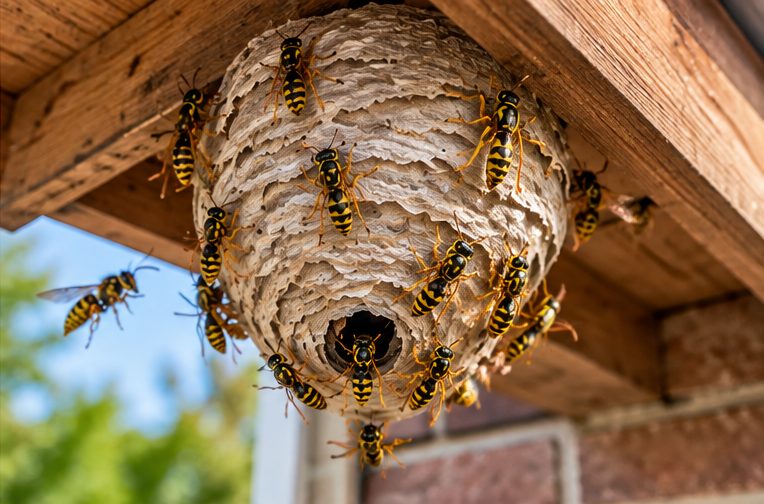
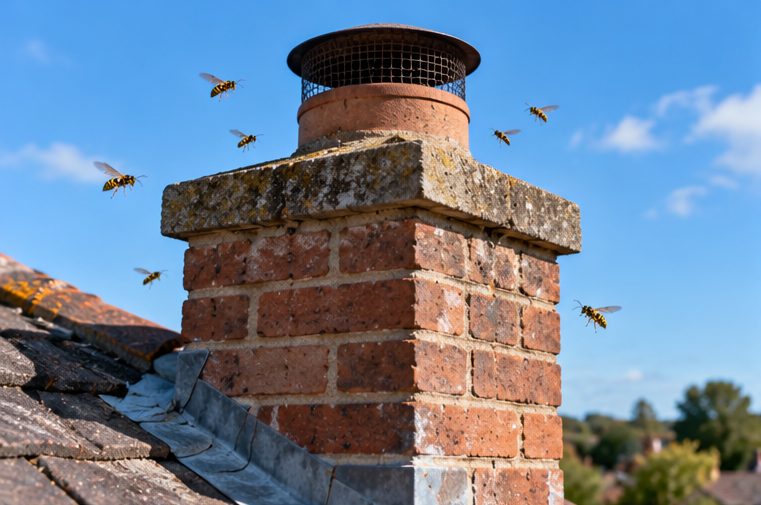
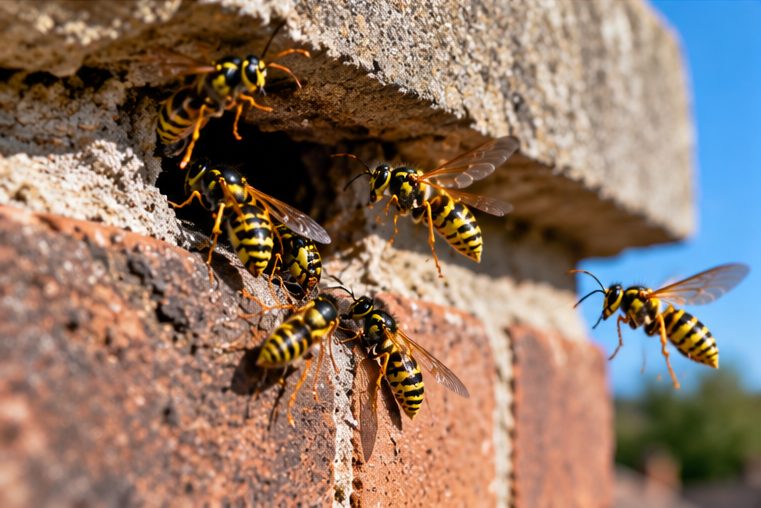
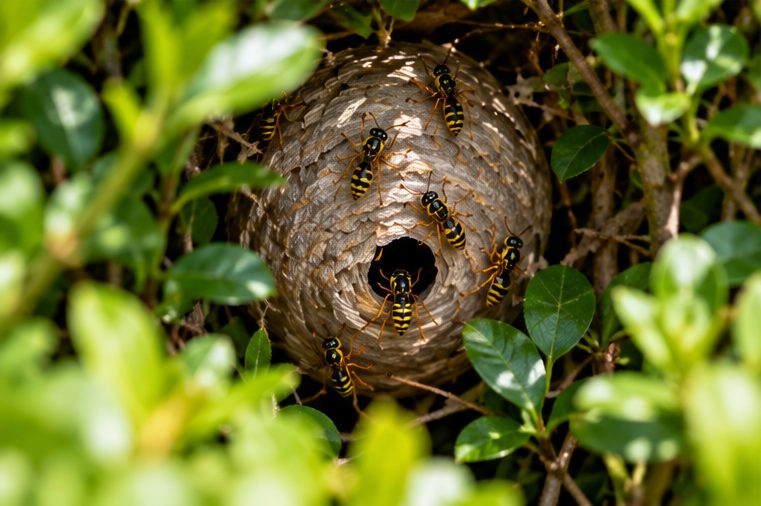
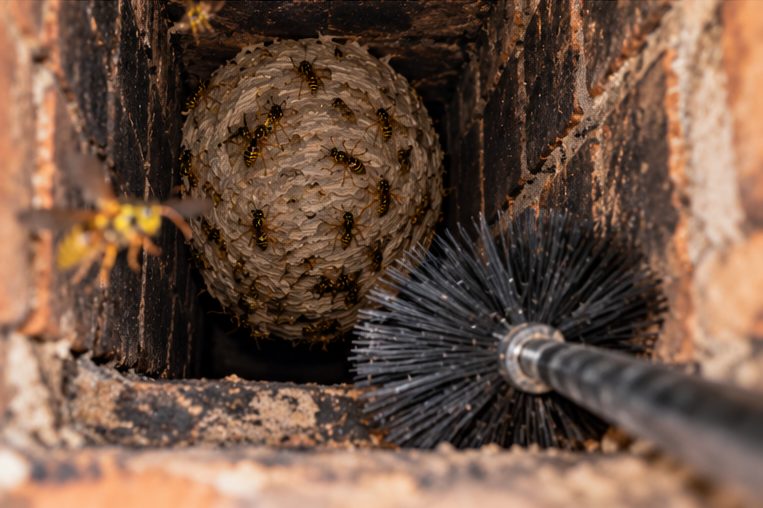
A nest usually shows itself through repeated traffic to one spot rather than through the nest being visible outright. Watch from a safe distance on a mild afternoon and let the flight line tell you where to look.
Roof tiles in Walthamstow and Leyton
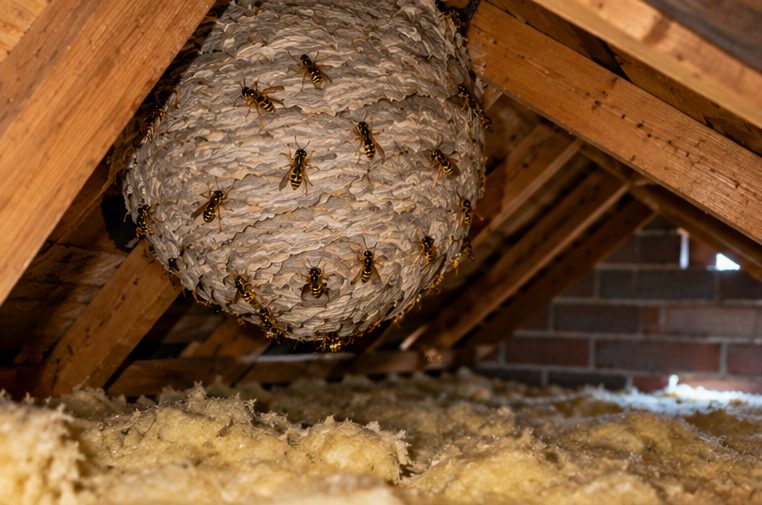
Slipped or loose roof tiles on the Victorian terraces of Walthamstow and Leyton give a queen wasp a sheltered gap to start a nest in spring. A soffit or fascia board with wasps repeatedly disappearing into it is the usual giveaway.
Sheds and fence lines towards Chingford
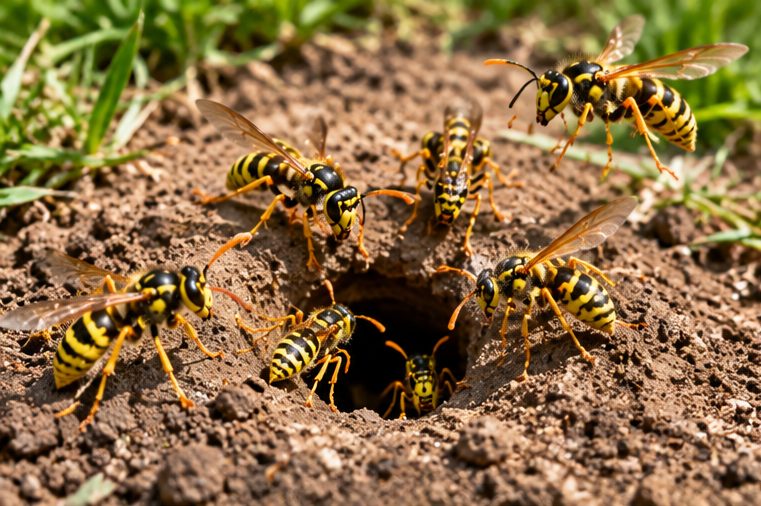
Further out, the larger gardens around Chingford and Highams Park put sheds and fence lines within easy nesting distance of the house, and a nest low down in a hedge or fence can go unnoticed until strimming or hedge-cutting disturbs it.
What to do today
- Keep children and pets away from the flight line
- Keep windows shut on the side of the house where the nest is
- Leave the entrance alone rather than blocking or spraying it yourself
- Clear fallen fruit and sweet drinks from the garden, which draw wasps in late summer
Why late summer feels worse
By August and September a colony has reached its full size for the year, but the queen has largely stopped laying, leaving fewer larvae producing the sugary secretion workers normally rely on - so the workers go looking for sugar themselves, which is why bins and drinks suddenly draw far more attention.
Booking wasp nest removal in Waltham Forest
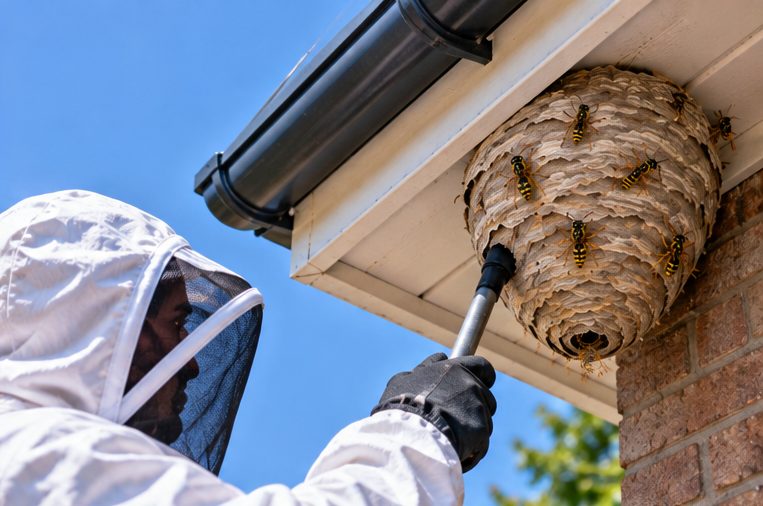
A standard wasp nest removal in Waltham Forest is a £90 fixed price, guaranteed: if the nest is still active within 30 days we come back at no extra cost, and that applies equally whether the nest turns up near Leyton - where dense Victorian terraces close to the North Circular and the Score - or anywhere else nearby, so book wasp nest removal and tell us roughly where the entrance is, with the full terms on the Waltham Forest wasp nest removal page.