Follow, don't wipe
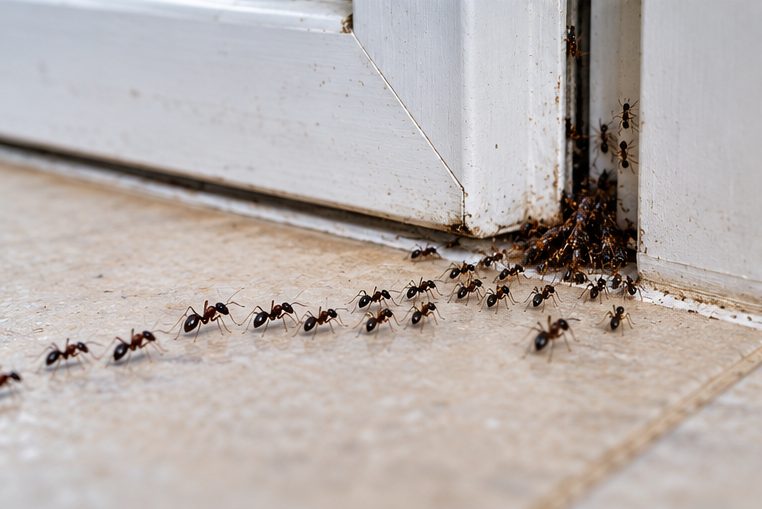
Every ant that completes the round trip to food and back reinforces the scent trail for the next one, which is why a line seems to grow busier the longer it's ignored. Cleaning the surface resets that day's trail; it does nothing to the colony sending it.
Service entrances and loading bays
Without gardens to nest in, City ants are usually tracing a trail in from a service entrance, a loading bay, or the gap around a delivery door, drawn by the food waste that collects near these points in office and food-premises buildings alike.
Staff kitchens and canteens
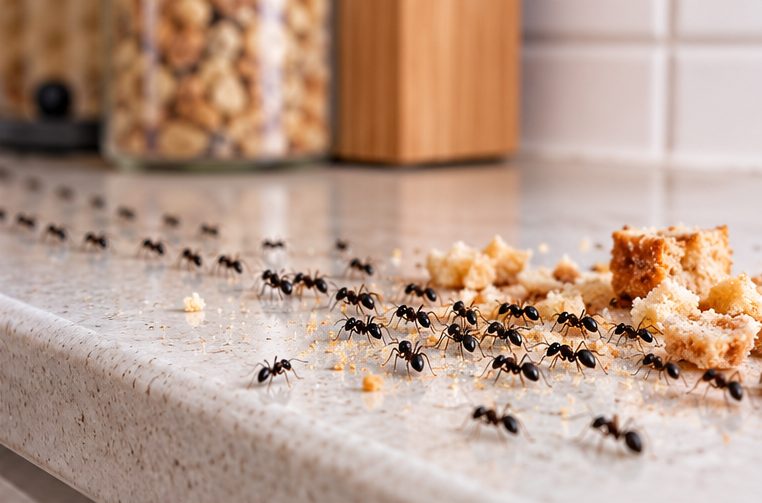
Once inside, a trail commonly runs to a staff kitchen or canteen area, where crumbs and spilled drinks around a kettle or vending machine give a colony a steady reason to keep sending workers back.
What to leave alone for now
- Spraying the trail, which kills the foragers and leaves the colony intact
- Sealing the entry gap before the colony is dealt with, which sends ants to find a new one
- Scattering powders along the trail, which can split a colony into several smaller ones
- Leaving spillages near vending machines or kettles unattended overnight
Closing the way in afterwards
Once the colony's dealt with, seal only the specific gaps the ants were using - a service door threshold, a pipe hole, a loading bay gap - and leave any weep holes or vents clear.
Booking ant control in the City of London
Ant control in City of London runs £190 for a flat and £220 for a house, and because around St Paul's, where offices and historic listed buildings around the cathedral precinct, it helps to say roughly whereabouts in the garden the nest might be when you book ant control, with the rest on the City of London ant control page.