
Where inside the structure they settle
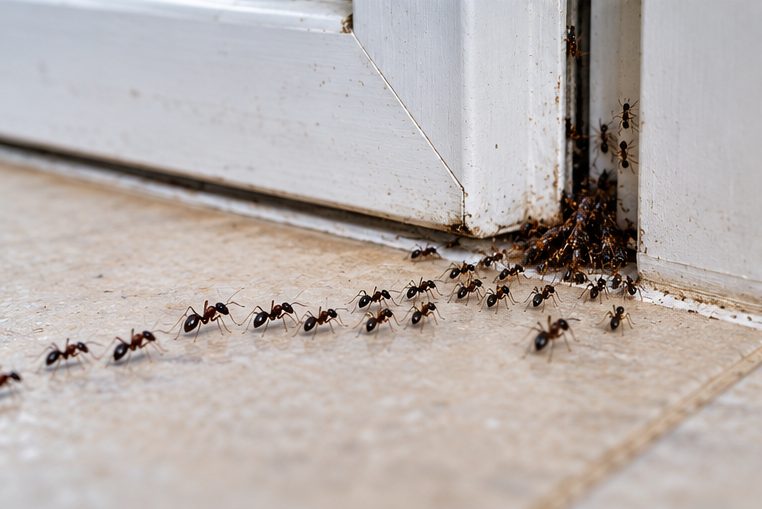
- The cavity of a cavity wall, reached from a crack at ground level or a weep hole
- The void behind plasterboard dry-lining, especially on an outside wall
- The space under a suspended timber floor, reached through an air brick
- Beneath kitchen and bathroom floors where hot water and heating pipes run
- Behind kitchen plinths and bath panels set against a warm wall
Why warmth draws them in
Outdoors, a garden ant colony all but shuts down for winter. A nest beside heating pipes stays warm, so it can keep foraging much later into the year, or right through it. Some species cannot live outside in a British winter at all and survive only in heated buildings, which is one reason wall nests in flats need a proper identification.
Signs the colony is in the wall

- Ants coming from sockets, switches, skirting or the gap around a radiator pipe on an inside wall
- A trail that disappears into the wall and never shows up outdoors
- Little piles of fine grit or mortar dust at the foot of a wall or along the skirting
- Winged ants emerging indoors during summer
- Workers active in the house in winter while the garden is quiet
Do ants damage walls?
Black garden ants are not wood-borers. They dig through soft material such as soil, sand and crumbling mortar, so they tend to exploit an existing weakness rather than create one. A long-standing nest can wash out loose pointing, but the ants are a sign of that gap more than its cause. Badly eroded mortar is a repair in its own right, whatever happens with the ants. Soft or crumbling timber is a separate matter for a builder or surveyor.
Hidden leaks and damp spots
Moisture draws ants as well as warmth. A slow leak under a bath, behind a dishwasher or beneath a sink keeps the surrounding space damp, which suits a colony that has already found a warm corner. If workers cluster around one appliance or a bath panel, check for a leak at the same time as sorting out the ants.
Do not drill or fill yet
Foam, sealant or filler squeezed into the exit hole does not reach the colony. The workers find or dig another way out, sometimes into the next room. Drilling into a wall to hunt for the nest risks hitting cables and pipes, and spraying anything into a socket is dangerous. Leave the hole alone, keep away from electrical fittings, and write down which ones the ants use.
Timber floors and older houses
Houses with suspended timber ground floors, as many in Willesden have, keep a ventilated void underneath that ants can reach through air bricks. Those air bricks must stay open to keep the timbers dry. The same openings matter for rodents, as stopping rats entering through air bricks explains.
Walls in flats

In a block, voids behind kitchen units and shared service risers link one flat to the next. Tiny, pale ants coming out of the walls of a heated flat, in a block like those in Wembley, must be identified before anyone sprays: read Pharaoh ants vs garden ants.
Getting a wall nest treated
Note which outlets or gaps the ants use, whether you have seen them in winter, and whether any had wings. Book ant control with those details; ant control in Brent is £190 for a flat and £220 for a house. If you are unsure whether the trail really ends in the wall, how to find an ant nest helps, and sealing the outside gaps afterwards is covered in how to stop ants entering your home.