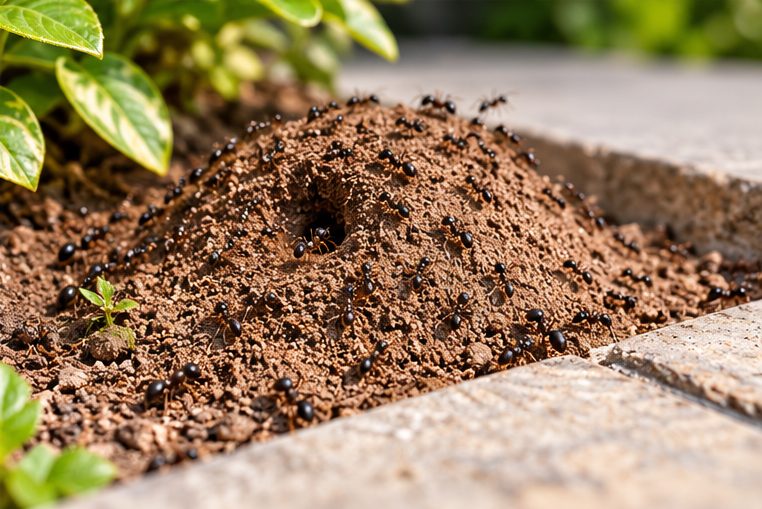
What the ants are after
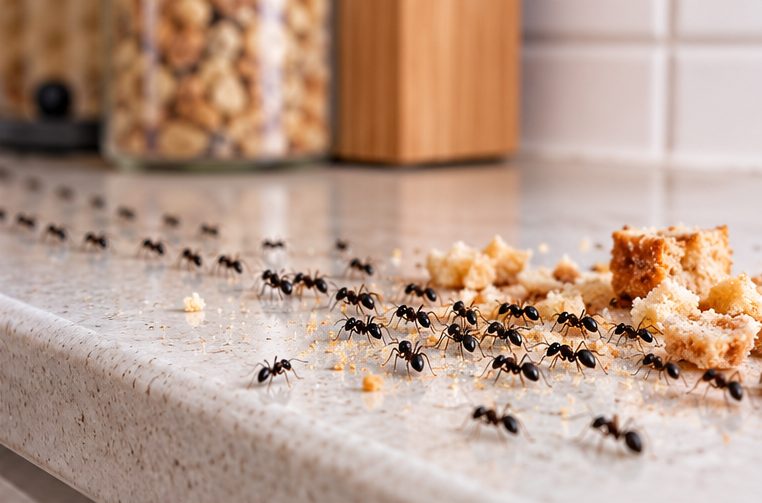
Kitchens hold exactly what a foraging colony needs: sugar, fat, protein and water, usually within a few metres of an outside wall. Garden ants are not fussy. A smear of jam on a cupboard door, crumbs under the toaster, a sticky ring beneath the honey jar or a drip of squash on the floor is enough to keep workers busy for hours.
One scout becomes a trail
It starts with a single worker wandering in search of food. When she finds some, she heads home laying a chemical scent as she goes, and nestmates who pick it up lay more scent on their own return trip. Within an hour or two a faint route can turn into a steady procession across the worktop. The ants are not looking for the food by sight; they are following the chemistry. One colony can run several trails at once, each to a different find.
Why wiping them away does not end it
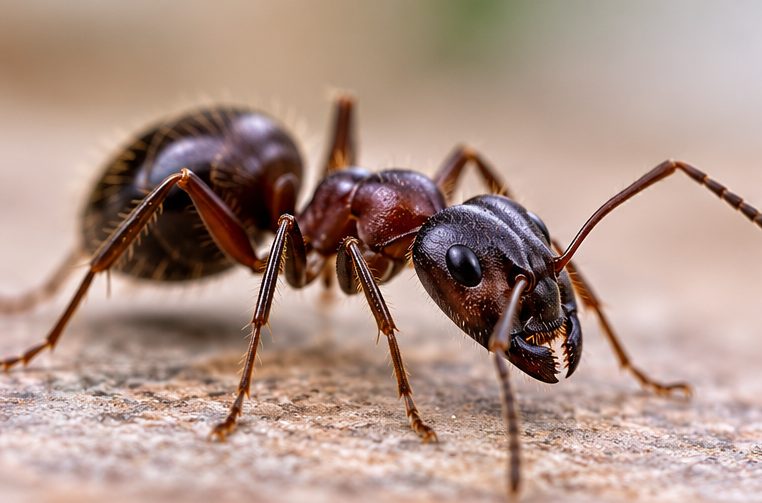
Clearing the ants in view leaves the colony untouched, and a quick wipe with a damp cloth often leaves enough scent for the next scout to find. Washing the route with hot soapy water breaks it for a while, yet new foragers rebuild it as long as the food and the nest are still close. The reasons home remedies stall are set out in why ants keep coming back after DIY treatment.
Weather and the time of year
The black garden ant, Lasius niger, is the usual kitchen visitor in London. Its colonies are busiest from late spring to early autumn, when the queen is laying and there are larvae to feed. A warm spell brings a surge of foraging, and a heavy downpour can push workers indoors along dry routes. Seeing them in the depths of winter is less usual, and worth a closer look.
Kitchens that sit close to the nest
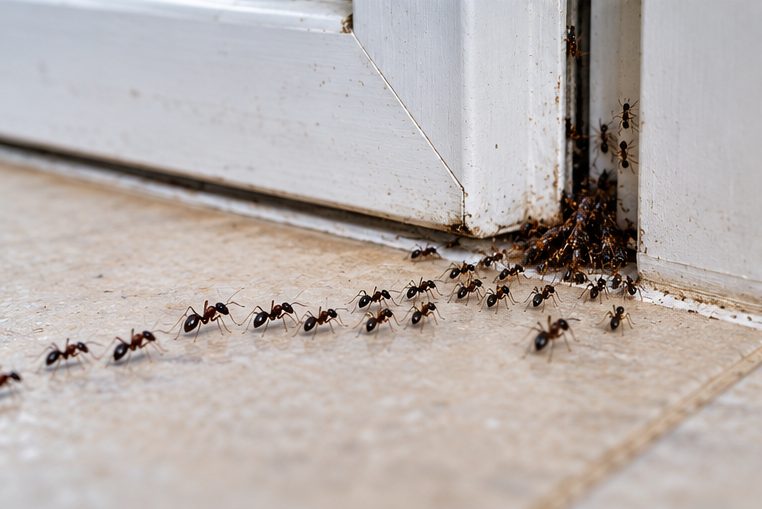
The colony normally lives outside, under paving, a patio or the soil at the foot of a wall. A kitchen at the back of the house, opening onto that patio, is the nearest target. Rear extensions make the distance even shorter: in Queensbury many kitchens have been pushed out into the garden with decking alongside, putting the worktop within easy reach. Tracing the colony itself is explained in how to find an ant nest.
A kitchen routine that helps
- Wipe worktops and the hob last thing at night, including under the kettle and toaster
- Rinse sugary bottles, cans and jars before they go in the recycling
- Keep sugar, honey, syrup, cereal and biscuits in containers with tight lids
- Empty the kitchen bin daily in warm weather and keep its lid shut
- Lift pet bowls once the animal has finished eating
Pet food is a strong draw in family homes with cats and dogs, like many in Sudbury. A bowl left down overnight can hold a trail on its own even when every worktop is spotless.
When the ants appear in winter
Garden ant colonies slow almost to a halt in the cold. Workers crossing a kitchen floor in December or January can mean a nest somewhere warm within the building, under a floor near heating pipes or in a wall void, or a different species altogether. Very small, pale ants in a heated flat need identifying before anything is sprayed: read Pharaoh ants vs garden ants.
Getting the colony dealt with
If the line keeps coming back after a week or two of careful cleaning, the colony is the problem rather than the kitchen. Ant control in Brent costs £190 for a flat and £220 for a house. When you get in touch, say where the ants enter the room and roughly how long they have been appearing.