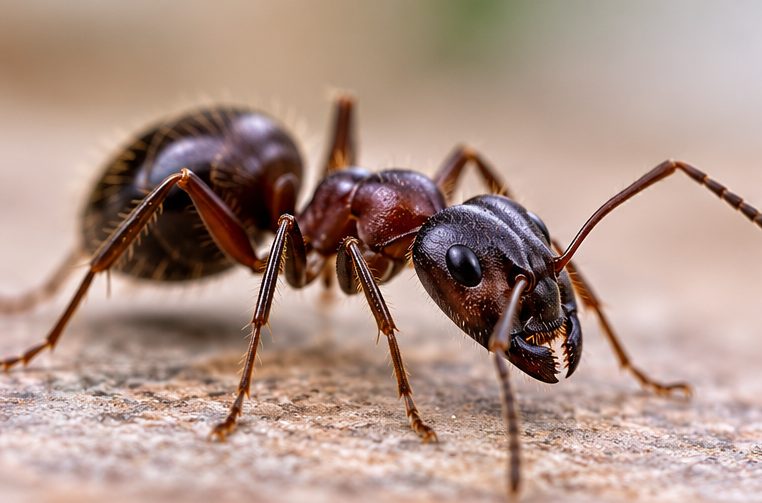
You killed the foragers, not the colony
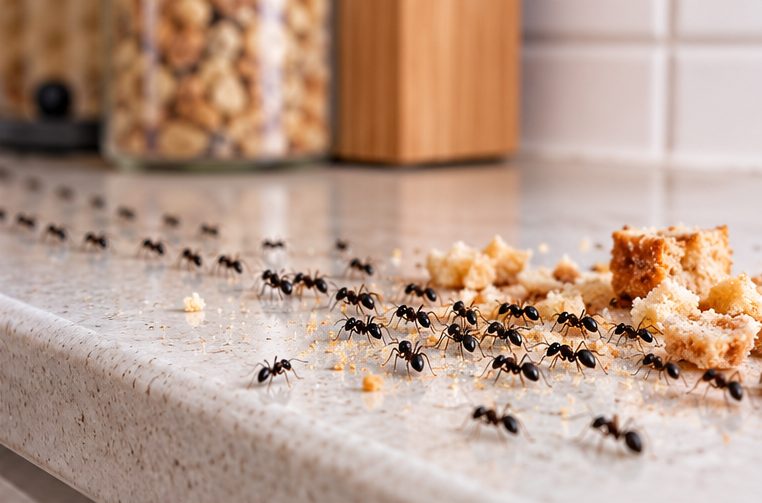
Only a small fraction of a colony is out foraging at any moment. The rest, along with the queen and the brood, stay in the nest. A spray on the worktop kills the ants it lands on, and the colony replaces them as new workers hatch. From the nest's point of view, it has lost a few couriers.
The queen is the one that matters
A black garden ant queen can live for many years and keeps laying through every warm season. While she survives, the colony recovers from losing workers again and again. Nothing sprayed in a kitchen gets anywhere near her, and a black garden ant colony can number thousands of workers.
The scent trail survives
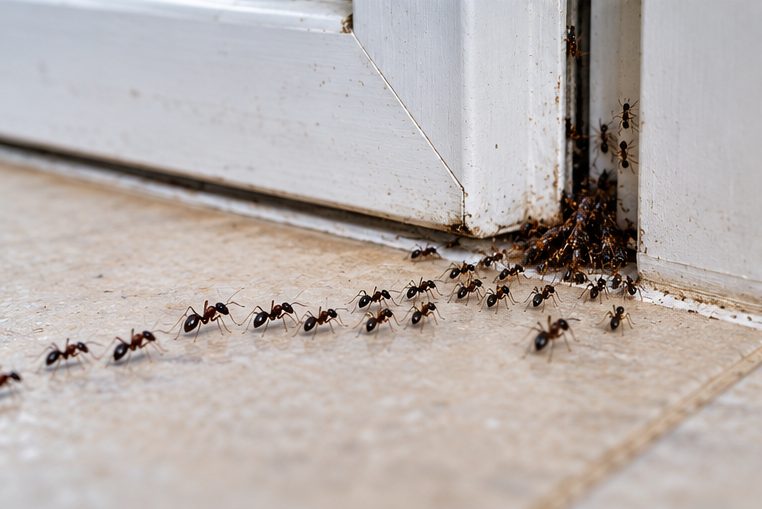
Many sprays and wipes leave traces of the chemical route behind them. Freshly recruited ants pick it up and follow it to the same cupboard, through the same gap, to the same crumbs.
Boiling water and digging
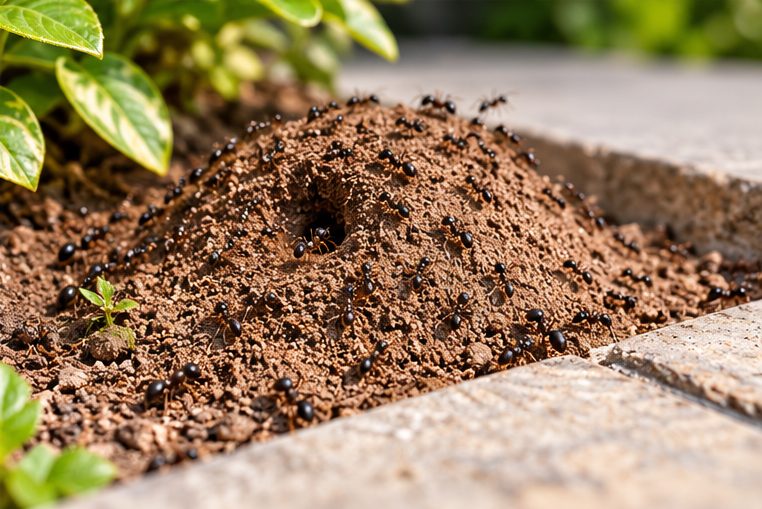
A kettle poured into a nest under a slab reaches the top chambers at most. Garden ant nests run deeper and wider than the entrance suggests, and the workers simply move the brood lower down or a short distance away. Lifting slabs to dig the colony out scatters it in much the same way.
Repellents can make it worse
Some products drive ants away without harming the colony, so the trail just moves to another door or window. With species that nest indoors, such as Pharaoh ants, repellent sprays can cause a colony to split into several, spreading the problem through a building. That is why identification comes first; see Pharaoh ants vs garden ants.
Common DIY approaches and why they stall
- Aerosol on the trail: kills the workers in sight, leaves the nest alone
- Lines of chalk, vinegar, cinnamon or pepper: may divert ants for a short time
- Filling the entry hole at once: the trail reroutes to the next gap
- Boiling water on the nest: reaches only part of it
- Hiding the sugar: helps, but a hungry colony searches for anything else
Powders and gels from the shop
Powder scattered along a threshold kills the ants that walk through it, but it is easily swept away, blown about or simply avoided, and it is not suitable where children or pets can reach it. Whatever product you buy, read and follow the label and keep it well away from food preparation areas.
A second nest takes over
Sometimes a home remedy did knock back one colony, and a different nest a few metres away found the same kitchen. Gardens with long paths and patios can support more than one, so a trail that returns in a slightly different spot is worth tracing again from the start.
What DIY is still worth doing
Good housekeeping makes the kitchen less rewarding, and washing the route with soapy water interrupts it for a while; why ants keep coming into the kitchen has a routine. In shared houses, like the HMOs of Kilburn, that works best when everyone using the kitchen does it. Tracking down the nest and noting its position will help whoever deals with it: how to find an ant nest. What DIY cannot easily do is reach a colony buried under a patio or inside a wall.
When to stop and call
If the ants are back after a couple of rounds of spraying, keep using the kitchen normally but stop adding more products along the trail, which only makes the route harder to read. Book ant control and say what you have already used. Ant control in Brent is priced at £190 for a flat or £220 for a house. Not sure it has reached that point? Read when an ant problem needs professional treatment.