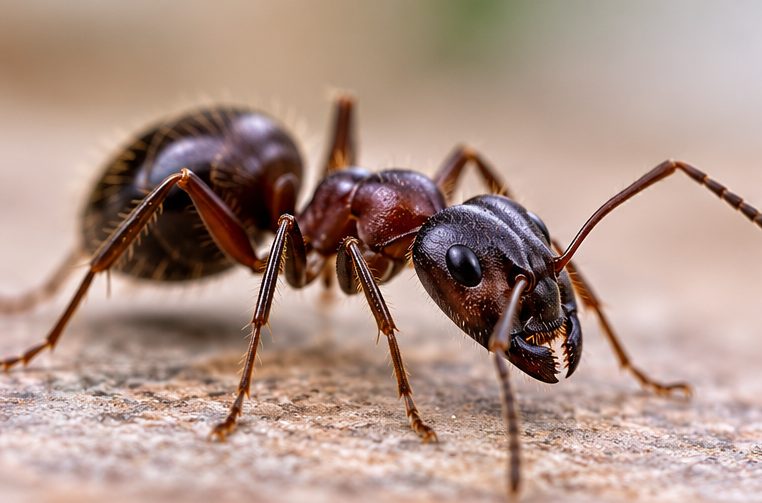
Why the nest matters more than the trail
Foraging workers are only a small share of a colony. The queen, eggs, larvae and pupae stay underground or in a cavity and never come out. For as long as that nursery is intact, the colony can keep sending new workers, so knowing where it sits is worth far more than counting the ants in the kitchen.
Pick the right moment
Look on a warm, dry afternoon, when foraging is at its peak. An early morning or a cold, wet day can show almost nothing even above a large colony. Allow a quarter of an hour, and take a torch for dark corners and the base of units. On the very hottest days activity can dip around midday, so late afternoon is often better.
Put down a marker bait
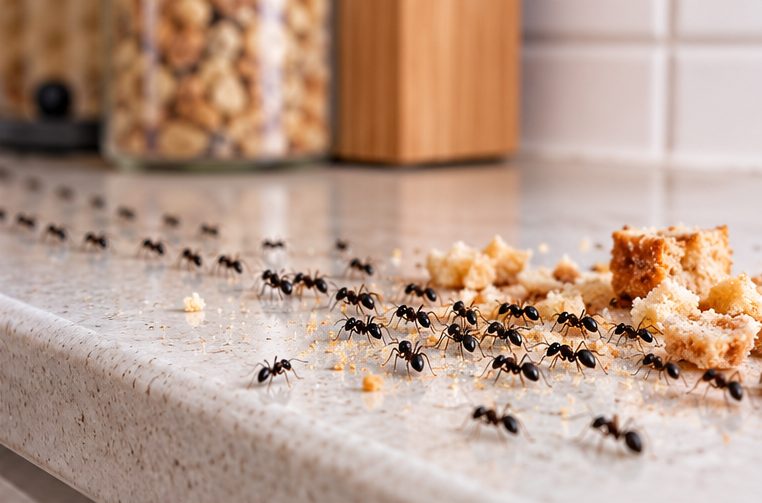
If the trail is patchy, put a small drop of honey or jam on a piece of card near where ants have been seen. Within an hour it usually draws a clear line. Do not spray anything nearby, because you want the ants walking normally so you can follow them. Throw the card away once you have finished.
Follow the line backwards
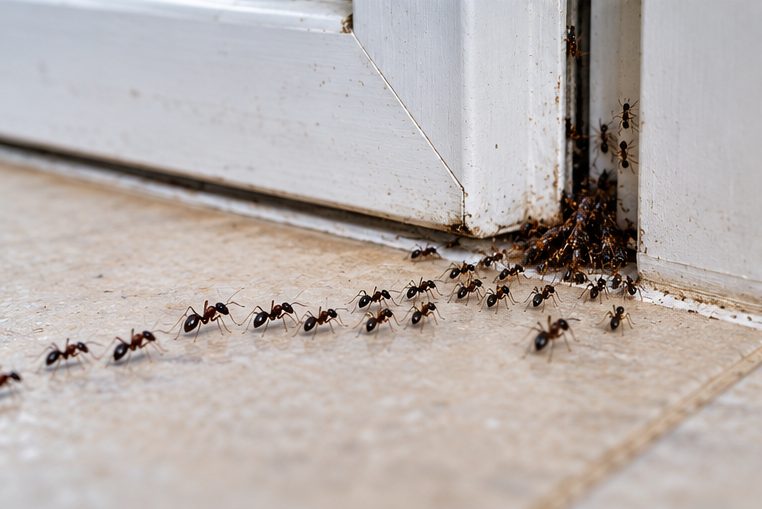
Watch the ants walking away from the food, not towards it: those are the ones heading home. Track them along the skirting or the back edge of the worktop to the point where they leave the room. That is often under the back door, a gap beside a pipe, the joint where an extension meets the old wall, or a hole in the mortar. Mark the spot with tape. The usual crossing points are listed in how to stop ants entering your home.
Pick up the trail outside
Go to the other side of that wall at the same height and look for ants emerging. Outdoors, trails tend to run along the bottom course of bricks, the edge of a path or the foot of a fence. Follow them until they drop into the ground or disappear under something. In a terrace the line may slip under the fence into next door's garden, and a quick word with the neighbour saves a lot of guesswork.
What the entrance looks like

- Small heaps of fine, crumbly soil or sand pushed up between paving slabs
- A line of grains along the joint where a patio meets the house wall
- Several tiny holes at the edge of a lawn or border with ants going in and out
- Workers pouring from beneath a plant pot, a loose slab or a board
Tipping a pot or lifting a slab may reveal white, rice-like pupae, which people often take for eggs. Put it back gently and leave the rest undisturbed.
When the line ends indoors
Some trails never leave the building. If the ants vanish into a skirting board, a floor beside a radiator or a socket on an inside wall, the colony may be in the structure, which changes things — see can ants nest inside walls. Tiny, pale ants that never head outside should be identified before anyone treats them: Pharaoh ants vs garden ants.
Houses with gardens and flats upstairs
Around the interwar houses of Kingsbury, with lawns, borders and paths at front and back, there may be more than one colony close to the walls, so a second trail can lead somewhere else entirely. In an upper-floor flat, the source may be a shared garden, a neighbouring flat or a void in the building that you cannot get to.
What to pass on when you book
Say where the ants enter the room, where you lost the trail, and whether you saw soil heaps outside. That helps plan ant control in Brent, which is £190 for a flat or £220 for a house. If the trail led further than you could follow, where ants nest around houses lists the likely spots.