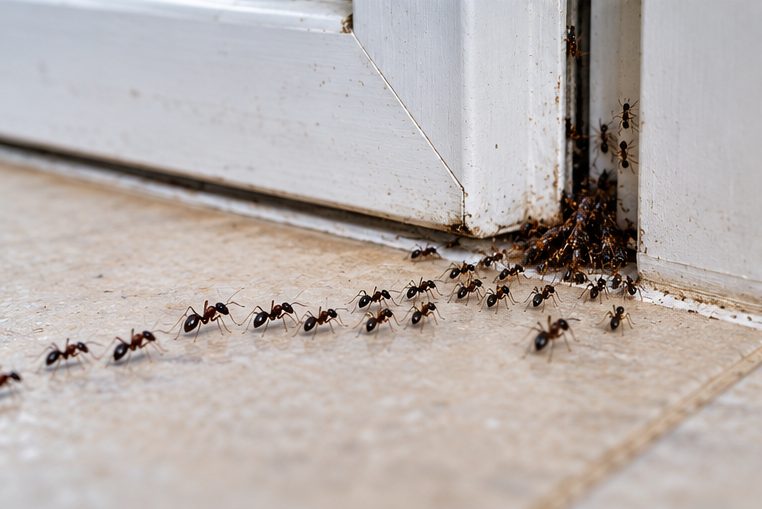
Follow the trail rather than wiping it
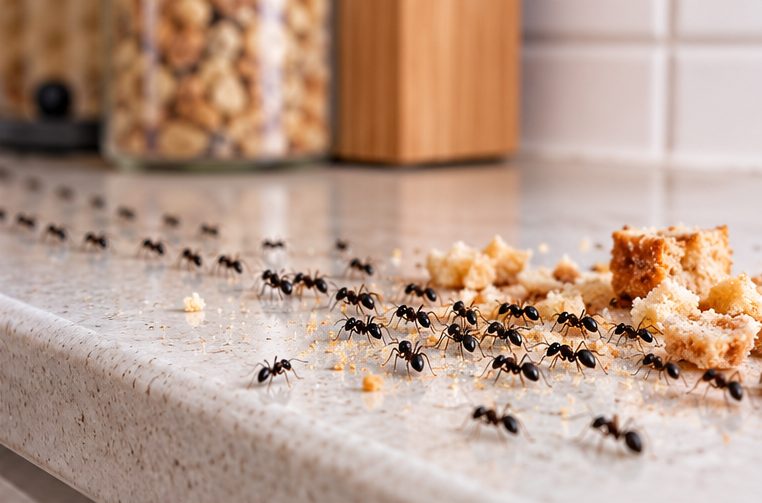
Every worker ant that reaches food and returns safely reinforces the same scent trail for the next one, which is why a line seems to thicken the longer it is left alone. Wiping it away only means a fresh trail gets laid; following it back tells you where the colony actually sits.
Basement and lower-ground kitchens
Many Kensington and Chelsea townhouses have their kitchen at lower-ground level, opening onto a light well or a small paved area, and ants often come in through the gap around a light well drain or the threshold of a basement back door rather than anywhere upstairs.
Holland Park's larger gardens
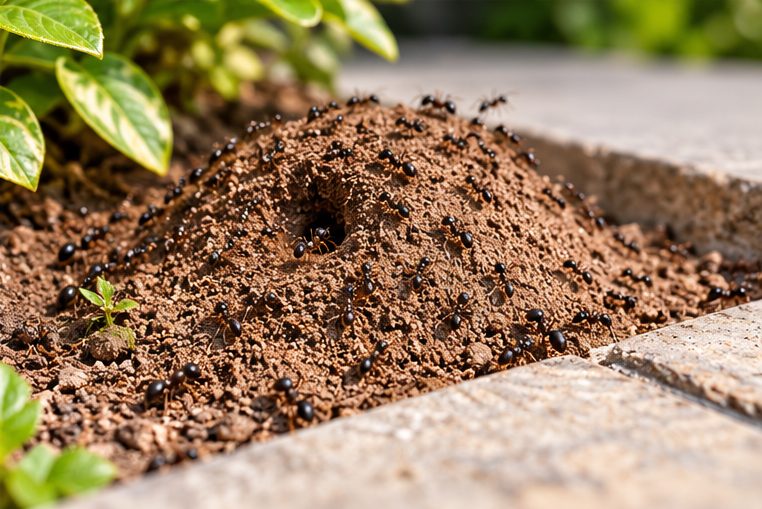
The larger detached and semi-detached houses around Holland Park sit on correspondingly bigger gardens, and a nest can be settled well away from the house, under a path or against a garden wall, still sending a trail all the way to the kitchen.
What to leave alone for now
- Spraying the trail, which kills the foragers and leaves the colony intact
- Pouring boiling water onto paving, which can damage mortar and rarely reaches the queen
- Filling the entry gap before the nest is dealt with, which sends the ants to a new one
- Scattering powders along the trail, which can split a colony into several smaller ones
Closing the way in afterwards
Once the colony has been dealt with, go back and seal only the specific gap the ants were using: a light well drain, a basement threshold, a crack in old mortar. Weep holes and air bricks should stay clear, sealing them shut only traps moisture inside the wall, much as it does near Earl's Court, where large mansion blocks and converted terraces.
Booking ant control in Kensington and Chelsea
Ant control in Kensington and Chelsea runs £190 for a flat and £220 for a house, and because around Ladbroke Grove, where a mix of stucco terraces and estates around North Kensington, it helps to say roughly whereabouts in the garden the nest might be when you book ant control, with the rest on the Kensington and Chelsea ant control page.