Follow, don't wipe
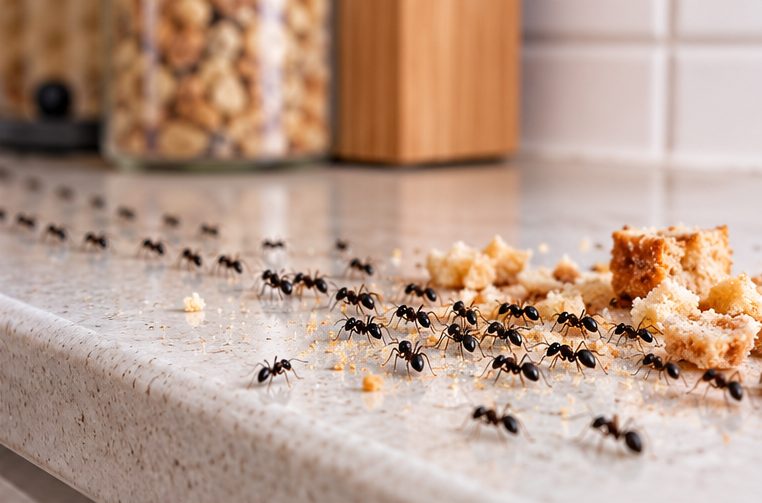
Every ant that completes the trip to food and back reinforces the scent trail for the next one, which is why a line seems to grow busier the longer it's left. Wiping the worktop only resets that day's trail, the colony behind it is untouched, as anyone near Highams Park will recognise, where interwar semis and Victorian terraces around the lake and the shops.
Leytonstone's patio doors and kitchen units

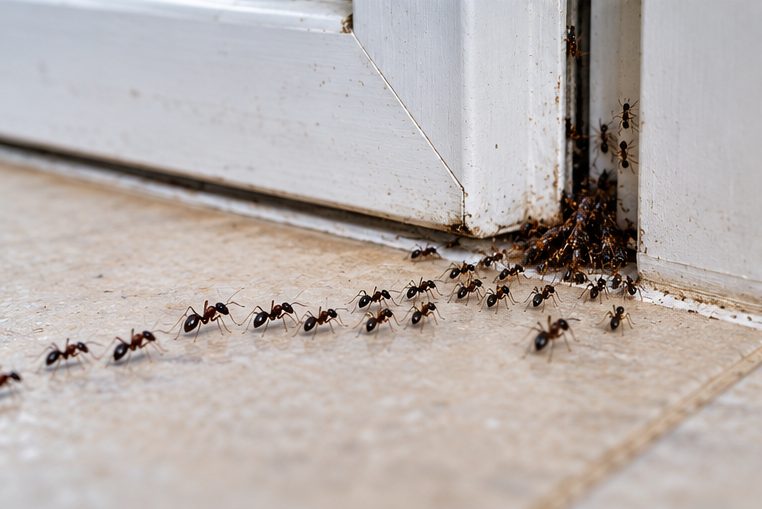
Terraced gardens around Leytonstone commonly open onto patio doors, and gaps under the door track or around kitchen units are a frequent entry point - watch on a warm, still afternoon and mark where the line actually crosses into the house.
Chingford's larger gardens
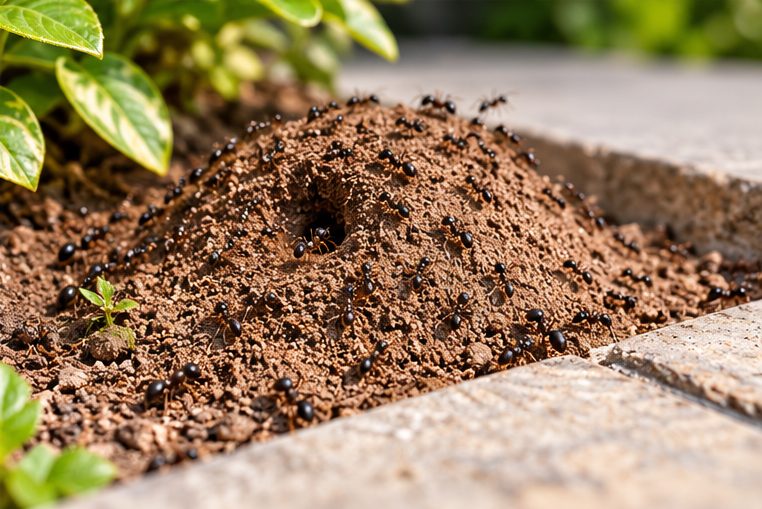
The bigger gardens typical of Chingford's interwar semis give a colony more places to settle away from the house itself - under a shed base, along a low retaining wall, at the edge of a lawn - so it's worth tracking the trail its full length rather than assuming the nearest paving slab is the source.
What to leave alone for now
- Spraying the trail, which kills the foragers and leaves the colony intact
- Pouring boiling water into paving, which rarely reaches the queen and can damage the mortar
- Sealing the entry gap before the nest is dealt with, which sends ants looking for a new one
- Scattering powders along the trail, which can split a colony into several smaller ones
Closing the way in afterwards
With the colony dealt with, close only the gap the ants used, air bricks and weep holes should stay clear or damp gets trapped inside the wall, whether that's near Walthamstow, where victorian terraces around the Village and the market, or elsewhere in the borough.
Booking ant control in Waltham Forest
Ant control in Waltham Forest runs £190 for a flat and £220 for a house, and because around Walthamstow, where victorian terraces around the Village and the market, it helps to say roughly whereabouts in the garden the nest might be when you book ant control, with the rest on the Waltham Forest ant control page.