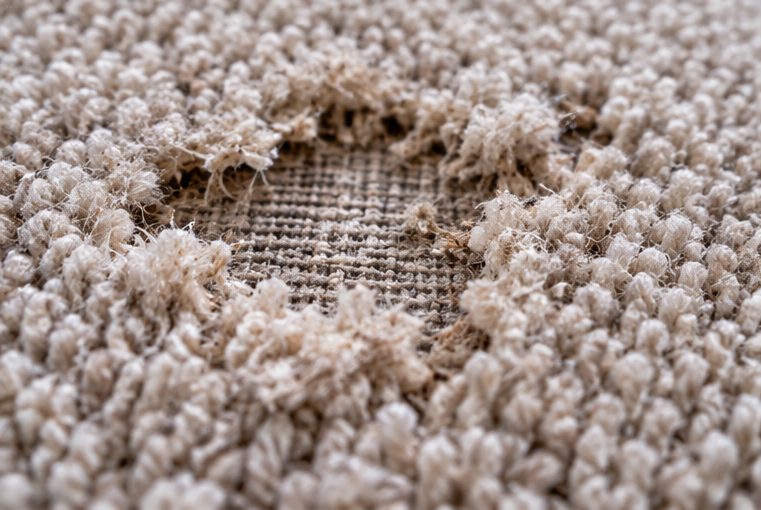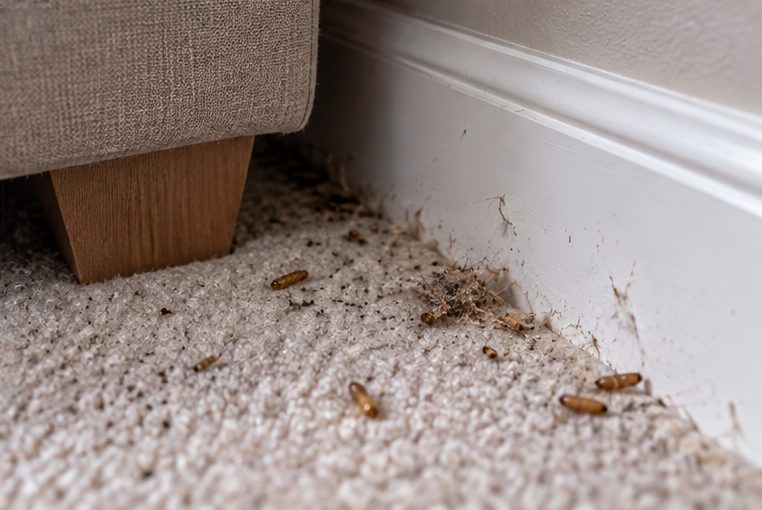
Why undisturbed rooms are the risk
Carpet moth larvae feed on natural fibres - wool carpet, clothes, upholstery - and they thrive wherever nothing disturbs them for weeks on end. A spare room, the space under furniture that never gets pulled out, and the back of a wardrobe are typical starting points in any home.
Forest Gate's original wool carpets
The Victorian terraces and their conversions across Forest Gate often still carry original wool carpeting, sometimes under a newer covering, in bedrooms and hallways that see comparatively little traffic. That combination of natural fibre and low disturbance is exactly what carpet moth larvae look for.
What to look for
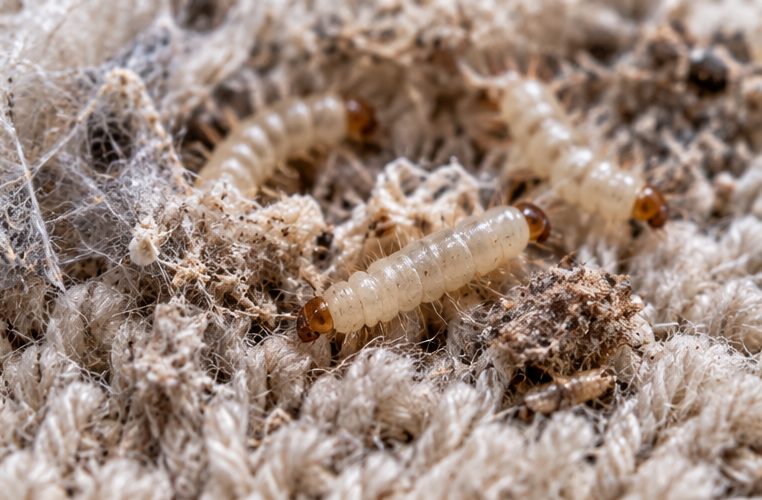
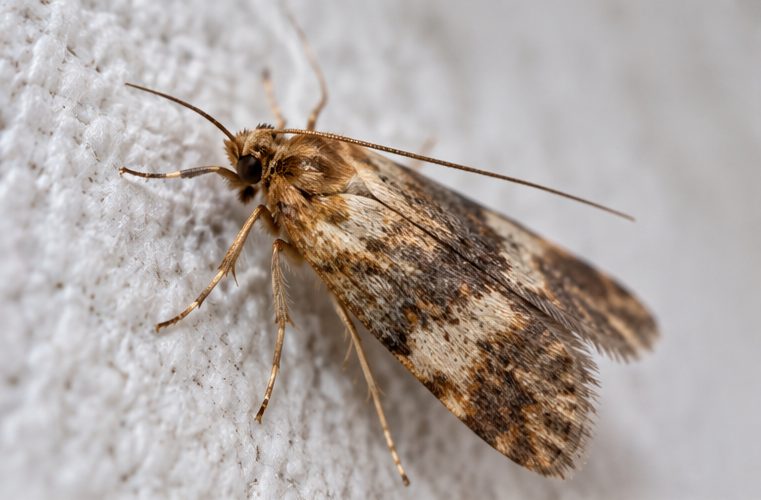
Small pale larvae with a fringe of bristles, silken tubes woven into the pile, and irregular bare patches near a skirting board or under furniture are the usual signs. Adult moths are small, pale and reluctant to fly, so the damage is usually noticed before the moth is.
Beyond the carpet
Once established, moths rarely stay confined to flooring. Check stored clothing, blankets and upholstered furniture in the same rooms, particularly anything wool that hasn't been worn or aired in a while.
What to do before treatment
- Vacuum thoroughly, including under furniture and along skirting boards, then empty the vacuum outside
- Have affected clothing dry-cleaned or washed hot rather than folded straight back into a drawer
- Move stored boxes and furniture away from the walls so edges can be reached
- Avoid simply vacuuming the surface and assuming that's dealt with it - larvae sit deeper in the pile
Booking carpet moth treatment in Newham
Carpet moth treatment in Newham is priced at £180 for the first room and £60 for each additional room, and given that around East Ham, where dense Victorian terraces and a busy high street running through the heart of the, it is worth checking older rooms first before you book carpet moth treatment and tell us which rooms show damage, with the rest on the Newham carpet moth treatment page.