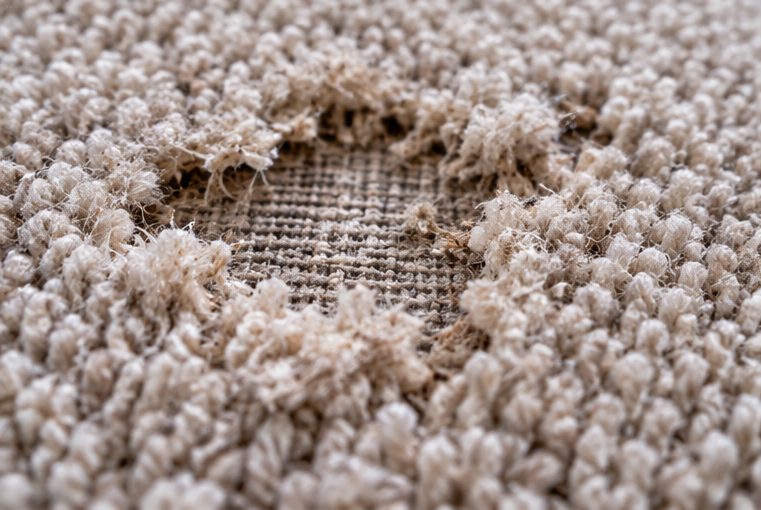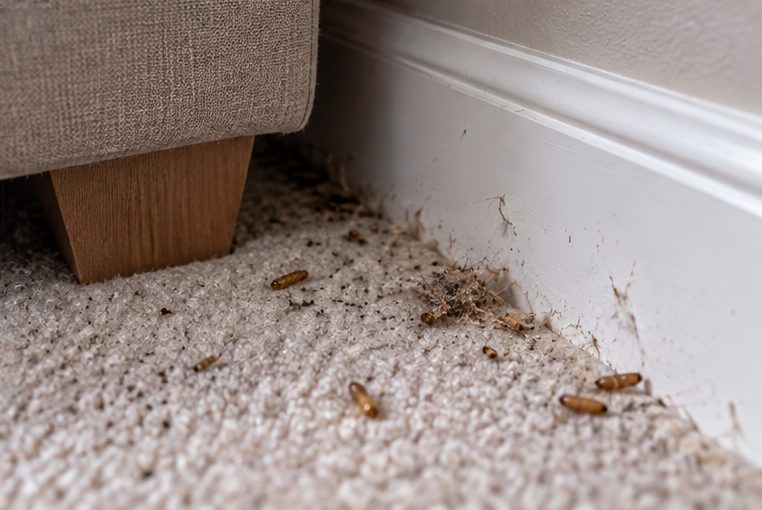
Largely the same insects
There is no single species that eats only carpet. The moths found damaging carpets, rugs, clothes and upholstery in British homes are nearly always one of two clothes moths. Call them carpet moths when they are in the floor and clothes moths when they are in the wardrobe; the insect is the same, and so is the damage.
The common clothes moth
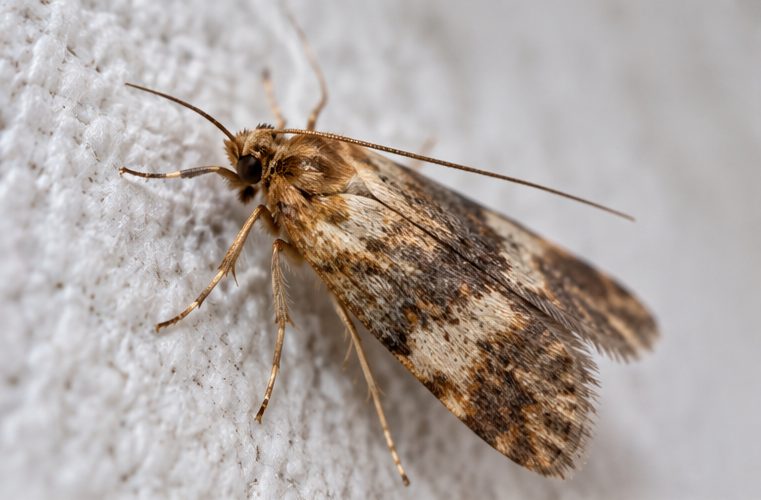
Tineola bisselliella, also called the webbing clothes moth, is the more common of the two. Adults are about 6–8mm long, a plain golden-buff colour with no obvious spots, and have a small tuft of reddish-gold hair on the head. They prefer to run or hide rather than fly, and flutter weakly when they do. This is the species whose larvae leave silk tubes through carpet pile.
The case-bearing clothes moth
Tinea pellionella is similar in size but duller and browner, with a few faint dark spots on each forewing. The adults behave in much the same way, and the species is generally less common indoors than its webbing relative. The easiest way to tell the two apart is not the moth, but its larva.
Telling the larvae apart
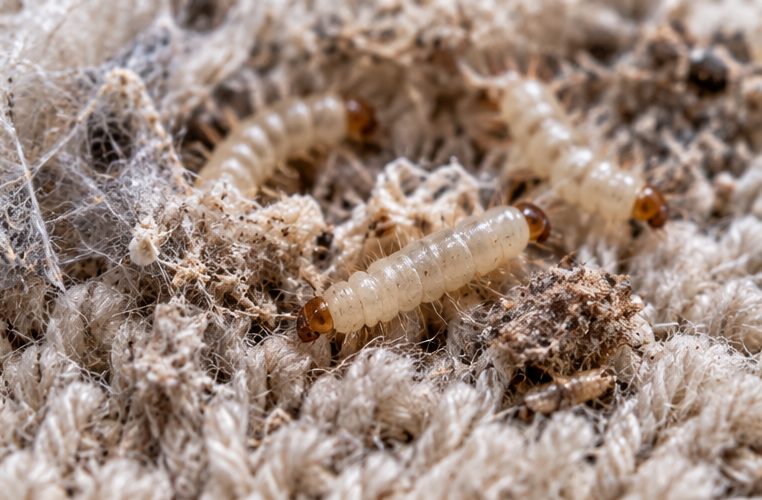
- Webbing clothes moth: the larva lives in silk it spins as it feeds, leaving tubes, patches of webbing and trapped frass
- Case-bearing clothes moth: the larva carries a small silken case, coloured by the fibres it eats, and peers out of one end
- Case-bearing larvae often leave their cases stuck to walls or ceilings when they pupate
A fuller description is in what carpet moth larvae look like.
Where they feed is the real difference
Both moths eat keratin in wool, silk, fur, feathers and hair. Whether the damage shows in a carpet or a coat depends on where eggs were laid and what was left undisturbed. A home with wool carpets and stored knitwear can easily have both affected, and moths flying in a bedroom may belong to the same population as damage in the room below. The full list of vulnerable items is in carpet moths and clothes and furniture.
The brown house moth
The brown house moth is a different, larger insect, bronze-brown with darker flecks on the wings. Its larvae scavenge on a wide range of debris and it is often linked with damp or old birds' nests. It should not be mistaken for a clothes moth: its size and colour are the giveaway.
Pantry moths eat food, not fabric
Moths flying around a kitchen are usually Indian meal moths. Their wings are pale grey near the body and coppery brown towards the tips, and their larvae live in stored cereals, flour, nuts, dried fruit and pet food. They will not eat carpets or clothes, and the fix starts with clearing out infested food. If moths keep appearing near food cupboards but no fabric is damaged, check the packets first.
And carpet beetles
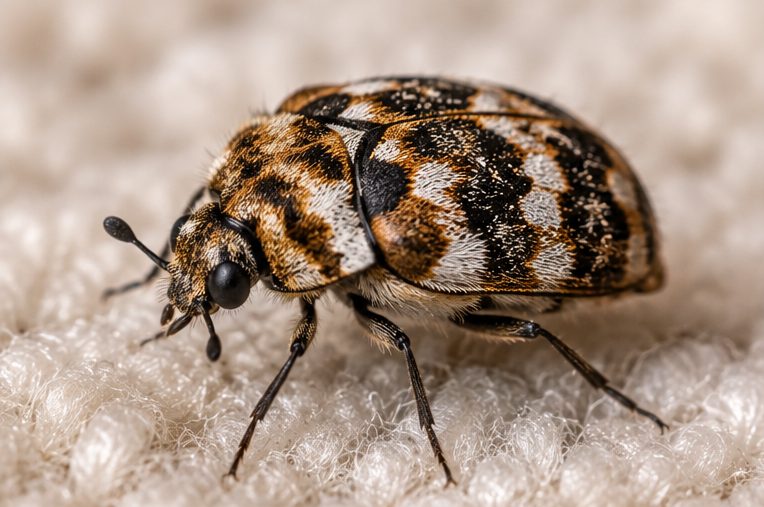
Carpet beetles are not moths at all, though their larvae do very similar damage. The adults are tiny, rounded and mottled, and the larvae are hairy. Carpet beetles vs carpet moths sets out the differences, and carpet beetle control covers that pest.
Does the name matter for treatment?
Not for pricing: whichever clothes moth you have, it is the rooms that are treated. Knowing the signs does help you spot every affected room, which is the useful part; see where carpet moths hide. Carpet moth control in Brent is £180 for the first room and £60 for each additional room. Wool-rich period homes in Dollis Hill often have signs in more than one room, so walk round first, then book carpet moth treatment.