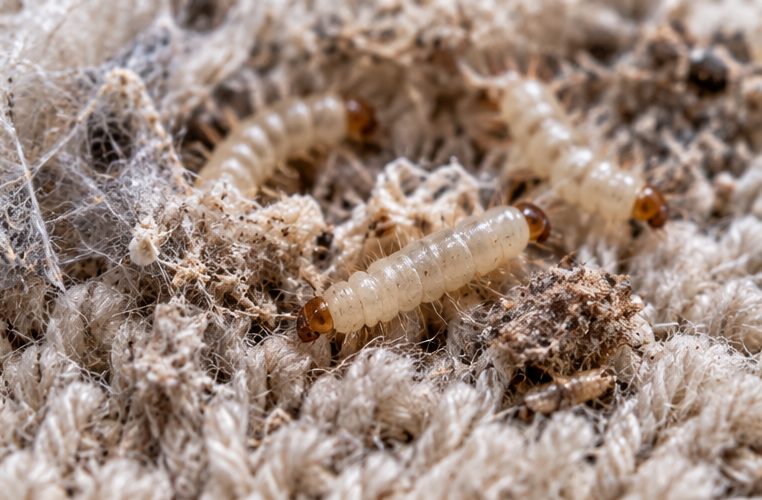
Darkness and stillness
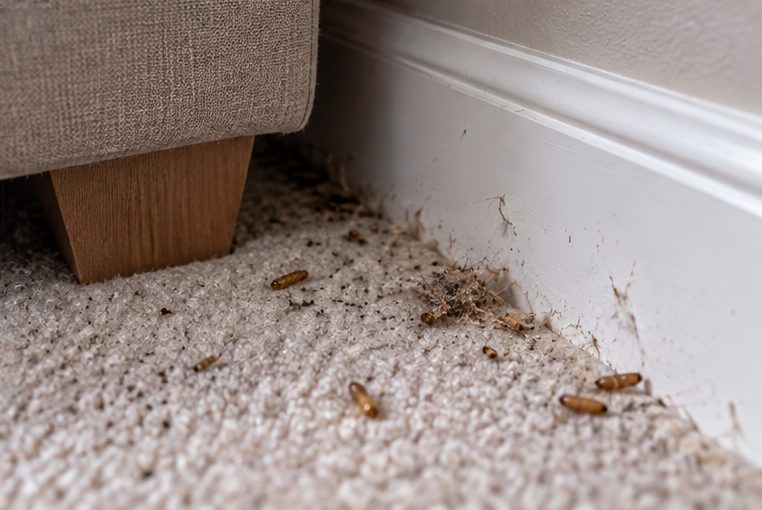
Clothes moth larvae and adults both shy away from light. Beneath a bed or a low sofa it is permanently dim, and nothing moves for months. Eggs laid there are not knocked loose, larvae are not squashed underfoot, and silk tunnels are left intact. Out in the open, the same larvae would be disturbed daily. Even a gap of a few centimetres under a sofa is enough.
Food collects where the vacuum does not reach
Hair, skin flakes, crumbs and dust drift under furniture and stay there. That debris is rich in the keratin larvae feed on, and fibres coated with it are preferred over clean pile. Pet hair adds to it, which matters in family homes with dogs and cats, such as many around Sudbury. Beds and sofas attract other pests for quite different reasons; if you have been bitten rather than finding damage, see bed bugs in sofas and furniture.
Carpet that is never walked on
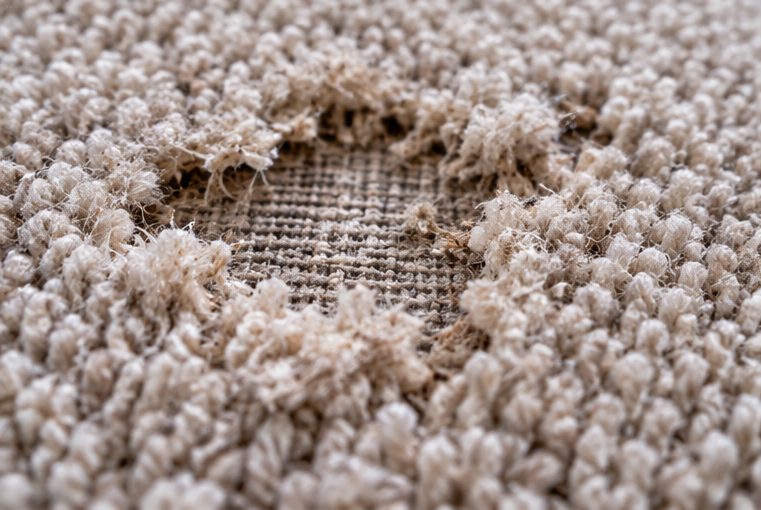
Foot traffic compresses and shakes carpet, which makes a poor home for eggs and young larvae. Pile under furniture stays deep and undisturbed, giving larvae shelter as well as food. That is also why the damage can grow unnoticed until the furniture is moved; the patterns it leaves are covered in why holes appear in carpet.
Warmth helps them along
Larvae develop faster in warm conditions. A sofa pushed against a radiator, or a bed in a room above the kitchen, can keep the space underneath comfortably warm through the year. In a well-heated home, feeding does not stop for winter. Heating pipes running under the floorboards can have a similar effect.
Beds, sofas, chests and bookcases
- Divan beds and storage beds sitting almost flush to the floor
- Sofas and armchairs with a skirt or low frame
- Heavy chests of drawers, sideboards and blanket boxes
- Bookcases and fitted wardrobes with a plinth or kick board
- Pianos and other pieces that are simply too heavy to shift often
Built-in furniture is a particular case. A fitted wardrobe or a bookcase built across an alcove cannot be moved at all, so the carpet under its plinth can go unseen for as long as the furniture has been there.
Checking underneath
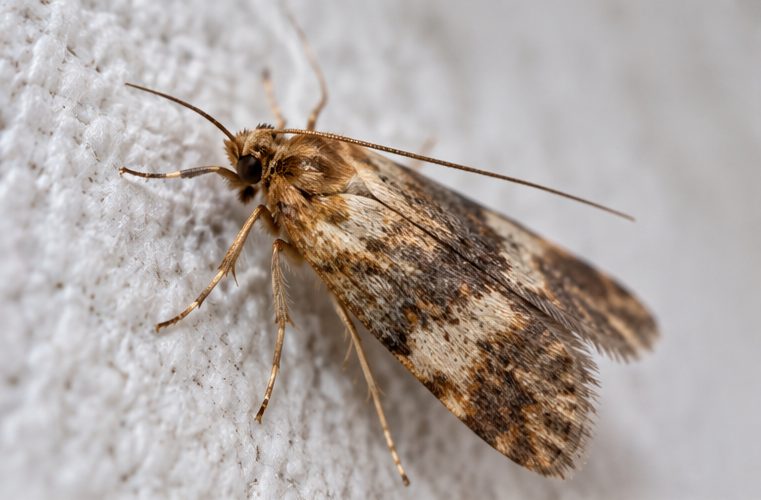
Lift or slide the piece if you can do so safely, ideally with someone helping. Shine a torch across the exposed carpet and look for thinning pile, loose tufts, silk and frass. Check the underside of the furniture and any felt pads on its feet. For heavy items you cannot move, a torch and a long-handled crevice tool give a partial view. The wider list is in the signs of carpet moths.
Keeping those spots disturbed
Moving lighter furniture every few weeks and vacuuming the floor beneath it takes away most of what larvae rely on. Furniture on raised legs is easier to keep clear than pieces that sit flat. The longer-term routine is set out in how to stop carpet moths coming back.
When moving furniture reveals damage
The discovery often comes at a moment of change: clearing a house to move, as in Cricklewood, or shifting everything for building work, as in the renovations common in Queen’s Park. Before new carpet goes down or furniture goes back, it is sensible to deal with the moths first. Landlords clearing furnished lets between tenancies in Kenton can find the same thing once beds and sofas are taken out.
Getting the rooms treated
Carpet moth control in Brent is priced at £180 for the first room and £60 for each additional room. When you book, mention any furniture that cannot be moved so the visit can be planned around it, and say which pieces you have already moved and vacuumed beneath.