Moths that run rather than fly
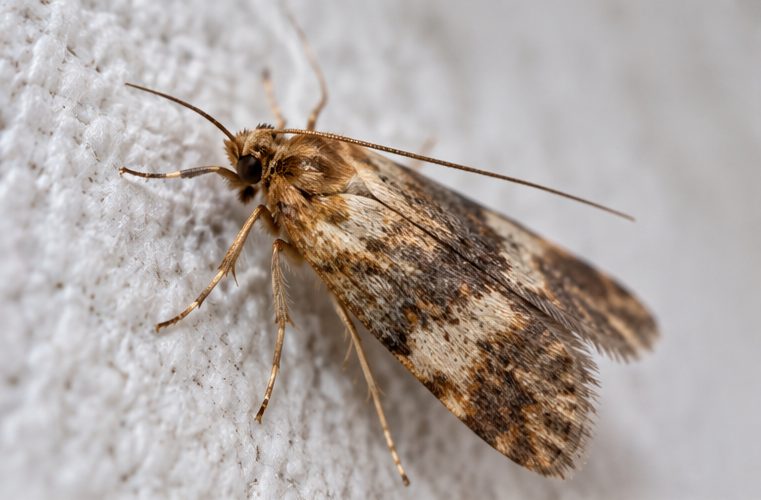
The adults are small, about 6–8mm long, and a pale golden or buff colour. Unlike the moths that bump against a lit window at night, they avoid light. Disturb one and it tends to scuttle deeper into the carpet or make a short, weak, zigzag flight before settling again in a dim corner. Seeing one or two in a wardrobe or under a bed is worth taking seriously. Not every small moth indoors is a fabric feeder, though; carpet moths or clothes moths explains which ones are.
Thin patches and bald spots
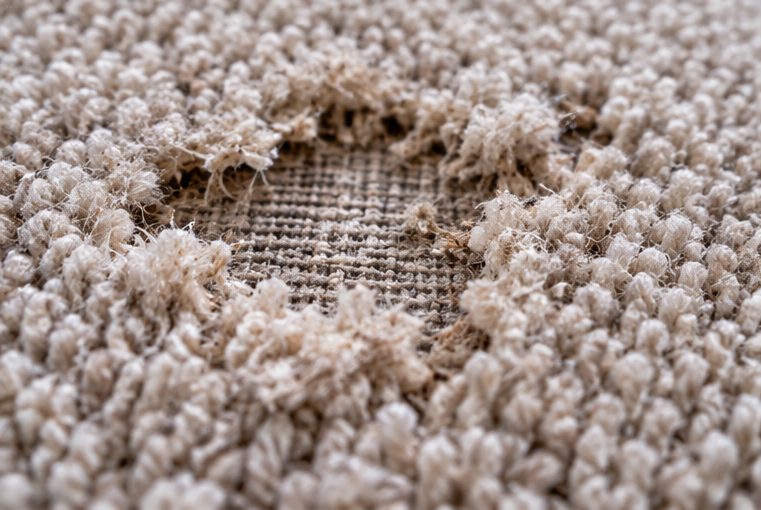
The damage is grazing rather than a clean hole. Pile gets eaten back towards the backing in irregular patches, often along the edge of the room, and loose tufts lift away when you brush a hand across the area. If you are trying to work out whether a worn patch is moths at all, why holes appear in carpet goes through the other causes.
Silk and small cases in the pile
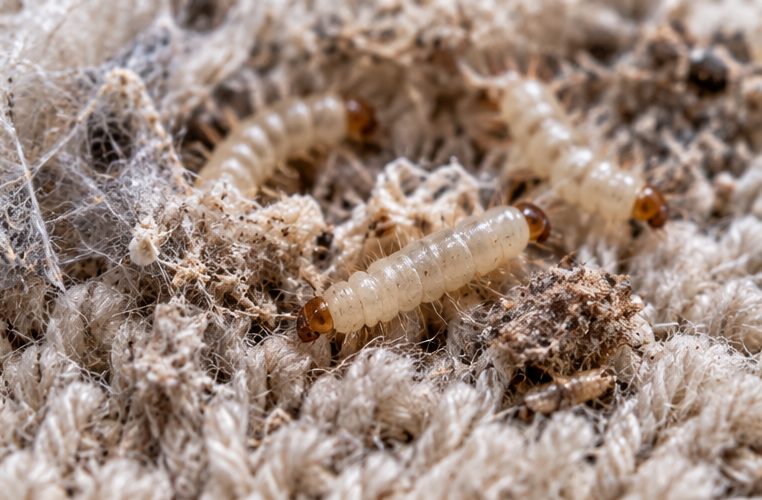
Part the fibres at the edge of a damaged patch. A fine, dirty-looking silk, sometimes formed into short tunnels, is left by webbing clothes moth larvae. Tiny, grain-shaped cases the same colour as the carpet belong to case-bearing larvae, which carry them around. For a closer description, read what carpet moth larvae look like.
Gritty specks the colour of the carpet
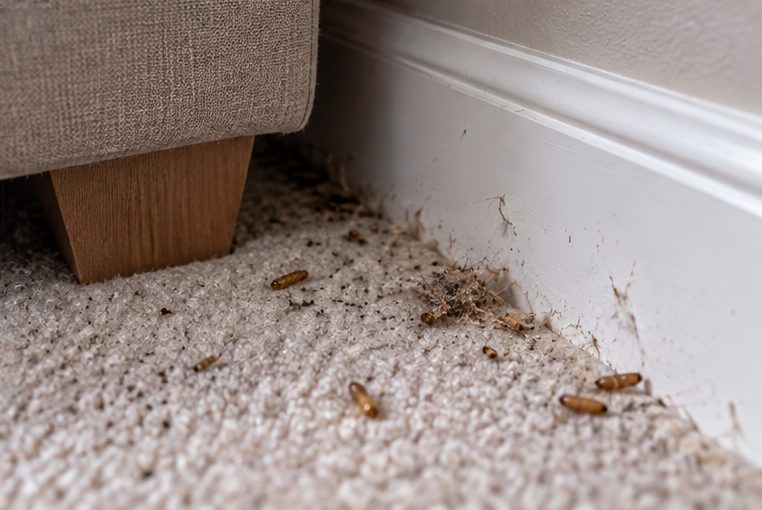
Larvae leave droppings, known as frass, as they feed. It looks like fine sand or grit and usually takes on the colour of the fibre that has been eaten, so a red rug produces red specks. A little of it collected where a rug meets the floor, or along a skirting board, is a strong hint that something has been feeding nearby.
Holes in knitwear and blankets
The same insects will feed on a wool jumper at the bottom of a drawer as readily as on a carpet. Small, scattered holes in stored woollens, especially around stains or the underarms, point to moths somewhere in the room. What is at risk beyond the floor is covered in carpet moth damage to clothes and furniture.
Something else that looks similar
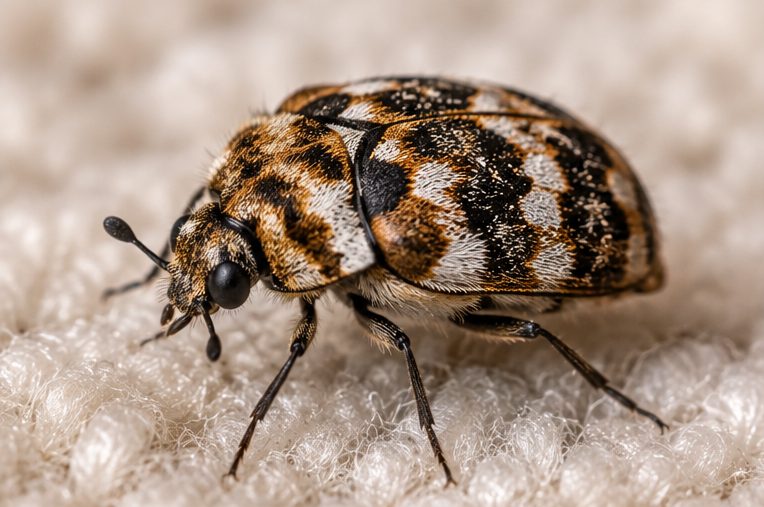
Carpet beetles cause very similar damage. Their larvae are bristly, banded and brown, and the adults are tiny rounded beetles often found on windowsills in spring. If that sounds closer to what you have, compare carpet beetles and carpet moths or see carpet beetle control. Moths in the kitchen near cereals and flour are pantry moths, which do not eat fabric.
Using a trap to confirm
A pheromone trap placed in the affected room can show whether adult moths are active. It attracts and holds males only, so it tells you something is there but will not end the problem. Treat a catch as confirmation, not as a solution. Checking the trap every couple of weeks, and trying one in each room you are unsure about, can help narrow down where the larvae are.
When the signs are most noticeable
Clothes moths can breed all year in a centrally heated home, but adults tend to be seen more from late spring into summer, when warmth speeds up their development. Damage can be discovered at any time: during a spring clean, when furniture is moved for decorating, or when winter clothes come out of storage in autumn.
What to do next
Note which rooms show signs and give them a thorough vacuum, including under furniture. Then book carpet moth treatment. Carpet moth control in Brent costs £180 for the first room and £60 for each additional room. Homes with fitted wool carpets and older rugs, like many of the larger period houses in Dollis Hill, are worth checking room by room.