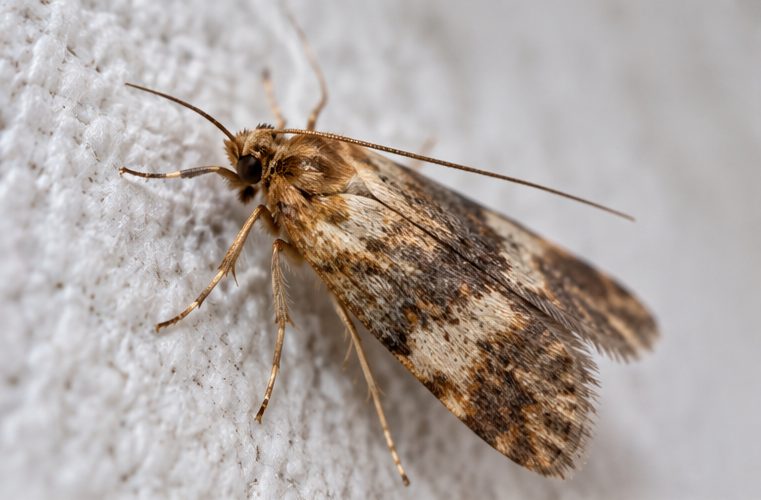
What moth damage looks like
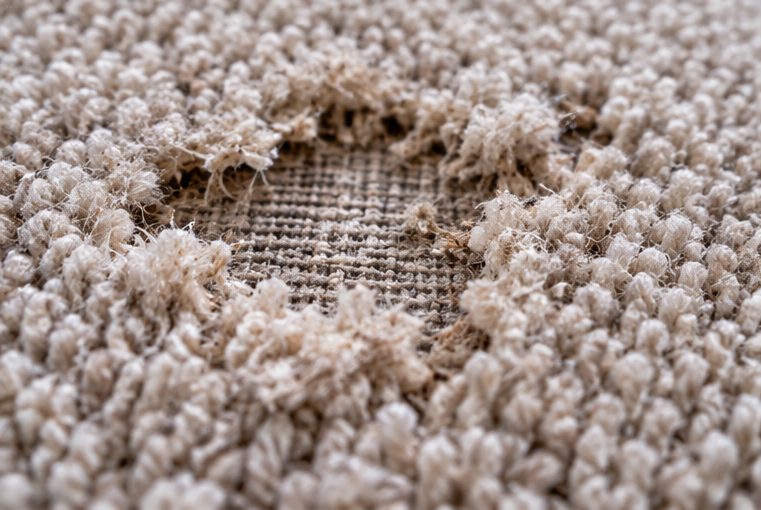
Moth larvae graze the pile rather than biting straight through. The result is an irregular, ragged patch where the tufts have been eaten down, sometimes to the woven backing, with a fuzzy edge where feeding is still going on. Running your palm across it lifts loose fibres. The patch tends to grow slowly outwards, not appear overnight.
The places the patches appear
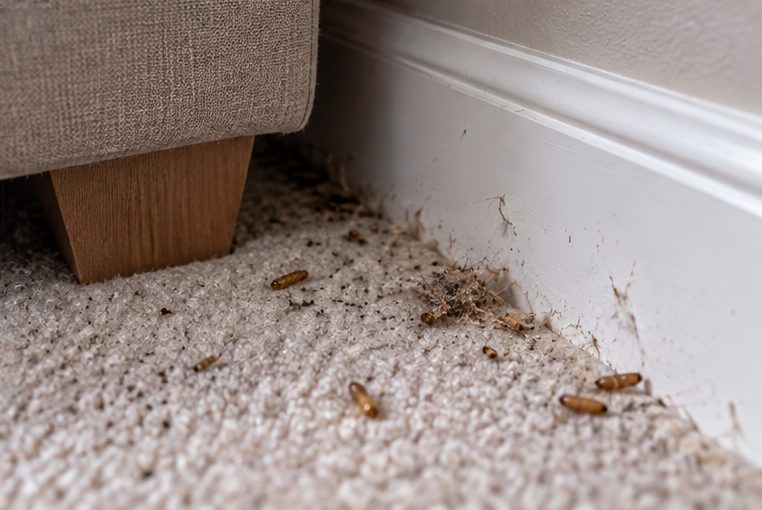
Damage from moths usually starts where the carpet is not walked on: at the edges of rooms, behind doors, inside built-in cupboards and under furniture. A hole in the middle of a walkway is less typical. The reasons larvae pick those spots are set out in why carpet moths are found under furniture.
Wool, blends and synthetic carpets
Larvae need keratin, the protein in animal fibres. Pure wool carpets and rugs are the most vulnerable. A wool-rich blend can still be damaged, because the larvae pick out the wool. Fully synthetic carpets are far less likely to be eaten, though fibres heavily soiled with hair or spilled food can be grazed where they sit alongside that debris.
Could it be carpet beetles?
Carpet beetle larvae eat the same fibres and can leave similar bare areas, often with more scattered, separate holes. The telling signs are bristly brown larvae and their shed skins, which look like tiny hollow husks. There is no silk. The damage carpet beetle larvae cause has more detail, and carpet beetle control is a separate service.
Holes that are not insects
- Wear in doorways and on stairs, where pile flattens and thins evenly along the walking line
- Pets scratching or chewing at the carpet by a closed door
- Deep dents and fraying where furniture feet or castors have rested
- Pale or weakened spots from bleach, spilled cleaning products or plant food
- Fringes and edges frayed by the beater bar of a vacuum cleaner
Wear tends to be even and follows the route people take through a room, whereas insect damage is patchy and sits where nobody walks. Pet damage is usually close to a door or a favourite spot, with pulled loops rather than grazed tufts. If you rent, take dated photographs of any patch so there is a clear record.
How to check a patch
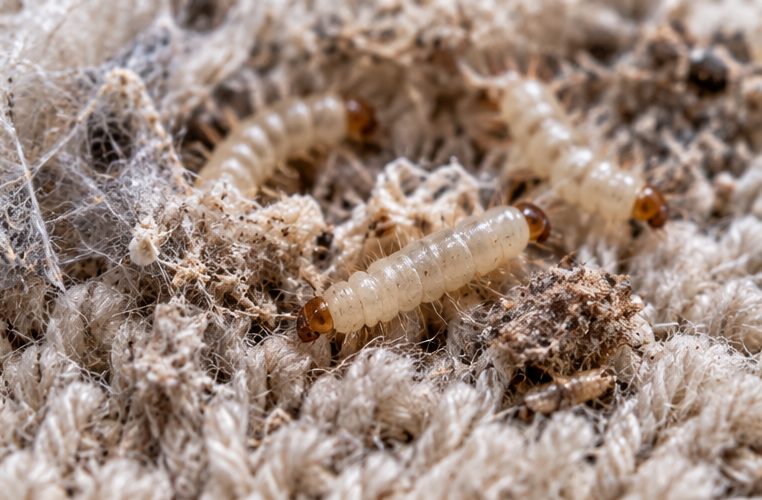
Use a torch held low across the carpet so the texture shows. Fold back the corner of any rug over the spot and look at the underside too. Part the fibres at the edge of the damage and look for small cream larvae, silk, cases or sandy frass. The full list is in the signs of carpet moths. If nothing living turns up and the edges look worn rather than eaten, wear is the likelier cause. A strip of clear tape pressed onto the pile and peeled away can lift small cases and frass for a closer look.
Rugs in older homes
Hand-knotted and antique wool rugs are especially attractive to larvae because they are dense, natural and often left in place for years. The larger period homes of Dollis Hill often have both fitted wool carpet and good rugs on top. Check the fringe and the knotted back of a rug as well, since larvae sometimes start there. A pest treatment deals with the insects; repairs to a valuable rug are a job for a specialist rug restorer.
Stopping the damage spreading
Once you are sure it is moths, the sooner the rooms are dealt with, the less pile is lost. Vacuum thoroughly now and book carpet moth treatment. Carpet moth control in Brent is £180 for the first room and £60 for each additional room.