Size and colour
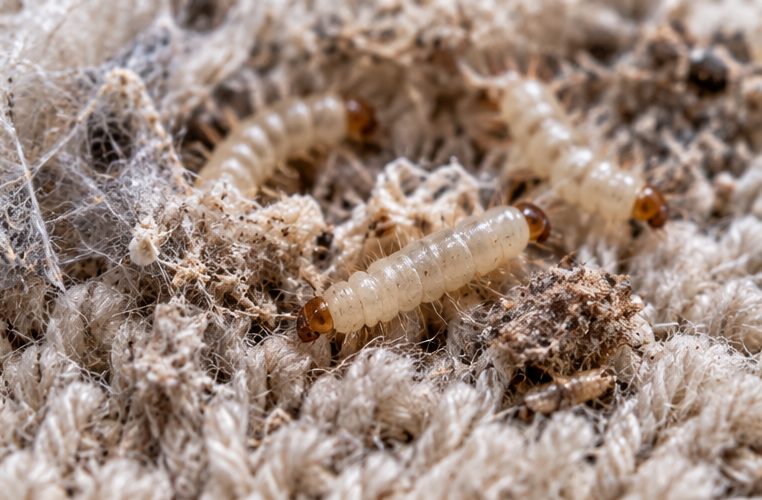
A fully grown larva is roughly a centimetre long, and many you find will be smaller. The body is soft, creamy white and slightly shiny, with a darker brown head at one end. It looks like a tiny caterpillar rather than a worm, and moves slowly. Against a cream wool carpet it can be almost invisible until it moves.
Exposed to light, a larva usually goes still or tries to crawl back under the pile or the edge of the rug. A magnifying glass, or the zoom on a phone camera, makes the brown head and the tiny legs near the front of the body much easier to see.
Two kinds of larva, two habits
Most moth damage in UK homes comes from two closely related clothes moths. The larva of the common clothes moth spins silk as it goes and lives in it. The larva of the case-bearing clothes moth builds a small portable case and stays inside, with only its head and front legs showing. The adults and their names are covered in carpet moths or clothes moths.
Silk tunnels and webbing
Webbing larvae leave a greyish silk that traps fibre, frass and dust. On a carpet it can form narrow tubes lying in the base of the pile or a thin mat under a rug. On clothes, it is often seen along seams or in folds. Pull a tube apart gently and there may be a larva inside, or only an empty channel if it has already moved on.
Cases on walls and ceilings
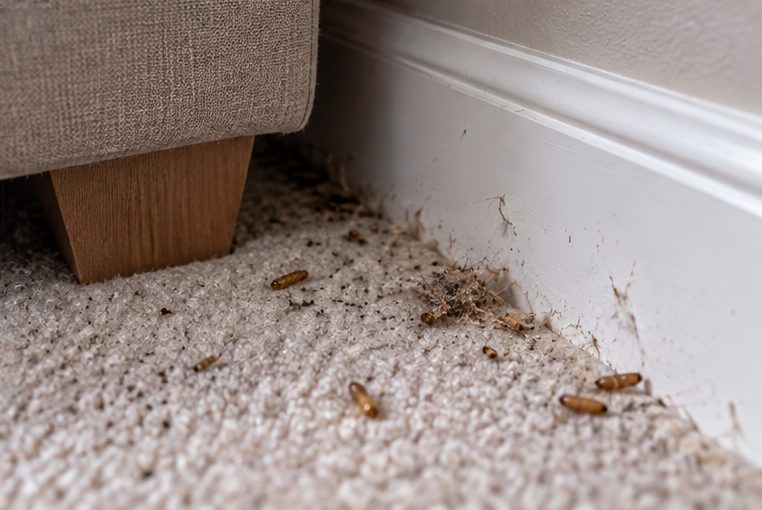
A case-bearing larva's case is a flattened, spindle-shaped tube a few millimetres long, made of silk and bits of the fabric it has eaten, so it matches the carpet or garment. When ready to pupate, these larvae often wander and fix the case to a wall, the underside of a shelf or even a ceiling. Small grain-like objects stuck high up in a bedroom are worth a closer look.
Eggs and pupae
Eggs are pale, about the size of a pinhead, and laid deep among fibres, so they are rarely seen. The pupal stage takes place inside a silk cocoon, often in the same hidden spot where the larva was feeding. An empty pupal skin left poking out suggests an adult has already emerged. Pupae are seldom found unless you are looking under furniture or inside folds of stored fabric.
Not to be confused with woolly bears
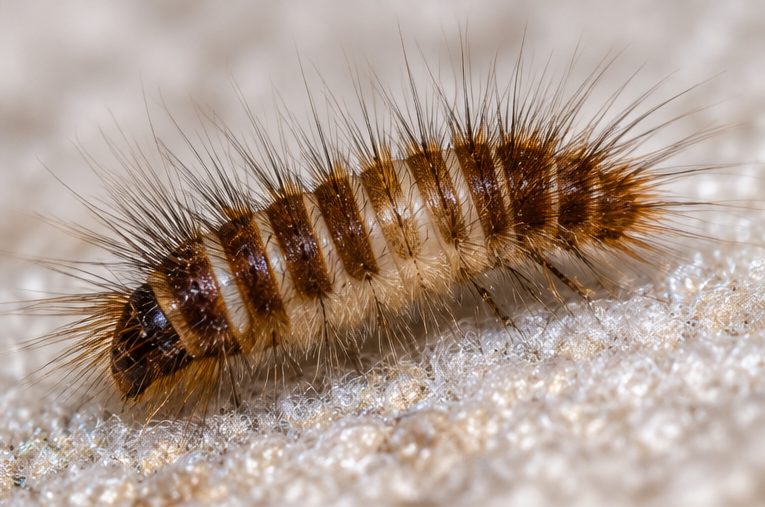
Carpet beetle larvae turn up in the same places and cause similar damage, but they look quite different. They are covered in stiff brown hairs, with darker bands across the body, and they shed their skins as they grow. If yours are hairy rather than smooth and cream, read what carpet beetle larvae look like.
Why the larvae matter more than the moths
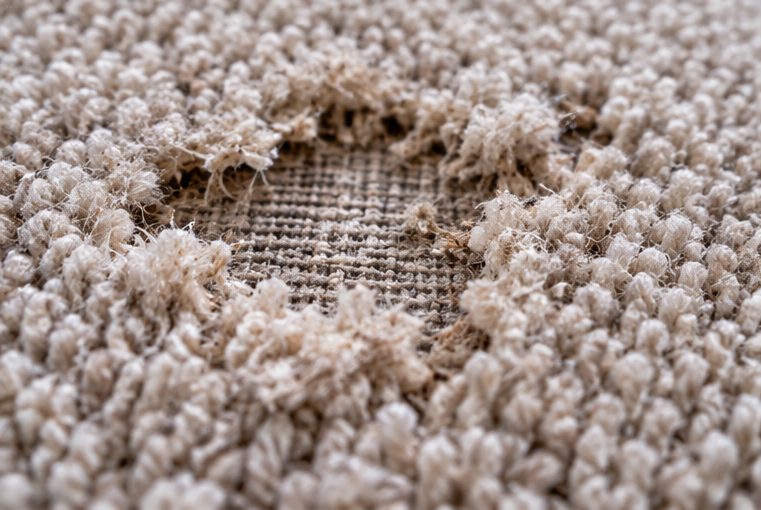
Adult clothes moths do not feed on fabric at all. Their job is to mate and lay eggs. Every bare patch and every hole comes from the larval stage, which can last for months in a warm home. That is why a room can be badly damaged even when hardly any moths have been seen. What that damage looks like is explained in why holes appear in carpet.
If you have found larvae
Avoid shaking an infested rug out indoors, which spreads eggs and larvae. Put affected clothing into sealed bags, vacuum the area and empty the vacuum outside, then follow how to prepare for treatment. Rooms with rugs and wool carpets, common in Dollis Hill period homes, often need several rooms looking at. Carpet moth treatment in Brent is £180 for the first room and £60 for each additional room, so two rooms would be £240. Book online when you are ready.