Undisturbed rooms are the risk
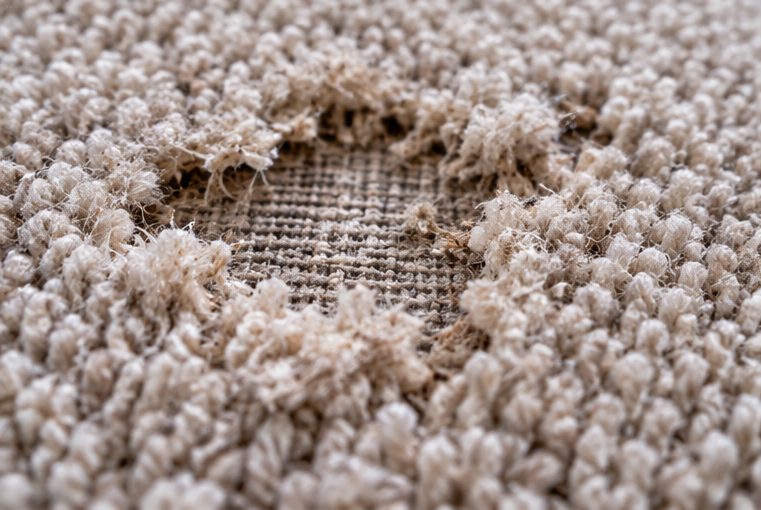
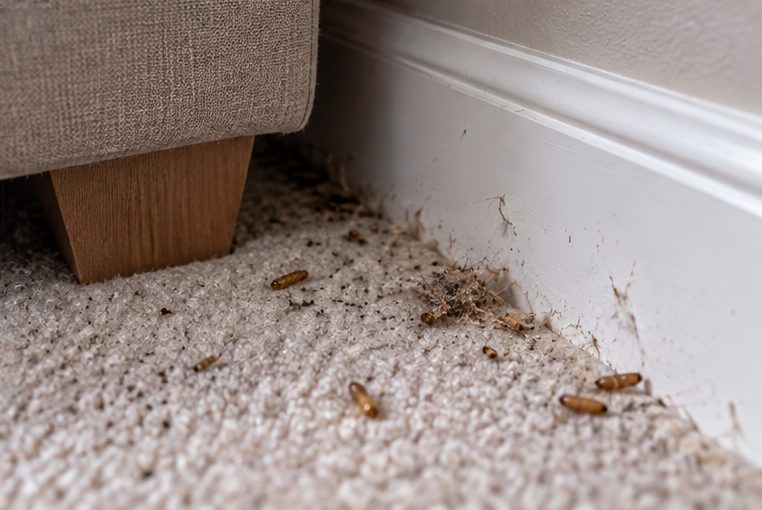
Carpet moth larvae feed on natural fibres - wool carpet, clothes, upholstery - and thrive wherever nothing moves for weeks. A rarely used spare room, the underside of furniture that never gets shifted, and the back of a wardrobe are the typical starting points.
Larger converted houses near Bethnal Green
Bigger Victorian houses around Bethnal Green that still hold original wool carpets, kept in rooms not used every day, give carpet moth larvae exactly the settled conditions they need. Splitting a house into flats doesn't remove this risk - it just means each flat's spare room needs checking separately.
What to look for
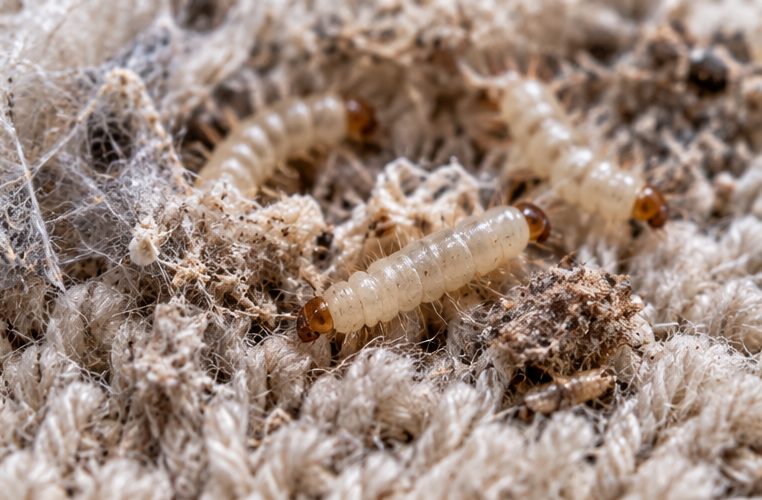
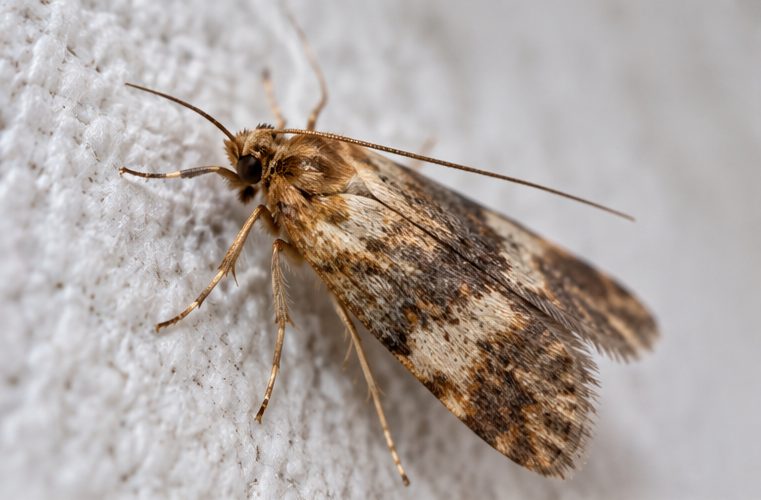
The usual signs are small pale larvae with a bristly fringe, silk webbing worked into the pile, and uneven bare patches near a skirting board or under furniture - the same pattern holds near Mile End, where terraced streets and student housing close to the park and the university. The adult moth is small, pale and reluctant to fly, so the damage is often noticed before the moth is.
What to do before treatment
- Vacuum thoroughly, including under furniture and along skirting boards, and empty the vacuum outside
- Have affected clothing dry-cleaned or washed hot rather than returned to a drawer
- Move stored boxes and furniture away from walls so edges can be reached
- Check stored blankets and upholstered furniture in the same room, not just the carpet
Booking carpet moth treatment in Tower Hamlets
Carpet moth treatment in Tower Hamlets is priced at £180 for the first room and £60 for each additional room, and given that around Bow, where victorian terraces close to the Roman Road and the canal, it is worth checking older rooms first before you book carpet moth treatment and tell us which rooms show damage, with the rest on the Tower Hamlets carpet moth treatment page.