Identifying the larva first
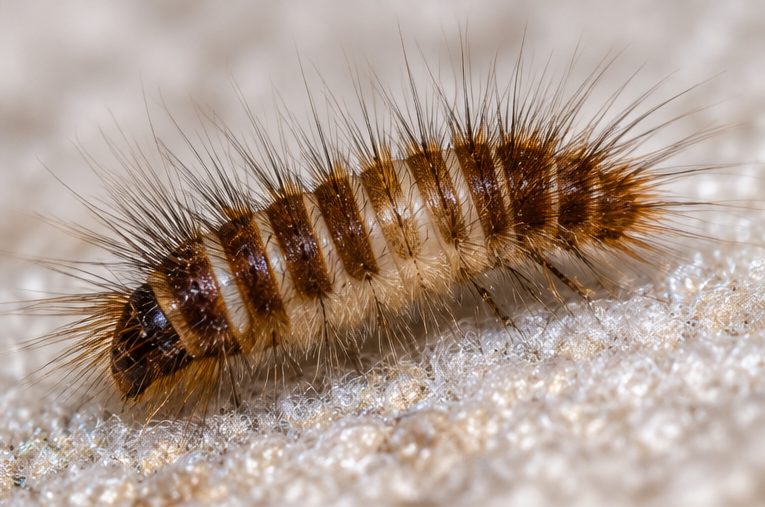
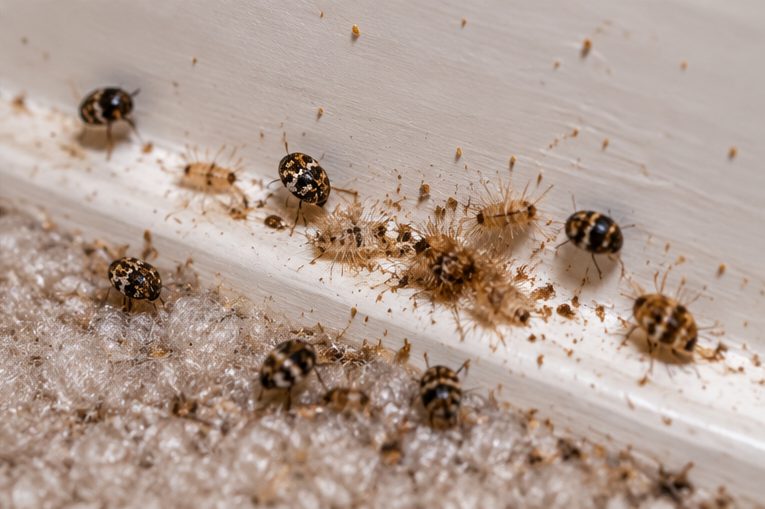
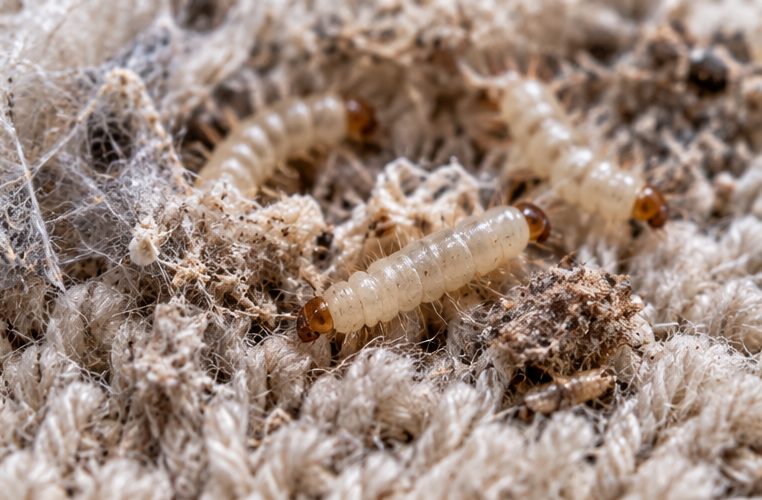
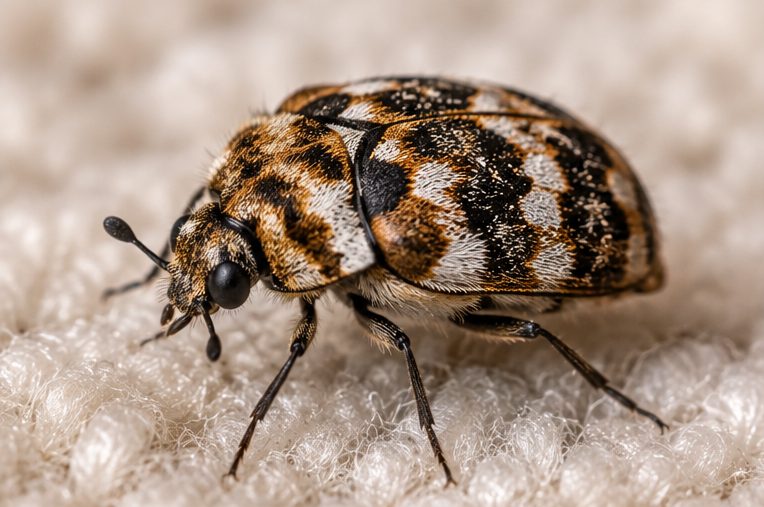
Picture a stubby, bristly grub that tapers at one end, like a miniature hairy carrot, and you have the carpet beetle larva; it stays largely put, unlike its carpet moth counterpart, just as near Putney, where riverside mansion blocks and Victorian terraces climbing up from the Thames. Fully grown, it's a tiny rounded beetle with a mottled pattern on its back, and it typically turns up on a windowsill looking for a way outside, just as near Balham, where dense Victorian terraces around the high road and the common.
Warehouse-to-flat conversions in Battersea
Converted warehouse flats around Battersea typically combine fitted carpet with stored soft furnishings in built-in cupboards close to original brick or timber features, both of which give carpet beetle larvae plenty to feed on once established.
Old nests near the roofline
In older terraces elsewhere in the borough, an inactive bird's or wasp's nest sitting in the eaves can be feeding carpet beetles that later move down into the rooms below once that food source runs out - worth having checked if damage keeps returning after the carpet's been cleaned.
What to do before treatment
- Vacuum thoroughly, including carpet edges, skirting boards and under furniture
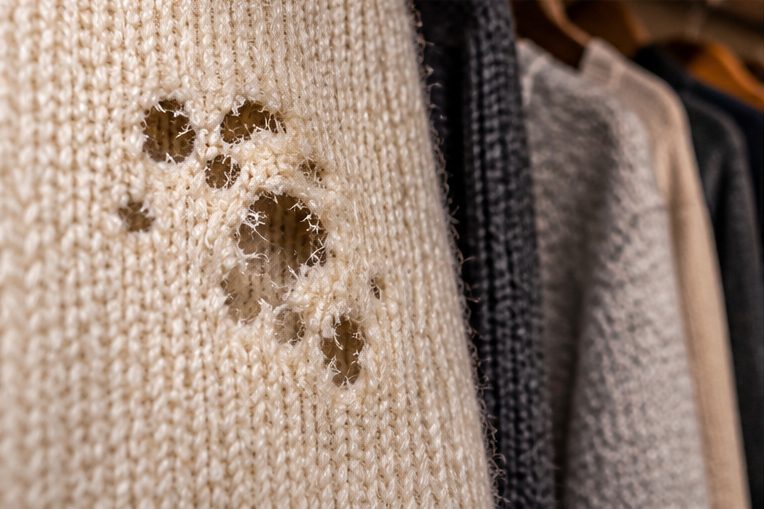
- Wash or dry-clean affected woollens and feather-filled items
- Remove dried flowers or accessible old nests and dispose of them
- Keep a note of which rooms and items are affected
Booking carpet beetle treatment in Wandsworth
Carpet beetle treatment in Wandsworth is priced at £180 for the first room and £60 for each additional room, and given that around Tooting, where terraced streets and estates close to the Broadway and Tooting Bec Common, it is worth checking older rooms first before you book carpet beetle treatment and tell us which rooms show damage, with the rest on the Wandsworth carpet beetle treatment page.