The quickest test: look for webbing
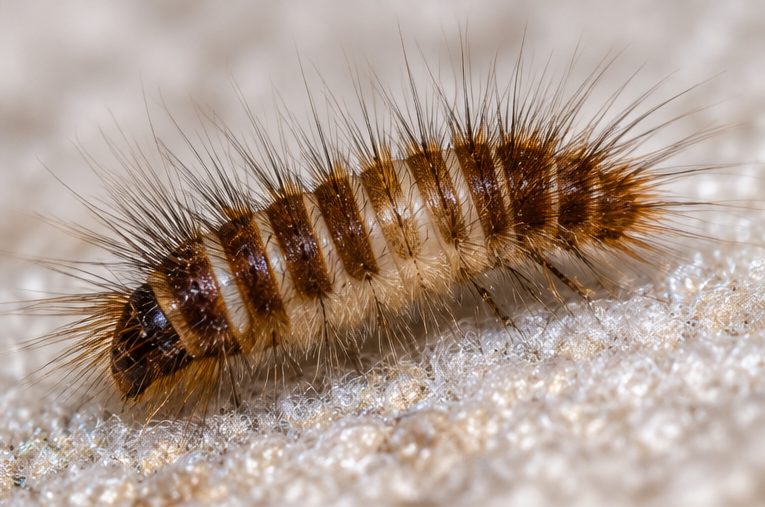
Moth larvae spin silk as they feed. On a damaged carpet or garment you may see fine webbing, silk tubes, or small cases stuck to the fibres, often with gritty droppings caught in them. Carpet beetle larvae spin no silk at all. Instead, the damaged spot tends to have cast skins lying around it: small, hollow, bristly husks.
Comparing the larvae
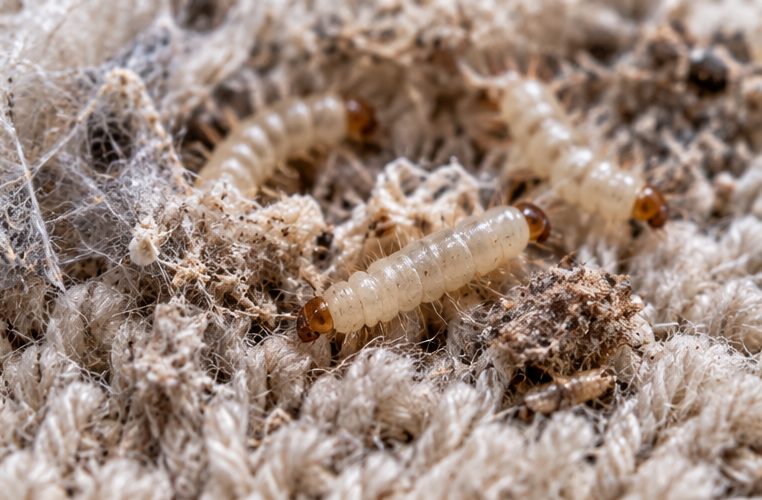
- Carpet beetle larva: brown, banded, covered in bristles, up to about 4–5mm, slow-moving
- Carpet moth larva: creamy white with a brown head, smooth-bodied, often in or under silk
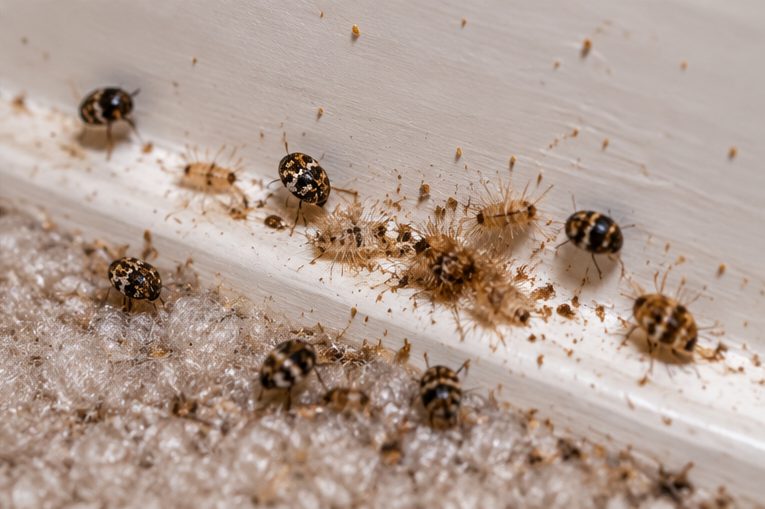
- Beetle larvae leave cast skins; moth larvae leave webbing, cases and droppings
More detail on each: what carpet beetle larvae look like and what carpet moth larvae look like.
Comparing the adults
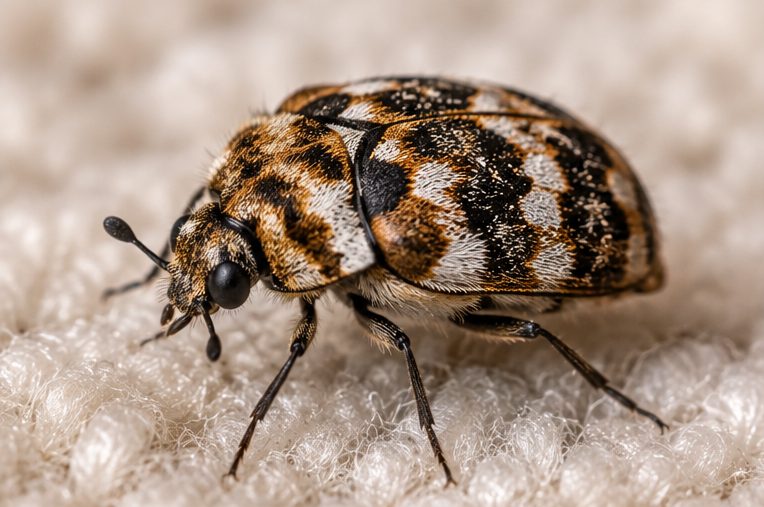
An adult carpet beetle is a tiny, rounded beetle with hard wing cases, mottled grey, brown and yellow. A carpet or clothes moth is slim, buff to golden or brownish, with narrow wings folded along the body, and it tends to run or flutter rather than fly strongly. You cannot mistake one for the other if you get a good look. Size helps too, since a household moth is noticeably longer than a carpet beetle.
Where each one turns up
Adult beetles head towards light, so they are found on windowsills, especially in spring and early summer. Adult moths tend to stay in dark places and are seen flitting out of wardrobes or from under furniture when disturbed. The larvae of both favour the same dark, quiet spots.
How the damage differs
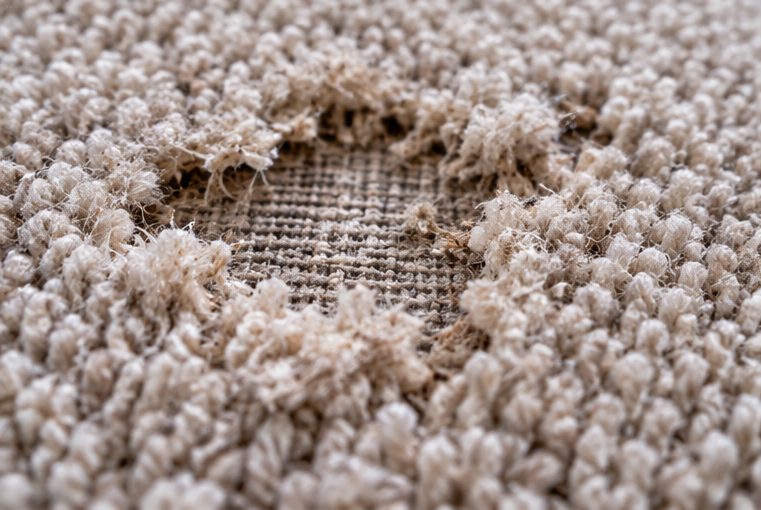
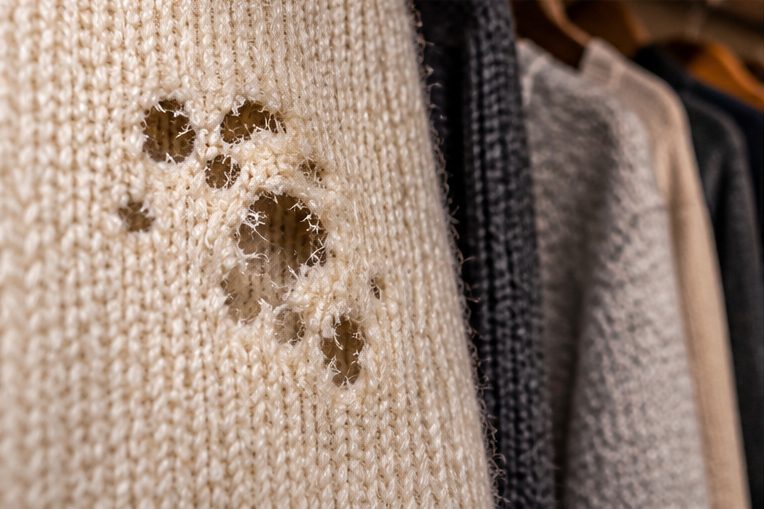
Moth damage often looks like grazing: the pile is eaten down in patches, sometimes to the backing, with silk and droppings in the area. Beetle damage is usually a set of irregular holes or thin, bald areas, cleaner-looking and with skins nearby. Both favour carpet edges and the ground under furniture, so location alone does not settle it.
Why it is worth knowing
The practical steps overlap a lot, but the sources can differ. Beetles often come in from birds' nests in the loft or on cut flowers, so the loft and windows deserve attention, and beetles at the glass give a spring warning that moths rarely do. Moths are more tied to stored textiles and undisturbed carpet. Knowing which you have points you to the right places to check and clean.
Having both at once
It happens, particularly in houses with lots of wool carpet and stored textiles. If you find webbing in one room and bristly skins in another, mention both when you get in touch. Neither one causes the other, but both are drawn to the same undisturbed wool, so a house that suits one often suits the other.
Checking with a sample
Lift a larva onto clear tape and look at it against white paper in daylight. Bristles and bands mean beetle; a smooth, pale body with a dark head means moth. An empty husk with hairs is a beetle skin, while a small silk tube or a flattened case, often coated in fibres from the carpet, belongs to a moth. The wider set of beetle clues is in how to know if you have carpet beetles.
Moths or clothes moths?
If what you have is definitely a moth, there is a further question of which kind, covered in carpet moths or clothes moths and on the carpet moth control in Brent page.
Booking either service
Both services are priced the same way: £180 for the first room and £60 for each additional room. If it is beetles, book carpet beetle control or read about carpet beetle control in Brent. Wool-heavy period houses in Dollis Hill can see either pest, so a photo of the larvae or the damage helps.