Size and shape
A fully grown larva of the varied carpet beetle is up to about 4–5mm long, around the length of a grain of rice but noticeably fatter. It is slightly wider towards the back end. Newly hatched larvae are far smaller and very hard to see without a torch and a close look. Tape one next to a ruler if you can; the size alone rules out many look-alikes.
Colour and banding
The body is brown, often with alternating darker and lighter bands running across it, which gives a striped look under magnification. The colour can range from a pale gingery brown to a deep chestnut.
Why they are called woolly bears
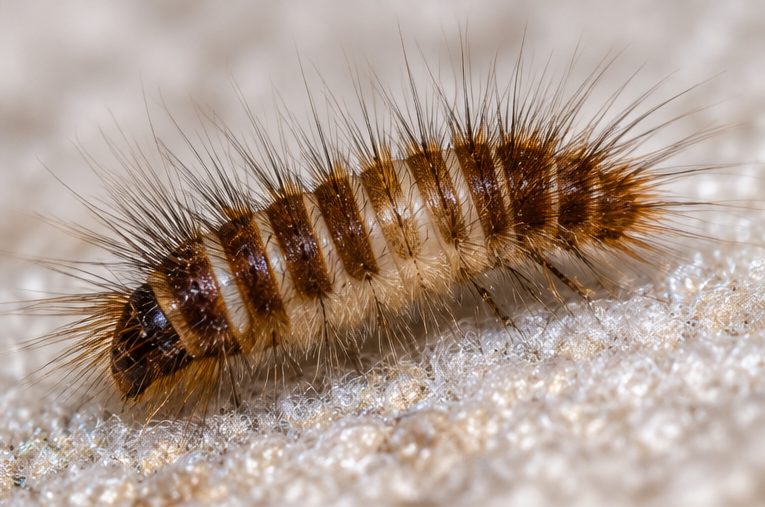
The whole body is covered in short bristles, and the hairs are thicker and longer at the rear, forming tufts. When a larva is disturbed, those tufts can be raised. The overall effect is a tiny, fuzzy caterpillar, which is where the nickname comes from. These hairs are also the reason some people get itchy skin after handling infested items, as explained in can carpet beetle larvae irritate your skin.
How they move
Woolly bears are slow. Uncover one under a rug and it will crawl away steadily from the light rather than dart off. They prefer dark, undisturbed places and spend most of their lives out of sight. They do not jump, fly or bite. What they do is wander: a larva looking for food or a place to pupate can turn up some distance from where it fed, on a wall, on bedding or crossing a hard floor.
The skins they leave behind
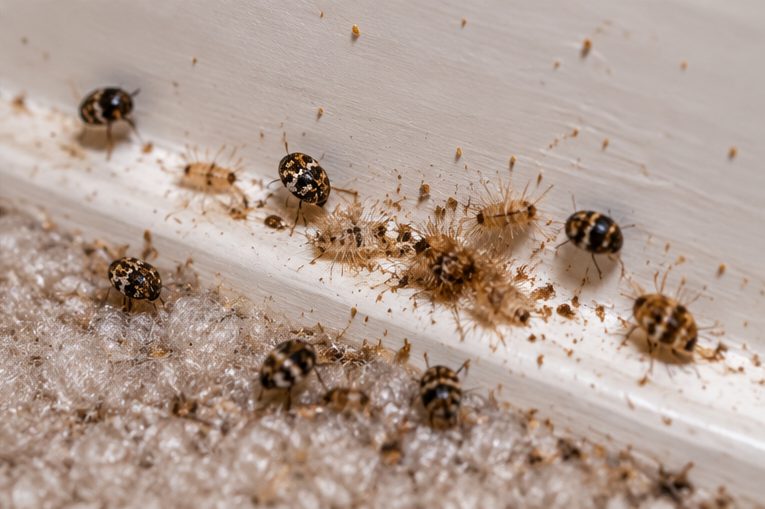
Each larva moults several times as it grows, and every moult leaves an empty skin that keeps the shape, bands and hairs of the larva. A cast skin is hollow, light and often split along the back. Because a single larva sheds a number of skins, and because they stay put for a long time, you can find a lot of skins but very few live larvae. Skins in a drawer still tell you larvae have been feeding nearby.
Other carpet beetle larvae
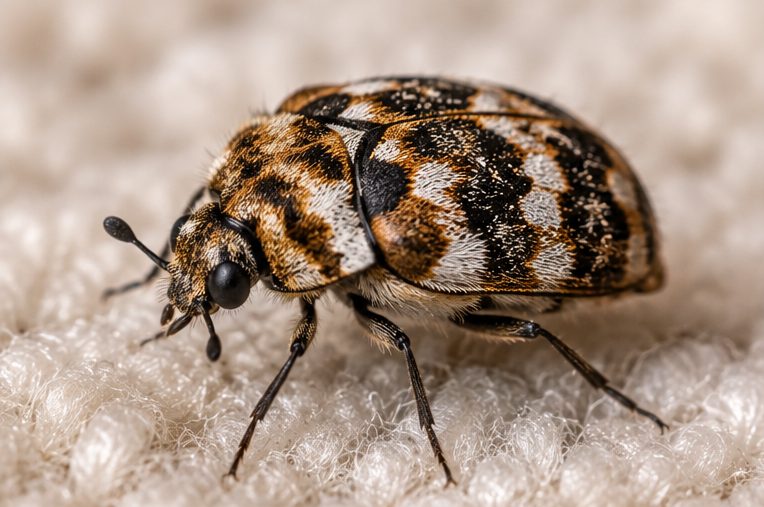
Not every carpet beetle larva is the varied carpet beetle. The fur beetle, whose adult is black with a small white spot on each wing case, has a longer, more tapered larva, golden to reddish brown, with a long tuft of hair at the tail. A few other related species turn up in UK homes too. The advice on what to do is the same for all of them.
Common look-alikes
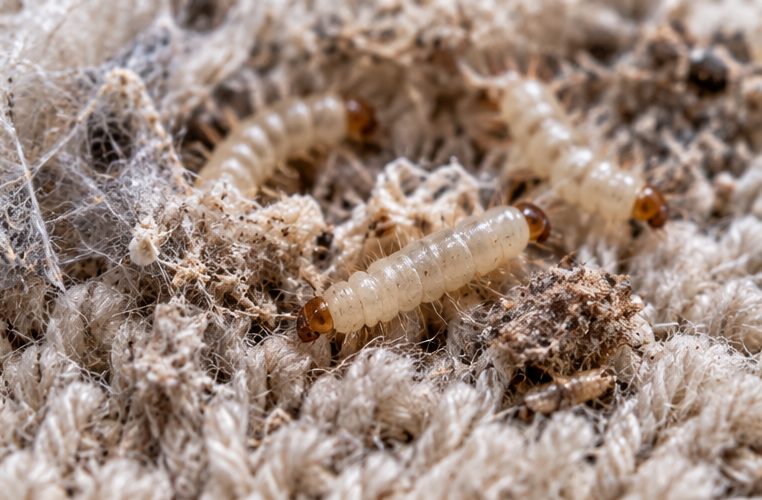
- Carpet moth larvae: creamy white with a darker head, smooth rather than hairy, often with silk webbing nearby
- Case-bearing moth larvae: live inside a small silk tube they drag around
- Fluff and grit: no segments, no bands and it does not move when you breathe on it
- Bed bug nymphs: flat, pale to reddish, no hairs, and found around beds rather than under rugs
If the larva you found is smooth and pale, compare it with what carpet moth larvae look like. For the two pests side by side, read carpet beetles vs carpet moths.
Where you are likely to spot them
Larvae turn up along carpet edges, in the fluff between floorboards and at the back of drawers holding wool. The full list is in where carpet beetles hide around the home. In houses with old timber floors, such as many in Willesden, the gaps between boards are worth checking closely.
Getting it confirmed and treated
Catch one on sticky tape or photograph it beside a coin, and send it with your enquiry. Carpet beetle control in Brent is priced at £180 for the first room and £60 for each additional room, and you can book online once you know which rooms are affected.