Why only the larvae cause damage
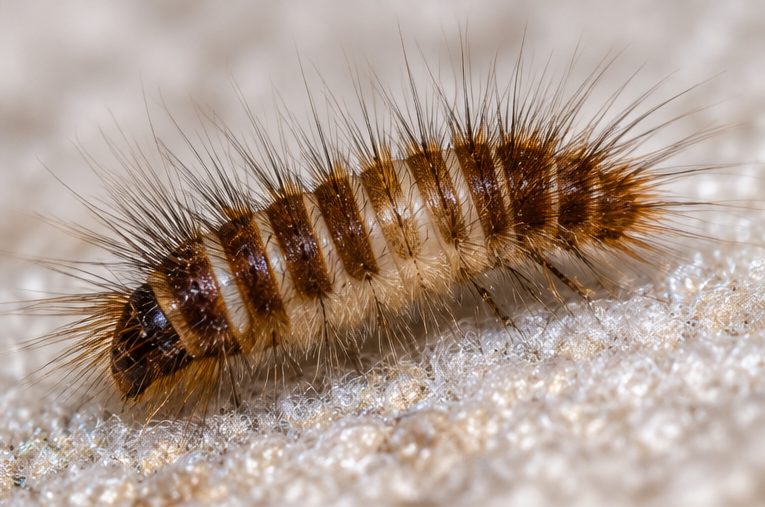
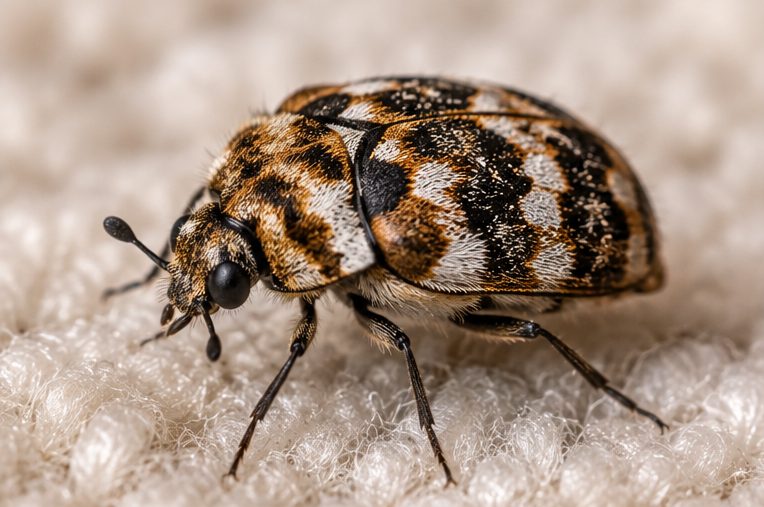
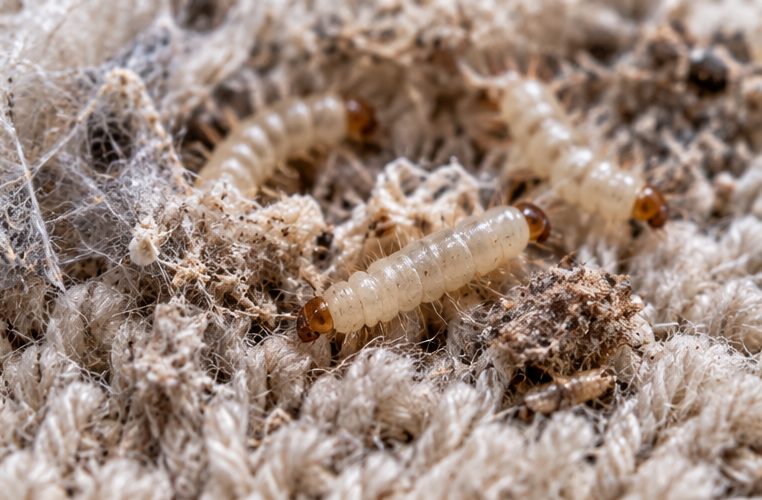
Adults live on pollen and nectar. It is the larvae that need keratin, the protein found in wool, fur, feathers, hair, silk and leather. They spend most of their lives feeding, so all the damage in a home comes from this stage. Beyond textiles, that can include natural-bristle brushes, stuffed animals kept as ornaments, and old collections of feathers or insects.
Materials at risk
- Wool and wool-mix carpets, runners and rugs
- Silk rugs and wall hangings
- Felt, such as underlay made from animal fibre and the felts inside pianos
- Feather and down pillows, duvets and cushions
- Fur, leather and sheepskin
- Stored blankets, curtains and textiles in lofts and cupboards
Pure synthetic fibres are not a food source, although mixed fabrics, and items stained with food or sweat, can still be chewed. Boxed items in the loft, such as old fur coats, wedding dresses and spare blankets, are especially exposed because nobody looks at them for years.
What the damage looks like
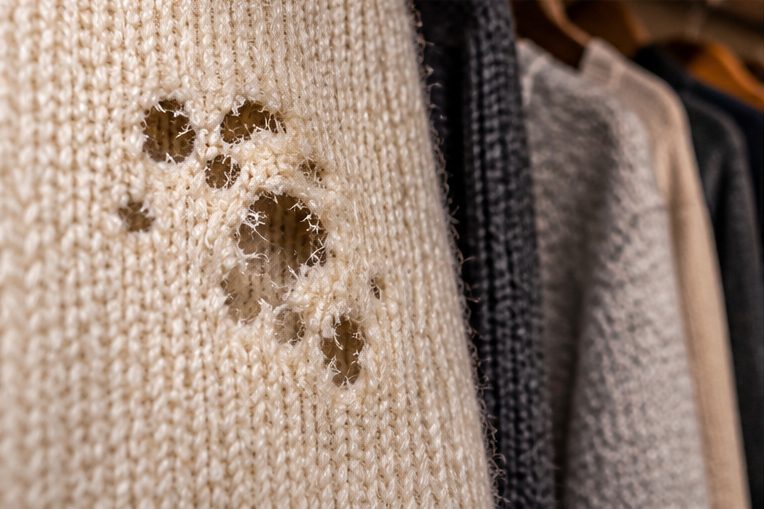
On a carpet or rug, look for thinning pile, bare patches where the backing shows, and loose tufts that come away when you brush them. On fabric, the holes are irregular in shape and scattered rather than in one neat line. Cast skins are often found nearby. There is no silky webbing, which is the quickest way to tell beetle damage from moth damage; the full comparison is in carpet beetles vs carpet moths, and moth damage to carpets is described in why holes appear in a carpet.
Why it starts at the edges
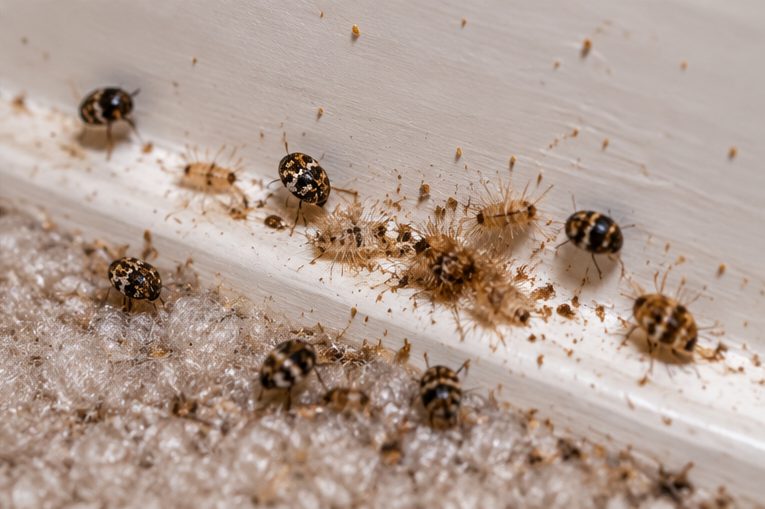
Larvae avoid light and traffic. The border of a fitted carpet against the skirting, the underside of a rug, and the area under a heavy piece of furniture are all dark and seldom disturbed, so damage tends to begin there and spread inwards. A room can look fine from the doorway while the edges are badly eaten.
How quickly damage builds
The life cycle can run from many months to a couple of years, and larvae feed for most of that time. That is why damage creeps up rather than appearing overnight, and why one season's small hole can be a bigger patch the next. How fast it spreads depends on how many larvae there are and how much undisturbed material they have.
Judging how far it has spread
- Pull furniture away from the wall and check the carpet beneath and behind it
- Fold back rugs and look at the underside, not just the top
- Check the edges of every room that has wool carpet, not only the one where you saw damage
- Open drawers, blanket boxes and loft storage holding natural fibres
Make a note of which rooms show damage or larvae. The count of rooms is what the price is based on, and the likely spots are listed in where carpet beetles hide around the home.
Clothes and soft furnishings
Damage to wardrobes, drawers and upholstered furniture follows the same rules but calls for different steps, so it has its own guide: can carpet beetles damage clothes and furniture.
Homes with a lot to lose
Wool carpets, old rugs and inherited textiles are where the damage is felt most, as in the larger period homes of Dollis Hill. Damage that is not repairable is worth photographing before anything is moved, in case you want a record of it.
Stopping the damage getting worse
Vacuum the edges thoroughly, including under furniture, and keep affected rugs separate from unaffected ones. Carpet beetle control in Brent is £180 for the first room and £60 for each additional room, so a living room and a bedroom together come to £240. Book carpet beetle control and tell us which rooms and items are affected.