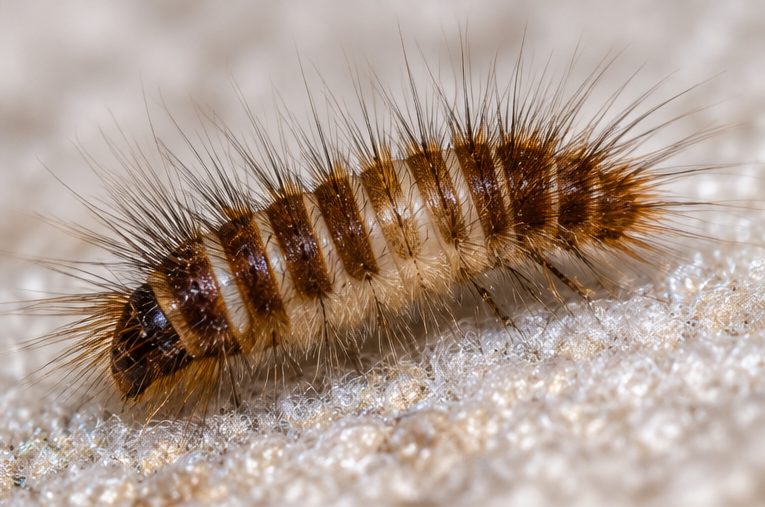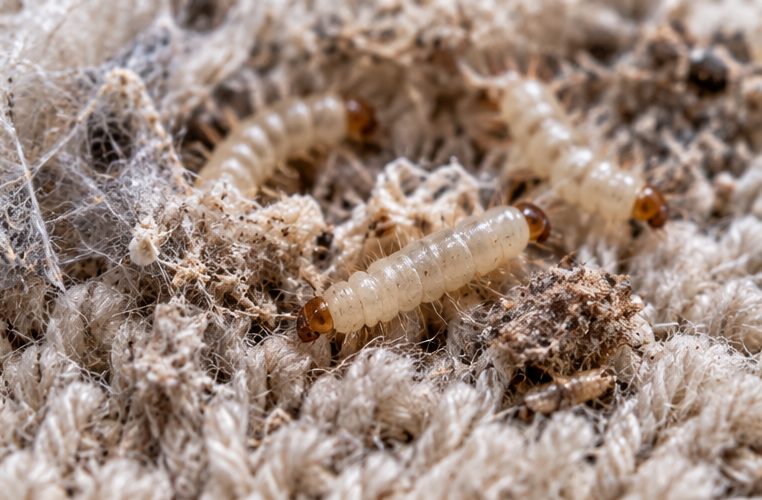
What makes a good hiding place
Larvae feed on wool, fur, feathers, silk and leather, but also on hair, dead insects and the fluff that builds up in corners. A spot that is dark, rarely cleaned and has a supply of that material can support larvae for many months without anyone noticing. Warmth speeds up their development, so heated rooms and cupboards suit them better than a cold shed.
The loft and the eaves
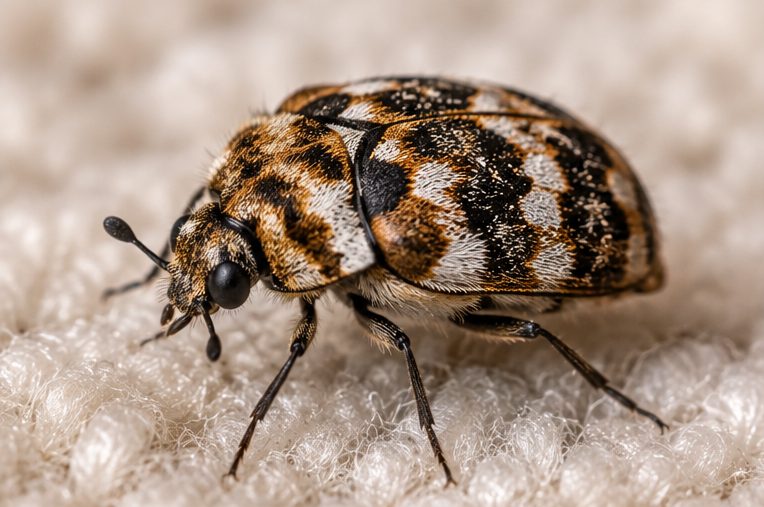
Old birds' nests in the roof space or tucked into the eaves are one of the most common sources. A nest holds feathers, droppings and dead insects, which suit the larvae well, and adults later work their way down into the house. Dead insects that gather in a roof space add to the food supply. Look also at stored boxes of old clothes, blankets or curtains up there. Lofts in the interwar houses of Kingsbury are a typical case, because birds can get in under the eaves.
Along the carpet edges
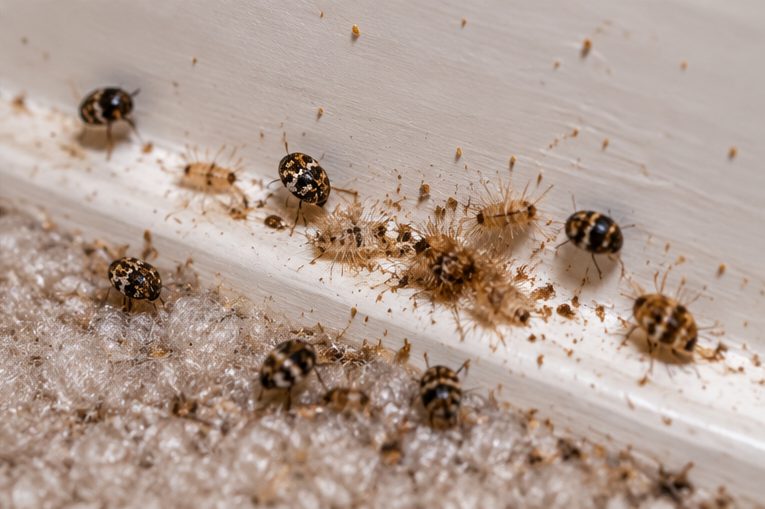
The strip of carpet next to the skirting board is rarely walked on and is often missed by the vacuum. Fluff and hair collect there, and larvae feed along it, which is why damage tends to start at the edges. Lift the corner where the gripper rod is if you can. Fitted carpet laid over old underlay can hide larvae between the two layers.
Under beds, sofas and heavy furniture
Anything that stays in one place for years shades the carpet beneath it. The area under a bed, a chest of drawers or a sofa that is never moved is an ideal feeding ground.
Between and under floorboards
Gaps between old boards fill with decades of dust, hair and fibres, and the void underneath can hold even more. Larvae live in that material and can move from room to room beneath the floor. Renovation work that lifts boards, as happens in many Queen’s Park houses, sometimes exposes it for the first time.
Wardrobes, drawers and storage
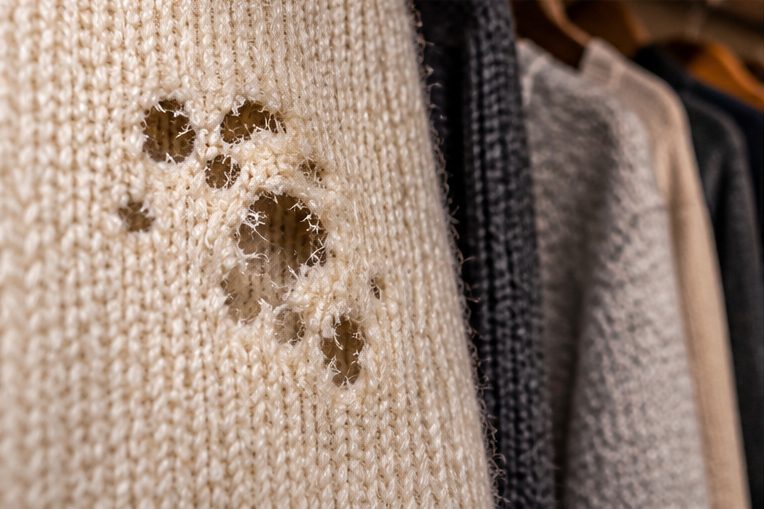
- The back and bottom of drawers holding woollen or silk clothing
- Clothes hung for a long time without being worn or cleaned
- Suitcases, vacuum bags that are not sealed, and boxes of stored textiles
- Blanket boxes and ottomans
The effect on the items themselves is covered in can carpet beetles damage clothes and furniture.
Airing cupboards and warm spots
Airing cupboards combine warmth, darkness and piles of spare blankets and towels. Fluff settles on the shelves and at the floor edges. Stacks of spare bedding that are rarely unfolded are worth shaking out and checking fold by fold. The space behind and under radiators and the backs of boilers can collect fluff in the same way.
Rooms that are used less
Spare bedrooms, box rooms and dining rooms that stay closed for weeks at a time are vacuumed less, walked on less and aired less. Larvae there can build up for a long time before anyone notices, so check them as carefully as the rooms you use every day, wardrobes included.
Less obvious places
- Light fittings and window frames where dead insects collect
- Pet bedding and places where pet hair builds up
- Upholstered furniture with natural fillings
- Rugs that are rolled up and stored
Moths favour some of the same places, so it helps to know which you have — see where carpet moths hide for comparison.
Using what you find
Note every place you find larvae or cast skins and which rooms they are in. The number of rooms decides the cost: carpet beetle control in Brent is £180 for the first room and £60 for each additional room, and halls and landings are not counted as rooms. Then book carpet beetle control and mention the loft if you think birds have nested there. For ways to make these spots less inviting afterwards, read how to prevent carpet beetles returning.