The clue people usually find first
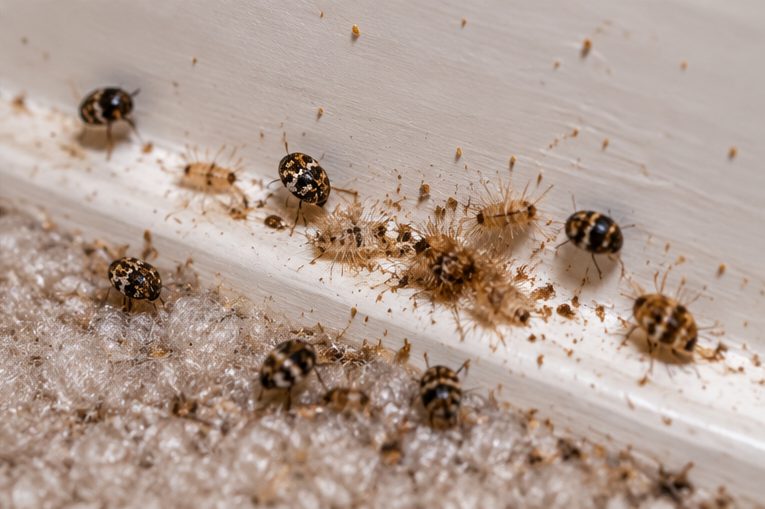
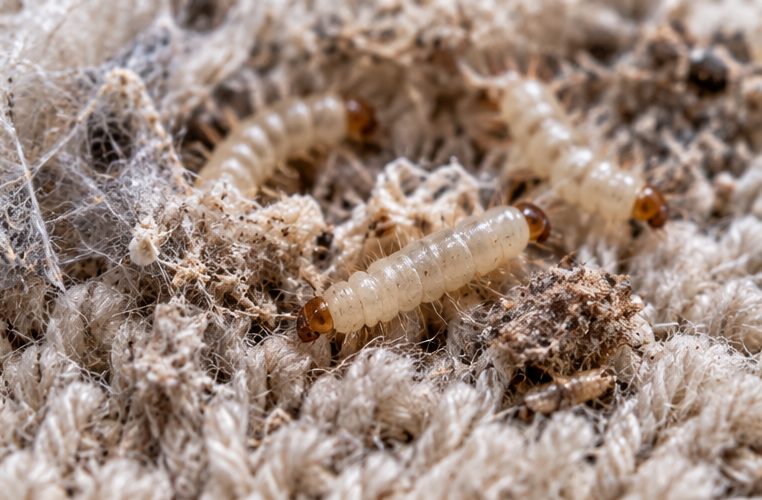
More often than not, it is not a living insect at all. It is a scattering of tiny, light brown, hollow husks in the bottom of a drawer, along a skirting board or under a rug. These are cast skins, left behind each time a larva grows and moults. They are dry and papery, and they often look like bits of dirt until you look closely and see the bands and bristles.
Tiny round beetles near the glass
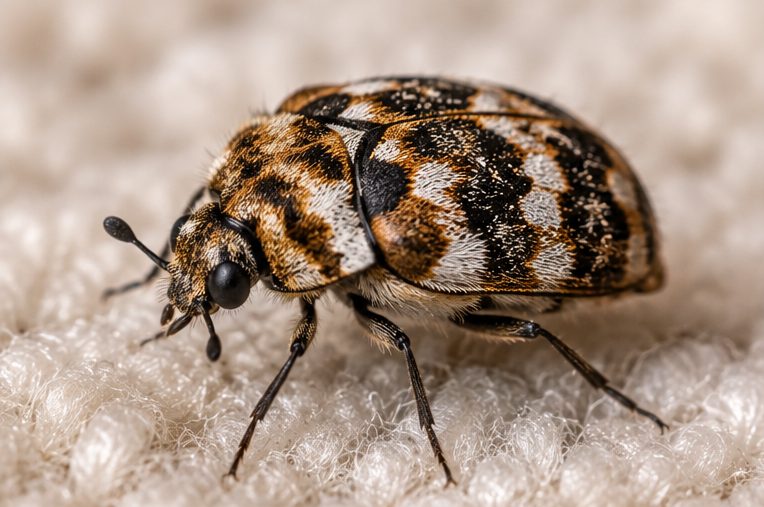
The adult varied carpet beetle is only about 2–4mm long, roughly round, and patterned in patches of grey, brown and pale yellow. From a distance it looks like a speck; up close it resembles a very small ladybird with a mottled coat. Finding several of them on the inside of a window in late spring is a strong hint that they have been breeding indoors. Why they gather there is explained in why carpet beetles appear on windowsills.
Slow, hairy larvae
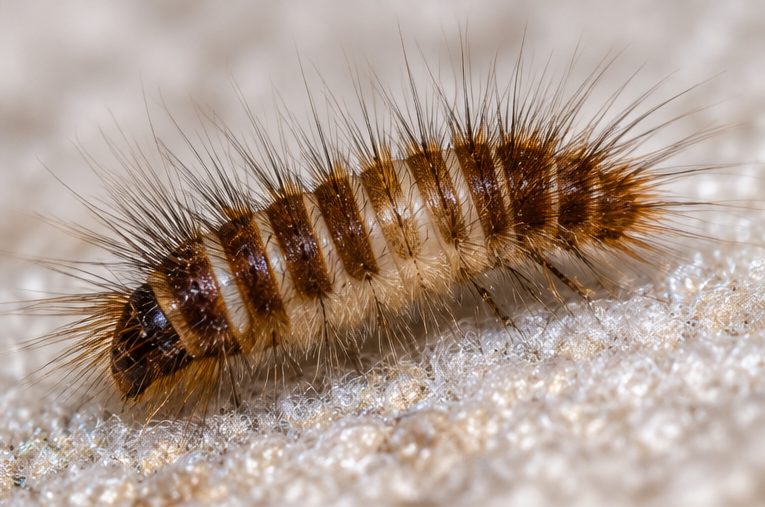
The larvae are the stage that does the damage. They are brown, bristly and banded, up to about 4–5mm long, and they move slowly when uncovered. Many people call them woolly bears. For a closer description and the look-alikes, see what carpet beetle larvae look like.
Holes and thin patches
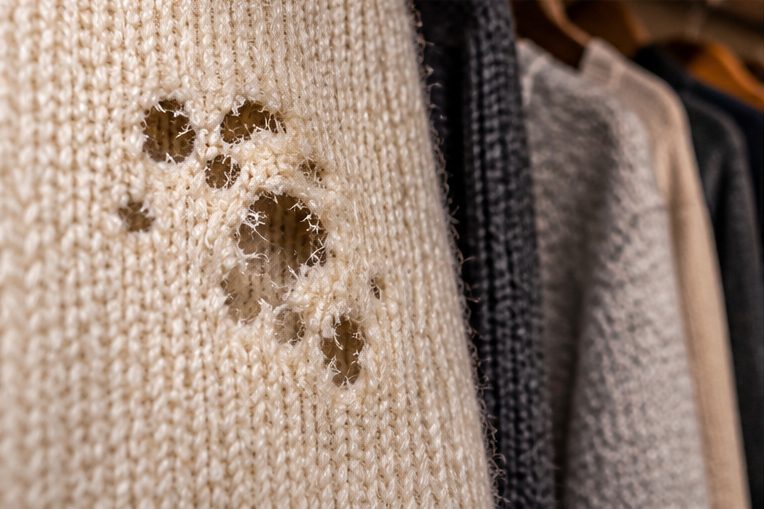
- Irregular holes in woollen jumpers, scarves or blankets that have been stored for a while
- Bald or thinning areas of carpet, most often along the edges and under furniture
- Damage to felt, feather cushions, fur trims or old rugs
- No silky webbing or tubes on the damaged area
That last point matters, because moths do leave webbing. The full comparison is in carpet beetles vs carpet moths.
A ten-minute check
Take a torch and a white sheet of paper. Pull back the edge of a rug, open the bottom drawer of a chest that holds wool, and run a finger along the gap between the carpet and the skirting in a quiet corner. Tap the fluff onto the paper. Cast skins, live larvae or tiny round beetles on white paper are much easier to see than on a patterned carpet. Do the same in the rooms either side and in the airing cupboard. A patch of skins in one drawer is a smaller problem than skins in every bedroom, and knowing which you have makes it easier to describe when you call.
Keeping a sample
If you find something, press a strip of clear sticky tape over it and stick it onto card, or drop it into a small sealed jar. A clear phone photo next to a coin for scale also helps. It makes identification far quicker when you get in touch, and it saves guessing between beetles, moths and other small household insects.
What does not point to carpet beetles
Small brown beetles in the kitchen cupboards, among flour or dried food, are more likely to be a stored-product beetle. Itchy bumps on their own are not proof of anything, as several pests and plenty of non-pest causes produce them; carpet beetles and skin irritation covers that question.
Homes where it is worth looking harder
Houses with lots of wool carpet, rugs and natural fabrics give the larvae plenty to feed on, which is why larger period homes in Dollis Hill are a good example. Houses with birds nesting under the eaves are another, since old nests can be a source.
What to do next
Vacuum the areas where you found evidence, empty the vacuum outside, and keep the affected items separate. Then book carpet beetle control in Brent: it costs £180 for the first room and £60 for each additional room. Tell us which rooms are involved and what you found, and if you are not sure it is carpet beetles, send the photo first.