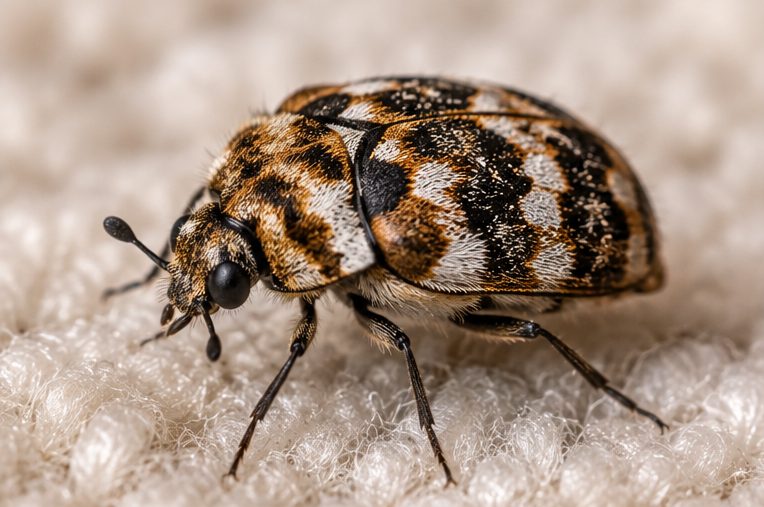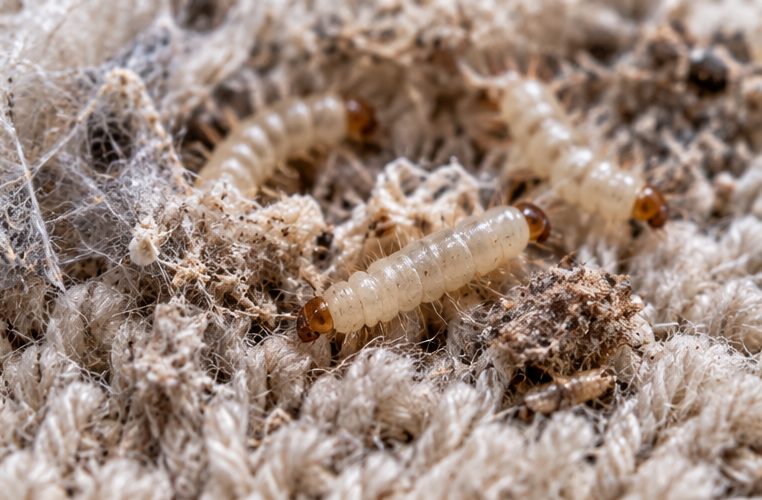
Clothes most at risk
- Wool jumpers, cardigans, coats and suits
- Cashmere and other fine animal fibres
- Silk ties, scarves and dresses
- Fur, leather and items with feather trims
- Hats, gloves and anything stored away for the season
Clothes worn and washed regularly are much less likely to be damaged than ones folded away for months. Stains from sweat or food make any fabric more attractive, including blends. A school jumper left in a bag over the summer holidays is a typical example.
What the holes look like
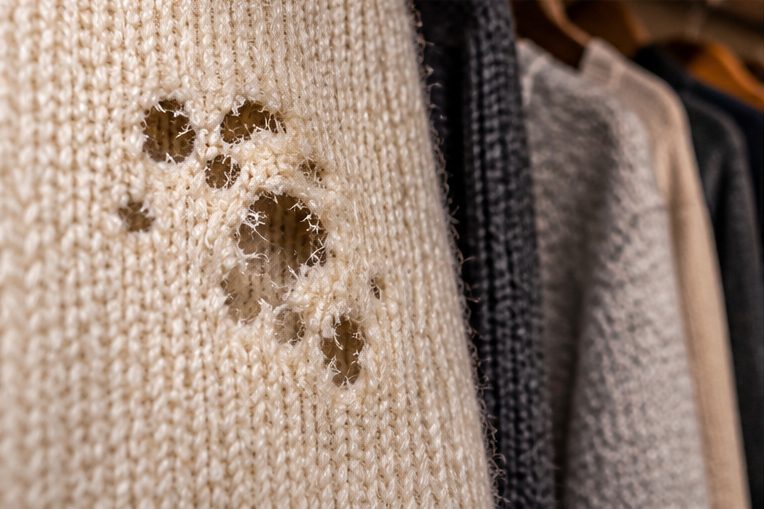
Look for scattered, irregular holes, often on folds, seams and parts of a garment that touched the bottom of a drawer. There is no webbing. Cast skins in the folds are a clear sign that beetles, not moths, are responsible. If you find silk webbing instead, read carpet beetles vs carpet moths and look at carpet moth control in Brent.
Wardrobes and drawers
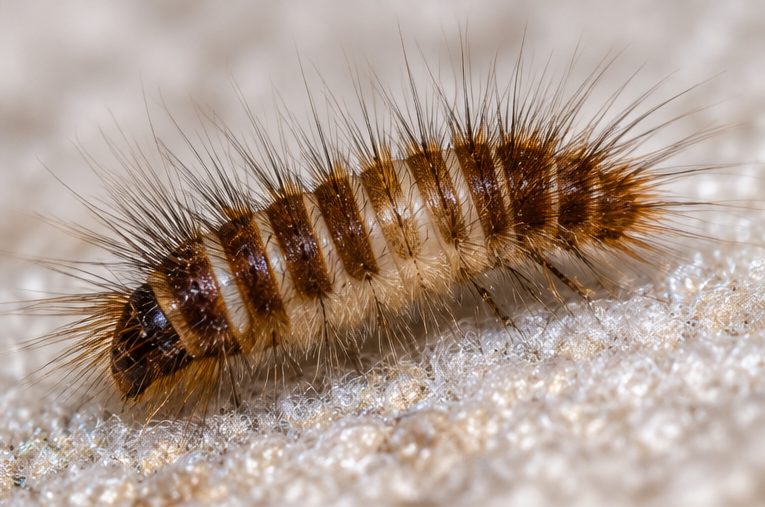
Larvae favour the back corners and floor of a wardrobe, where fluff gathers, and the bottom drawer of a chest, where wool is often kept. Drawer liners and lining paper trap fluff and skins, so lift them out when you check. A wardrobe on a carpet can draw larvae up from the edges of the room. Other household hiding places are in where carpet beetles hide around the home.
Upholstered furniture
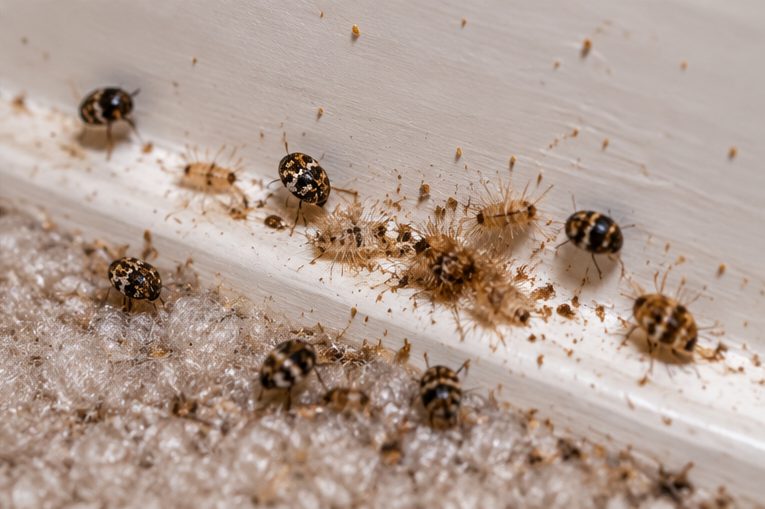
Sofas and armchairs covered in wool fabric, or stuffed with horsehair, feathers or down, can be fed on from underneath or inside. The fabric on the base and the area under seat cushions is where to look. Antique chairs and old ottomans are often more at risk than modern foam-filled furniture. Turn a chair over if you can, and shine a torch into the gap under the base fabric.
Leather, fur and feathers
Leather shoes, belts and bags kept in a dark cupboard, fur-trimmed hoods and old fur coats, and feather-filled pillows and duvets all contain the protein larvae feed on. Check along stitching and inside linings, and look for skins in the corners of pillowcases and duvet covers. Down-filled items that leak feathers from small holes deserve a closer look.
Sorting affected items
Take everything out of the affected wardrobe or drawer and sort it on a hard floor or a sheet. Separate items with holes, larvae or skins from those that look clean, and bag the affected ones before carrying them through the house so larvae do not drop along the way. Working through one room at a time keeps material from being spread across the house.
Cleaning what you keep
- Wash at the highest temperature the care label allows
- Send items that cannot be washed for dry cleaning
- Brush coats and suits outdoors and inspect the seams
- Vacuum the empty wardrobe or drawer, including corners and runners, then empty the vacuum outside
- Store cleaned items in sealed bags or boxes until the problem has been dealt with
Items that cannot be saved
Badly holed clothing and heavily infested cushions may not be worth keeping. Seal them in a bag before disposal. Valuable or sentimental textiles may be repairable by a specialist restorer once the larvae are gone.
Moving home or second-hand furniture
Larvae can travel in boxes of stored clothes, rugs and old upholstered furniture. If you are moving, as many people in Cricklewood are, check and clean textiles before they go into the new home. The same applies to second-hand items. Moth larvae cause similar problems, covered in can carpet moths damage clothes and furniture.
Getting the room treated
Cleaning the clothes does not deal with larvae in the carpet, the floorboards or the loft. Carpet beetle control in Brent costs £180 for the first room and £60 for each additional room. Book carpet beetle control, and see how to prevent carpet beetles returning for storage habits that help.