Adults do not eat your carpet
An adult carpet beetle feeds on pollen and nectar, not wool. Once it emerges from its pupa, its job is to find flowers, feed, mate and lay eggs. Flowers are outside, so the beetle heads for daylight, and in a house the brightest place is the window. On a warm day they are capable fliers, which surprises people who expect a carpet pest to crawl.
Why spring and early summer
Larvae spend the colder months feeding and growing out of sight. As the weather warms, many finish developing and turn into adults, usually from around April into early summer. That is why the windowsill sightings are seasonal. A handful in May and none in November is the normal pattern, and a warm spell can bring a burst of them within a few days.
What they look like on the sill
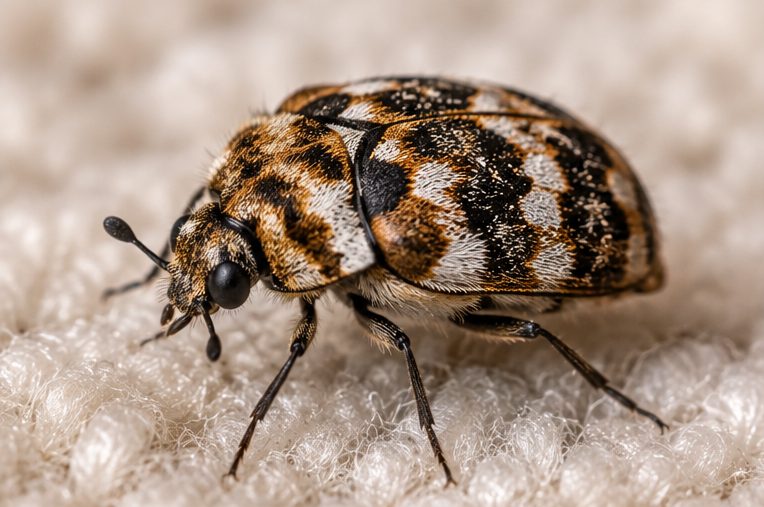
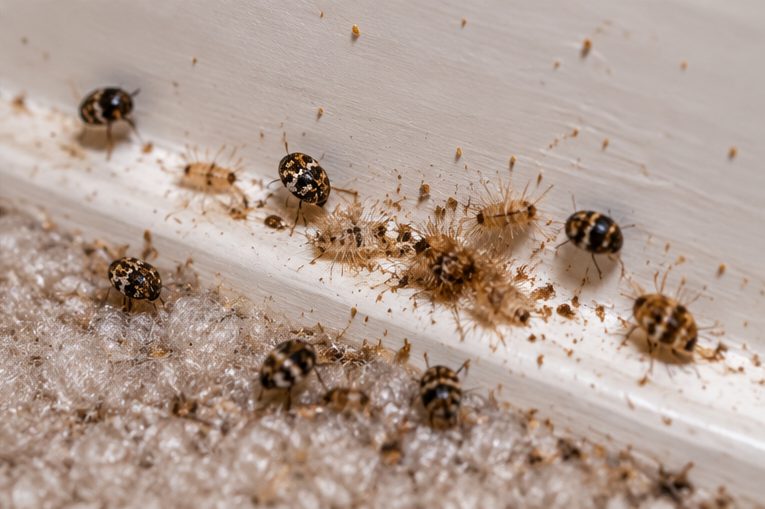
Look for tiny, rounded beetles, about 2–4mm long, with a patchwork of grey, brown and yellowish scales. They walk along the frame, climb the glass and drop onto the sill. Dead ones collect in the corners of the frame and in the tracks of sliding windows.
Where they came from
- Larvae that developed inside the house, in carpets, drawers or floorboard gaps
- Old birds' nests in the loft or the eaves, with adults working their way down
- Open windows, since adults fly in on warm days
- Cut flowers brought in from the garden or a shop, with adults already on the blooms
The first two mean breeding has been going on indoors. The last two may be a one-off visitor. The indoor sites are mapped out in where carpet beetles hide around the home.
A few beetles or a sign of larvae?
A single beetle on a sill after a day with the windows open is not much to worry about. Several a day, over several weeks, at windows that have been kept shut, point to an indoor source. So does finding them in more than one room, or finding cast skins as well. The fuller checklist is in how to know if you have carpet beetles.
The eggs they leave behind
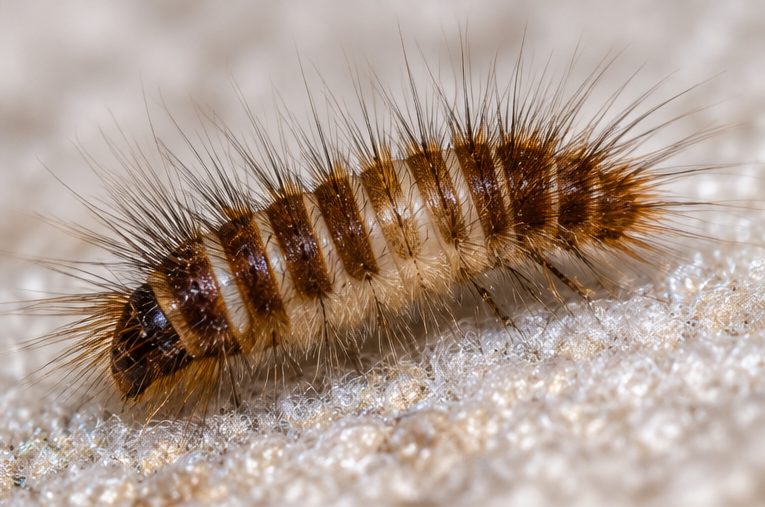
Before a female gets out, she may lay eggs indoors in a dark spot near suitable food. Those eggs hatch into larvae that feed for many months, so this year's sill beetles can lead to next year's damage. That is the reason to act on them rather than simply sweep them away each spring.
What to do with them
Vacuum the beetles from the sill and frame, and wipe the corners. Empty the vacuum outside or seal the bag. Check the flowers in any vase near the window. Then look at the rooms nearby for larvae, especially along carpet edges and in drawers of wool. Clearing the adults you can see does not reach larvae that are still feeding elsewhere, so treat the sill as a clue rather than the whole problem.
Are the adults harmful?
Not directly. Adult carpet beetles do not bite or sting, and they do not eat fabric. The concern is what they represent: a generation of larvae that fed somewhere in the house, and possibly another on the way. It is the larvae that some people react to, as covered in can carpet beetle larvae irritate your skin.
Houses where the loft is a likely source
If beetles are appearing mostly at upstairs windows and the loft has had birds nesting in it, the eaves are the first place to suspect. The interwar houses of Preston and Kenton often have eaves where birds can get in.
Getting it looked at
If the sill beetles keep coming, book a visit and tell us which windows and rooms are affected. Carpet beetle control in Brent costs £180 for the first room and £60 for each additional room.