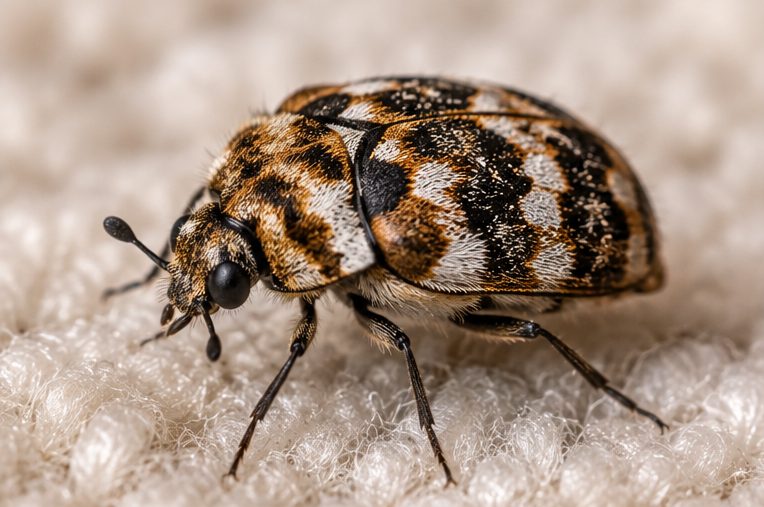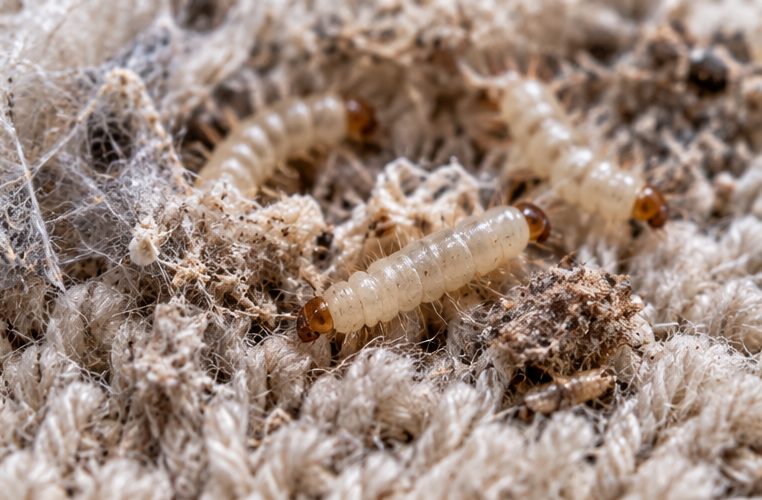
Not a bite
Neither adult carpet beetles nor their larvae feed on people or blood. They have no interest in you at all, and they do not burrow into skin or live on the body. Any skin reaction comes from contact with the larvae or their shed skins, not from being bitten.
Where the irritation comes from
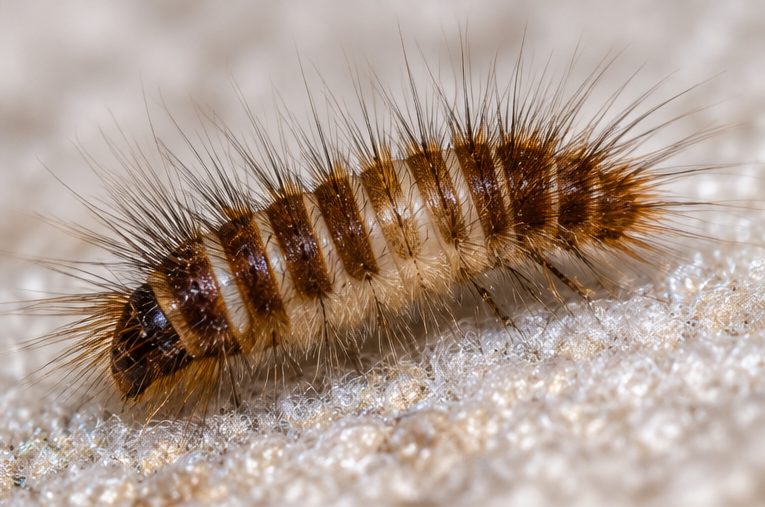
Woolly bear larvae are covered in very small bristles, and some of those hairs come loose. Cast skins carry them too. In some people, skin that touches these hairs reacts, which is sometimes called carpet beetle dermatitis. Many people have no reaction at all. It is the larvae and their skins, rather than the adults, that are usually linked with it.
What people notice
Reports describe itchy red bumps, weals or a rash, often on skin that has been in contact with bedding, clothing or furniture where larvae are living. It can appear on the arms, neck, legs or body. Because it looks like a cluster of bites, people often assume they have bed bugs or fleas first.
Speak to a pharmacist or GP
If you have a rash or itchy skin, a pharmacist can advise, and you should see your GP if it does not settle, spreads or worries you. Call 999 if someone has signs of a severe allergic reaction, such as difficulty breathing, or swelling of the lips, tongue or throat. We deal with pests, and we cannot tell you what is causing a skin problem.
Reducing contact at home
- Wash bedding, throws and cushion covers at the highest temperature the care labels allow
- Vacuum mattress edges, the bed base and the carpet under the bed
- Check wool blankets, feather pillows and duvets for larvae or skins
- Wear gloves when sorting through infested drawers or stored textiles
- Empty the vacuum outside and wash your hands afterwards
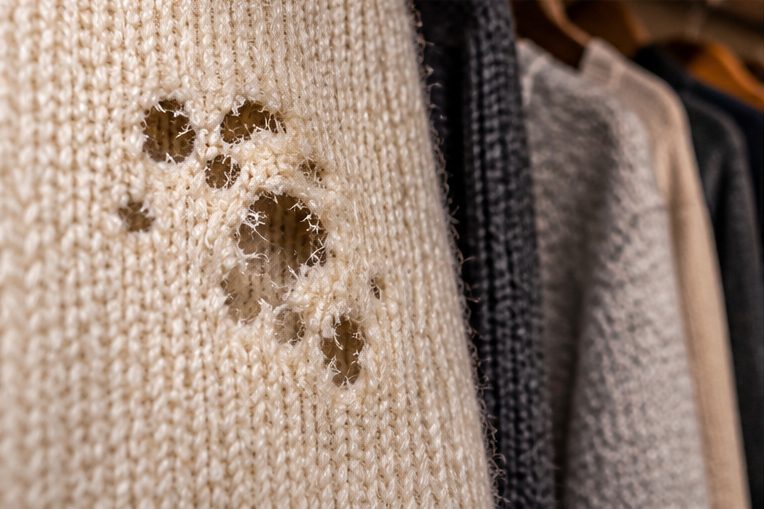
Clothes taken from an affected drawer are best washed before they are worn.
Why the cause can be hard to pin down
The hairs are far too small to see, a reaction may not show straight away, and the larvae are often in a different place from where the skin was exposed, such as a jumper taken from an infested drawer in another room. That is why evidence in the home tells you more than the pattern of the rash.
Other causes of itchy bumps
Bed bugs and fleas do bite, and there are many causes of itchy skin that have nothing to do with pests. Look for evidence rather than judging by the rash. For bites around the bed, see the first signs of bed bugs; for bites on the ankles, especially with pets in the house, see how to know if you have fleas.
Finding the larvae
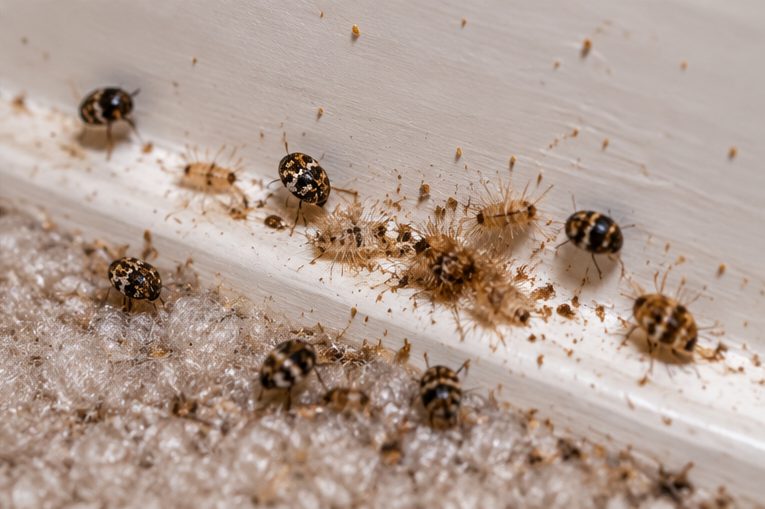
Look in the bedroom first: under the bed, along the carpet edges, in blanket boxes and in the drawers that hold wool. The appearance to look for is described in what carpet beetle larvae look like, and the wider list of spots is in where carpet beetles hide.
Families and pets
Larvae in a child's bedroom carpet or in a pet's bed are worth dealing with sooner rather than later. In family homes with pets, such as many in Sudbury, check dog and cat bedding as part of the search, and keep young children from playing with fluff pulled from under furniture. If a pet seems to have skin problems, speak to a vet.
Dealing with the source
Removing the larvae removes the hairs. Carpet beetle control in Brent is £180 for the first room and £60 for each additional room. Book carpet beetle control and tell us which rooms you have found larvae or skins in. Until then, washing bedding and vacuuming carpets reduces the hairs you come into contact with.