Walthamstow Village's split terraces

The Victorian terraces around Walthamstow Village were built as single homes and have since been divided into flats one on top of another, sharing party walls and floor voids their original layout never expected to separate. A mouse in the ground-floor flat's kitchen can be heard in the bedroom above within days.
Chingford's interwar semis

Further out, the semis and later housing around Chingford give mice a different kind of run: loft insulation, garage connecting doors and the gap under a single-storey extension are the usual first places to check rather than a shared wall.
Finding the nest
Mice nest close to food, usually within a few metres, so droppings in a cutlery drawer or a nibbled cereal box point to somewhere nearby - a kitchen void, under the sink, or behind an integrated appliance. Locking food away matters even before the nest is located.
What to do this week
- Move dry food, pet food and bird seed into sealed containers
- Check behind the cooker and fridge if you can safely pull them out
- Note where droppings appear and whether they return after cleaning
- Ask neighbours, upstairs or downstairs, whether they've seen anything too
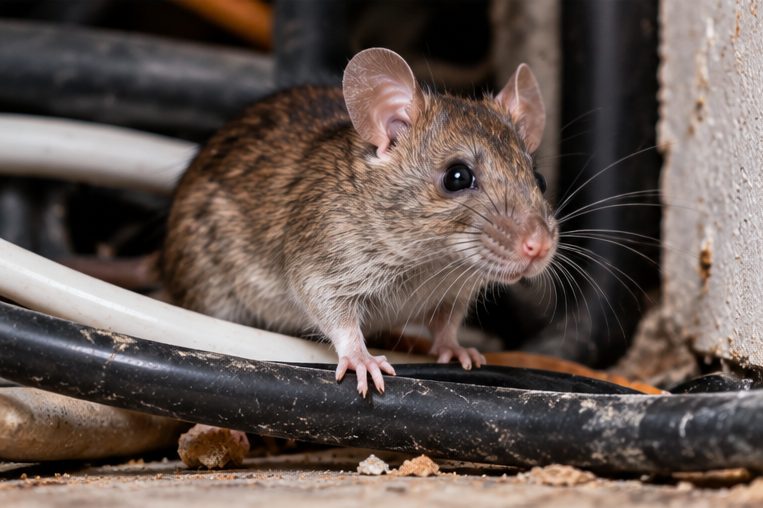
- Watch cables near appliances for fresh gnawing
Closing the gaps afterwards
Once activity has stopped, the routes need sealing with materials a mouse can't chew through. In a split terrace, that's often the join between flats; in a semi, it's more likely the eaves or the garage connecting door.
Booking mouse control in Waltham Forest
Mouse control anywhere in Waltham Forest is £190 for a flat and £240 for a house, and because around Leyton, where dense Victorian terraces close to the North Circular and the Score, mentioning that when you book mouse control points us towards the likely route in, with the rest of the detail on the Waltham Forest mouse control page.