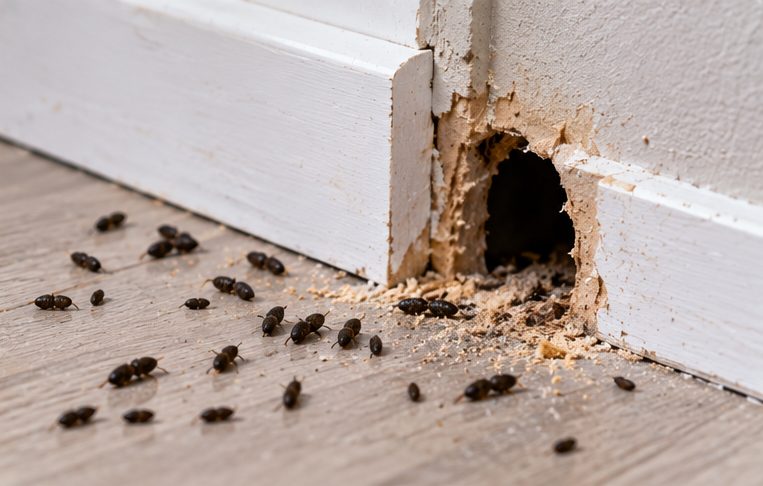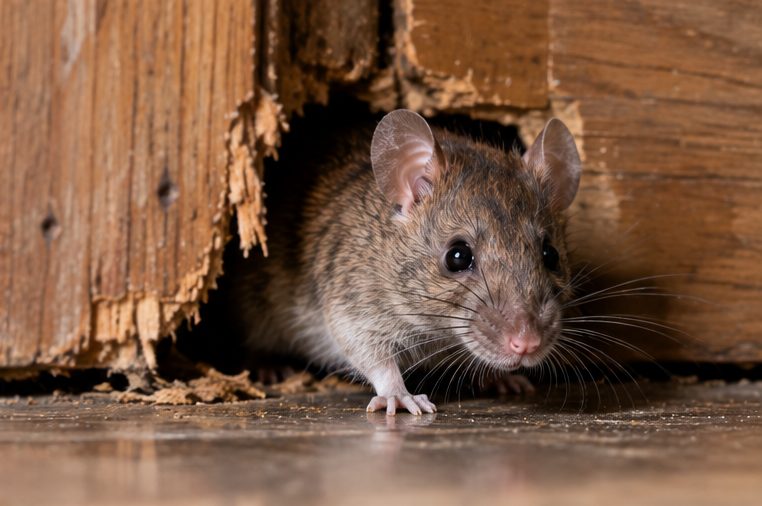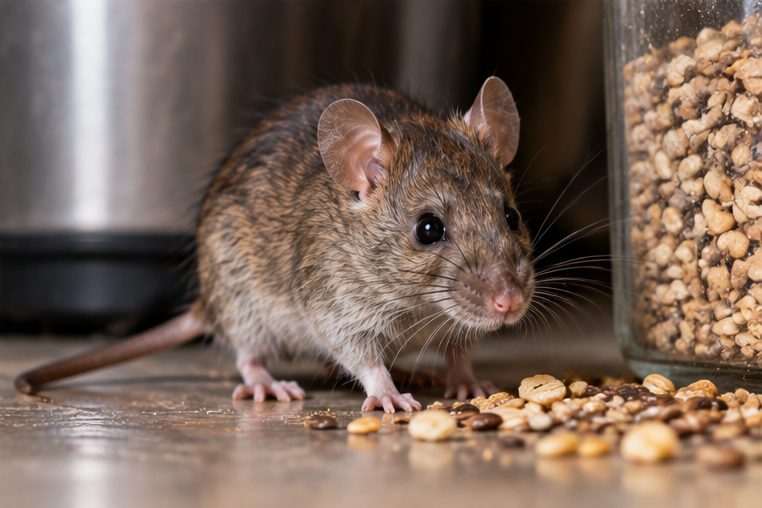
Why the kitchen is where they end up
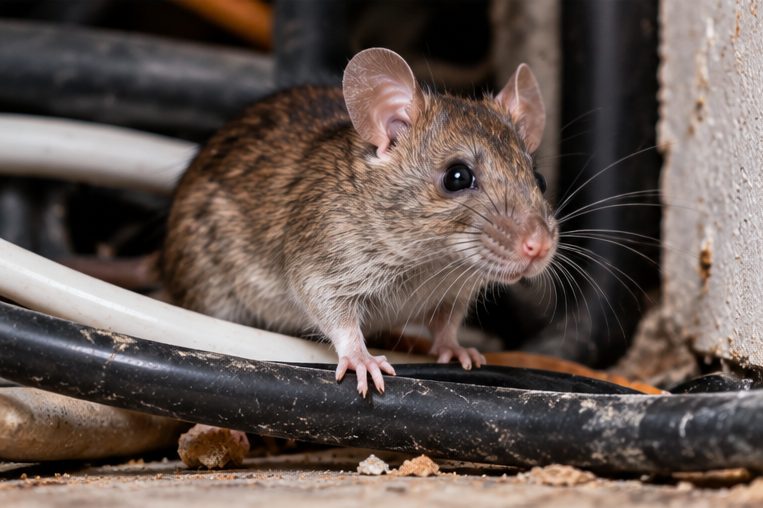
The space behind kitchen units is warm, dark and a short dash from food. Appliances keep it heated, pipework provides corridors, and crumbs collect under the plinths. It is where most mouse problems in a home are centred.
What to do straight away
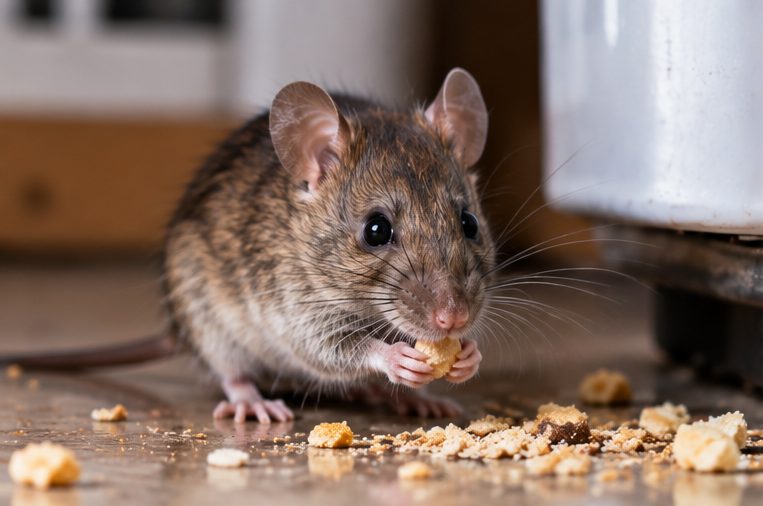
- Move all dry food — cereals, rice, pasta, biscuits, pet food — into sealed plastic, glass or metal containers
- Wipe worktops and sweep floors every evening, including under the edge of the plinths
- Do not leave pet food down overnight
- Put gloves on to clear droppings; disinfect the surfaces afterwards
- Make a note of where the droppings and noises are
What not to do
Do not seal the gaps behind the units while mice are living there — they will be trapped in the void and chew new exits into cupboards. Avoid scattering poison behind appliances where children or pets could reach it, or where a mouse could die out of reach. And plug-in repellers are unlikely to help — see do ultrasonic repellers work.
Checking how bad it is
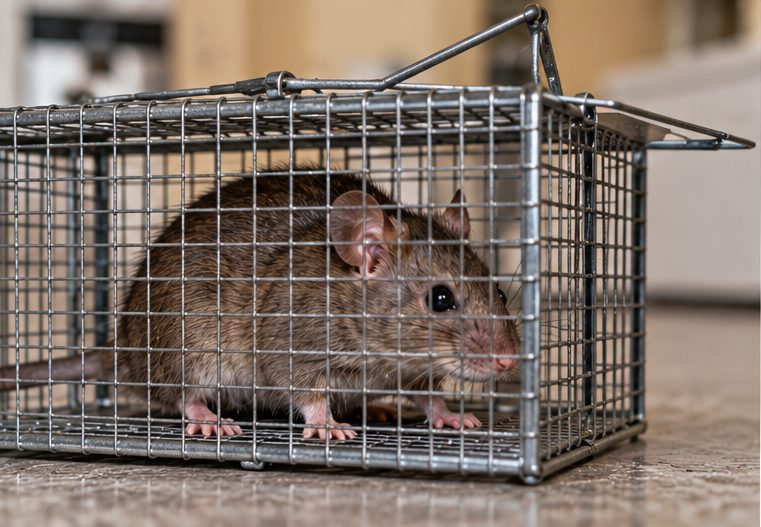
Unclip the plinths and look underneath with a torch. A few droppings in one corner is an early problem; droppings along the whole run, nesting material and chewed packaging dragged into the void mean an established one. The signs of mice explains what each clue tells you.
Getting them treated
An established colony behind kitchen units needs professional treatment. Mouse control in Brent is £190 for a flat and £240 for a house, and we will explain what the treatment involves when you call. Book mouse control here.
Flats: tell the neighbours
In a converted house or block, the void behind your kitchen may connect to the flat next door or below. If they have mice too, a joint approach works best — mice between flats explains why.
Afterwards: closing the void
Once activity has stopped, seal the pipe holes and gaps behind the units so the next mouse cannot move in. The step-by-step is in stopping mice getting behind kitchen units, and our rodent proofing service can do it for £180 for up to one hour.