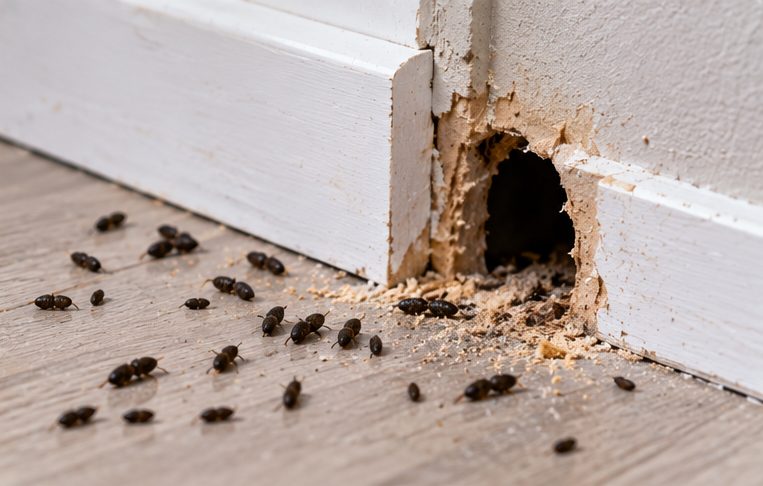
Mice do not need an open door
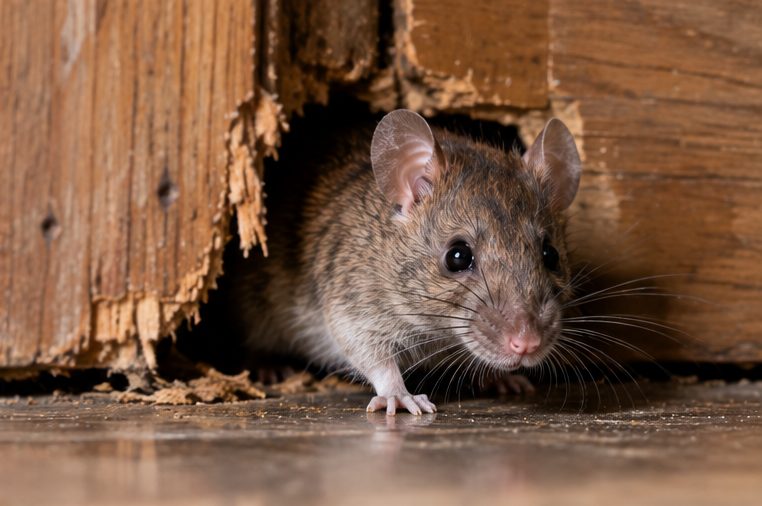
A mouse can squeeze through a hole about the width of a pencil. A house has dozens of openings that size: service holes, shrunken skirting, worn thresholds, gaps behind units. The detail is in what size hole a mouse can get through.
The most common routes in Brent homes
Around pipes and cables
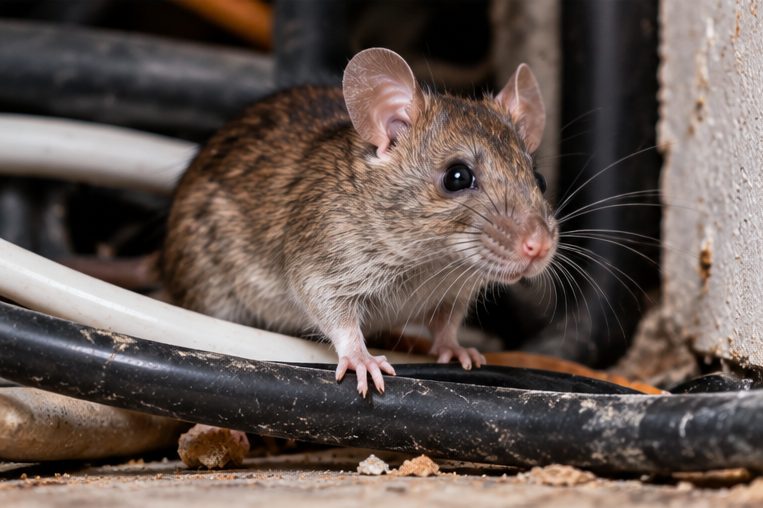
Waste pipes from sinks, washing machines and dishwashers, gas supplies to cookers and boilers, and cables for broadband and outside lights all pass through walls. The gap left around them is the classic mouse entrance — see proofing pipe gaps.
Under the floor
In houses with suspended timber floors, common across Willesden, Kilburn and Queen's Park, mice move through the void beneath the floorboards and come up wherever a pipe or gap allows. Damaged air bricks let them into that void from outside.
Doors and thresholds
Back doors, garage doors and doors to outbuildings with a gap at the bottom, worn weather strips or damaged thresholds.
From next door

In terraces and converted houses, mice move between homes through shared walls, loft spaces and floor voids. If your neighbours have mice, you may be getting theirs — can mice travel between flats covers shared buildings.
In with your shopping — rarely
Mice can occasionally arrive in deliveries, boxes from storage or garden sheds, but this is far less common than a structural gap.
Why autumn brings them in
As temperatures fall, mice living in gardens, sheds and hedges look for warmth and food. Entry points that were ignored all summer suddenly matter — one reason mice keep coming back at the same time each year.
Finding your route
Walk round the house with a torch and a pencil, following the entry point checklist, then check which gaps show signs of use with the flour and paper tests.
Getting them out and keeping them out
Mouse control in Brent is £190 for a flat and £240 for a house. Once the mice have gone, rodent proofing closes small gaps for £180 for up to one hour. Book mouse control to start.