How mice reach the loft
- Climbing up inside cavity walls from the ground floor or floor void
- Following pipes and cables up through boxing and service holes
- Running up rough brickwork, climbing plants or drainpipes to gaps at the eaves
- Moving across from a neighbour's loft in a terrace or semi
The loft is often the last place a colony spreads to, having started in the kitchen — see where mice nest.
Mice, rats or squirrels overhead?
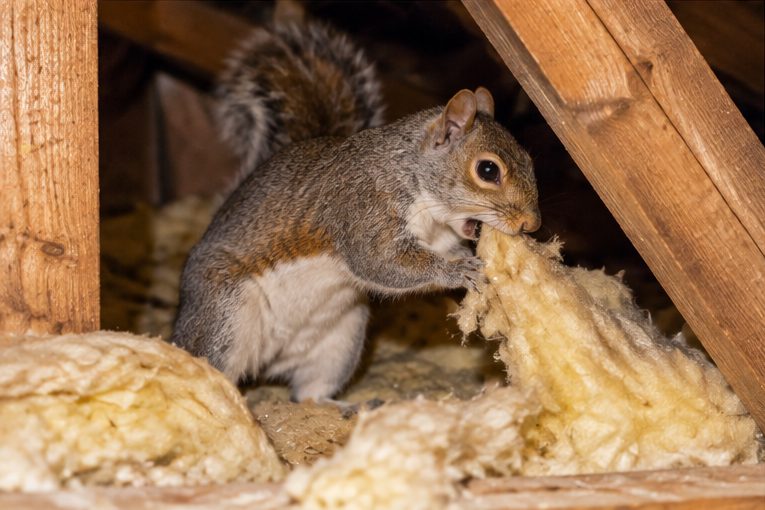
Mice make light, fast scratching and pattering, mostly at night. Rats are heavier and louder, also at night — see rats in the loft. Squirrels thump and run in daylight, especially at dawn, and are covered by squirrel control. Tiny, pointed droppings on the loft boards confirm mice.
What mice do in a loft
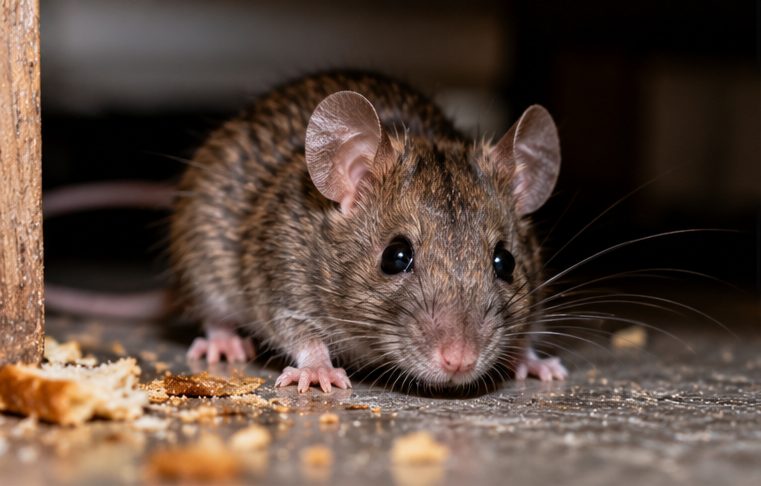
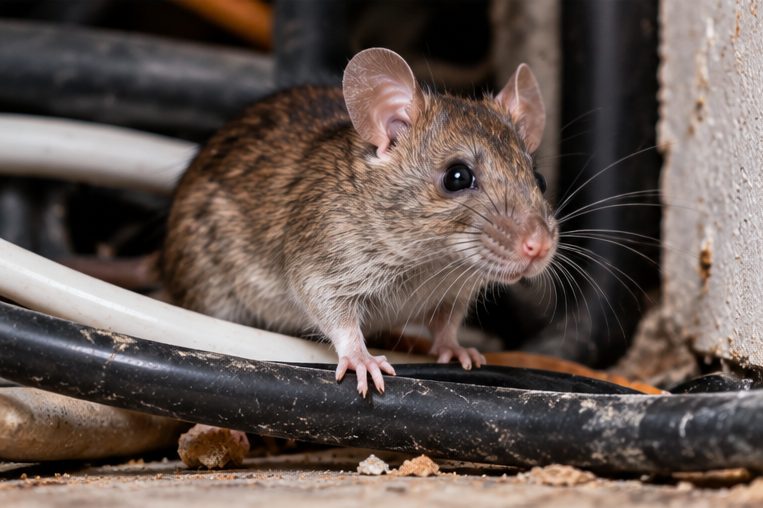
They tunnel through and nest in insulation, shred stored cardboard, paper and fabric, and gnaw cables. Chewed wiring in a roof space is a fire risk, covered in more detail in can mice chew through wiring.
Shared lofts in terraces
In some older terraces the loft space is only partly divided between houses, and mice move freely along the row. Talking to neighbours helps work out whether the problem is yours alone.
What to do
Do not scatter poison across insulation where it cannot be retrieved, and do not block the eaves while mice are inside. Keep the loft hatch closed, note when you hear activity, and book mouse control. Mouse control in Brent is £240 for a house and £190 for a flat.
Keeping the loft mouse-free
Once clear, close gaps at the eaves and where pipes and cables rise through the ceiling, and store items in sealed plastic boxes rather than cardboard. For the full approach see how to mouse-proof a property. Interwar houses with deep eaves, like those in Kingsbury and Preston, are worth checking at the roofline.