What London does for rats

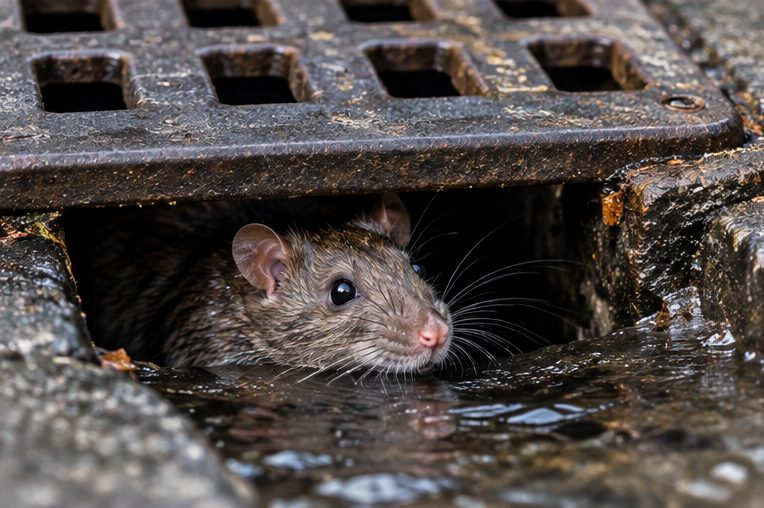
London sits on top of one of the oldest sewer networks in the world, and much of the housing above it is almost as old. Victorian and Edwardian terraces often share drain runs with the houses either side, and clay pipes crack and shift as the ground moves. Food waste is never far away, from takeaway bins on the high street to compost heaps in back gardens that run end to end. Railway embankments, canal towpaths and the banks of the Thames give rats long, quiet corridors between neighbourhoods. None of this means your home is at fault. It means the pressure is constant, and any weakness in a building tends to be found.
How rats reach the inside of a home
There are three broad routes. From below, through a cracked pipe under a floor, an old drain left open when a kitchen or bathroom was moved, or an unsealed joint inside boxed-in pipework. At ground level, through gaps round pipes and cables, broken air bricks, worn door thresholds or the seam where an extension meets the original house. From above, by climbing ivy, trees, fences and flat roofs. Each route is described in how rats get into homes, and the same routes apply anywhere in the capital.
Make sure it is rats
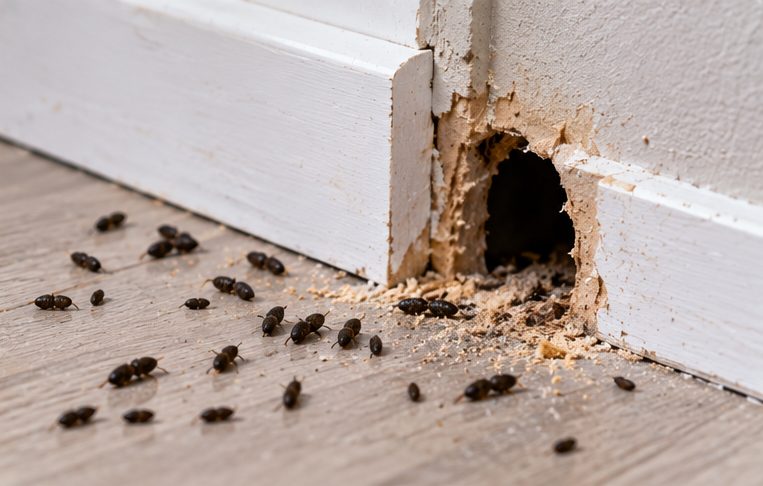
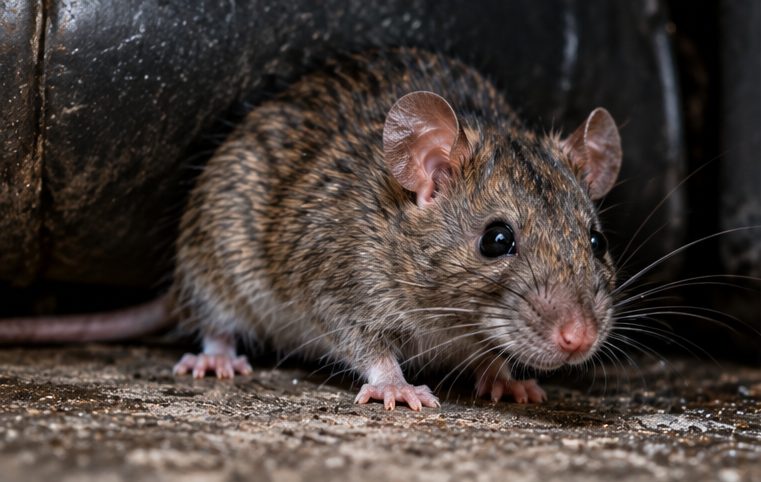
Before buying anything, be certain what you are dealing with. Rat droppings are dark, blunt-ended and around one to two centimetres long, far bigger than a mouse's. Greasy marks along skirting boards, gnawed plastic or wood, scratching under the floor after dark and a sharp smell of ammonia all point the same way. The first signs of rats explains what each clue tells you, and rats or mice helps if the droppings look small.
What you can do yourself straight away
- Take away food: use lidded bins, never leave rubbish bags out overnight, and keep pet food and bird seed in metal or hard plastic tubs
- Bring bird feeders in for a few weeks and stop scattering food on the ground
- Keep compost bins closed, and leave cooked food, meat and bread out of them
- Clear clutter from along fences and the foot of walls, where rats like to run under cover
- Check that the inspection chamber covers in the garden or yard are unbroken and sit flat
- Keep a note of where and when you find signs, which helps whoever deals with it
Traps and poison from the shop
A shop-bought trap can catch a rat that is passing through, but rats are cautious about anything new on their route and may avoid a trap for days. If you try them, set them flat against walls where you have found droppings or smear marks, out of reach of children and pets, and check them every day. Poison needs far more care. Follow the label to the letter, never leave it loose, and keep it well away from pets, children and wildlife. A poisoned rat can die under a floor or inside a wall where nobody can reach it, and the smell may linger for weeks. Neither traps nor poison will close the way in.
When a drain fault needs more than traps

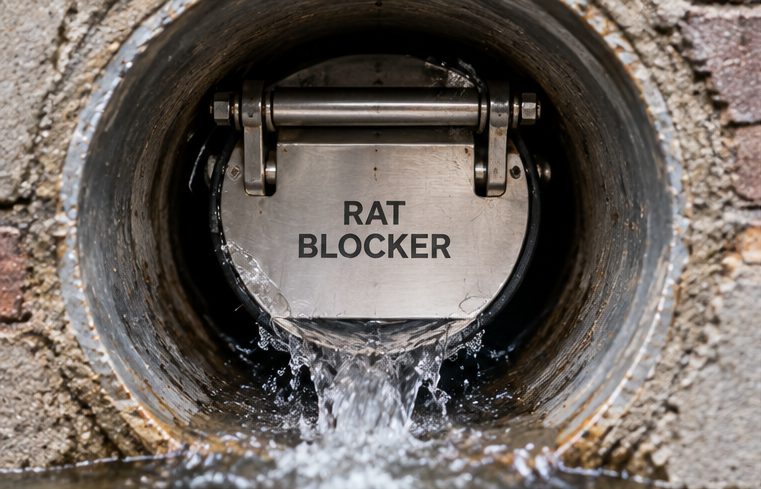
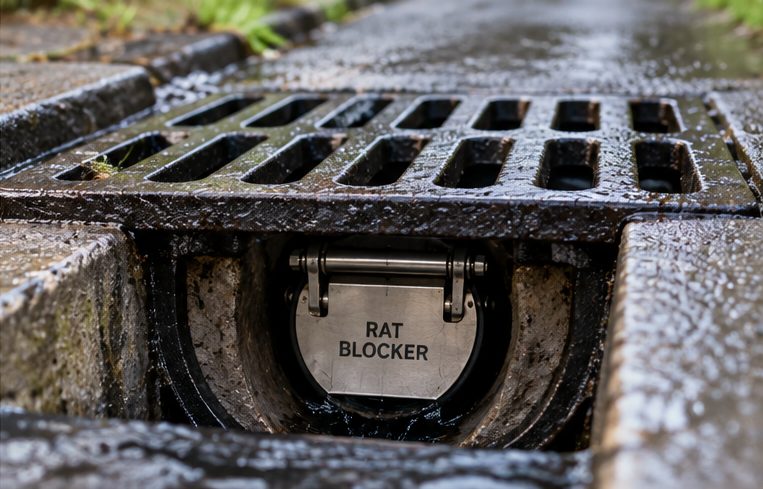
Some signs point firmly underground. Rats turning up in a bathroom or kitchen with no gap you can find, scratching beneath a ground-floor bath, droppings next to a boxed-in soil pipe, a rat seen inside an inspection chamber, or rats returning again and again after they seemed to have gone are all typical. So is a strip of lawn or paving that sinks along the line of a drain. In those cases, trapping indoors only removes the rats that have already arrived. The defect has to be found, usually with a camera survey by a drainage contractor, and then repaired or fitted with a one-way rat blocker. Rats and drains explains the process, and why rats keep coming back covers the other reasons a problem repeats.
As a rule of thumb, a drain inside your boundary that serves only your home is usually yours to repair, while most shared and lateral drains have been the water company's responsibility since 2011. If you rent, report it to your landlord.
Mistakes that make it worse
- Filling a hole with expanding foam while rats are still using it; they chew through it or open a new route that is harder to trace
- Leaving poison down for months, where it becomes a hazard to pets and wildlife
- Lifting floorboards or pulling out kitchen units to hunt for the nest
- Treating your own home while the real source is next door's shed, garden or drain
- Assuming a flat on an upper floor is out of reach
Flats, conversions and shared buildings
In a converted house or a purpose-built block, rats often travel through bin stores, service risers and the voids behind boxed-in pipes, so what you find in one flat may begin somewhere else in the building. Tell your landlord, letting agent or managing agent early, and let neighbours know what you have seen. Dealing with several flats together usually works better than one flat on its own. Rats in flats sets out who normally deals with what.
Getting ready for a visit
When you book, describe where the signs are, when you hear noises, and whether there is a garden, a basement or a shared drain. Before the appointment, empty the cupboard under the sink, clear the area round the boiler and any boxed-in pipework you can reach, and make sure the loft hatch can be opened if the noise is overhead. Keep pets in another room on the day. How long it all takes depends on the property and the size of the problem; how long rat control takes explains why.
Keeping them out for good
Once activity has stopped, close the routes with materials rats cannot chew, such as steel mesh, metal plates and cement mortar, rather than foam or filler alone. Rat proofing gives the checklist, and rodent proofing is there if you would rather have it done. Rat control in London is £190 for a flat and £240 for a house. If the droppings are small and the scuttling light and quick, read getting rid of mice instead.