Why London buildings suit mice
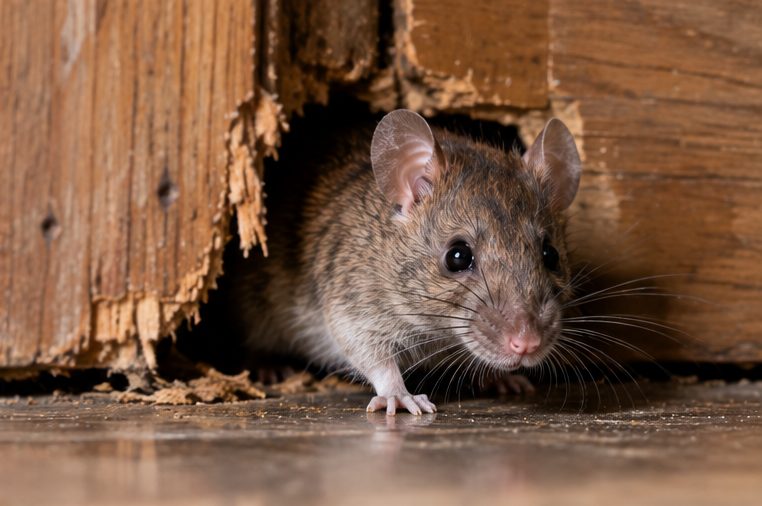
A house mouse needs warmth, a little food and a quiet place to nest, and older London property offers all three in spaces nobody sees. Terraces share party walls with gaps at floor and roof level. Converted houses have voids under the floors and around old chimney breasts that link one flat with the next. Mansion blocks and estates carry heating and water pipes through every storey. Fitted kitchens add a hollow plinth under every run of units. Mice come indoors in any month, but the first cold nights of autumn tend to bring the biggest rise in activity.
Check it really is mice
Small dark droppings about the size of a grain of rice, nibbled packets in a food cupboard and light scratching in the ceiling or behind the units at night are the usual trio. The signs of mice goes through each one. If the droppings are much larger or the noises heavier, read getting rid of rats, because the approach is different.
Walk the property to find the entry points
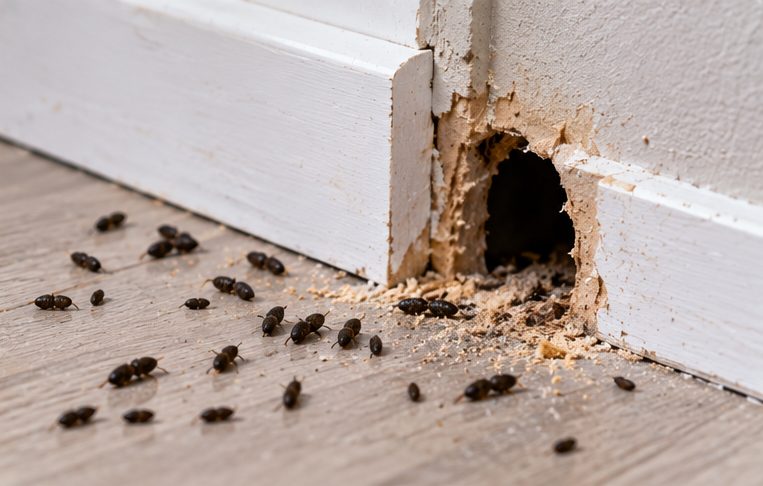
Start indoors, with a torch, in the room where the signs are heaviest. Mice use the same runs night after night, so look for:
- Gaps where pipes come through under the kitchen sink, behind the washing machine and inside the boiler cupboard
- Holes at the back of gas and electricity meter cupboards
- Loose or missing kickboards under kitchen units
- Gaps between skirting boards and the floor, especially over old timber floors
- Outside, broken air bricks, gaps round waste pipes and worn thresholds on back doors
A gap roughly the width of a pencil is enough, as what size hole a mouse can get through explains, and how mice are getting in covers the less obvious routes. Fresh droppings, dark rub marks and chewed edges around a hole show that it is in use.
When the route is through the building
In a flat, a conversion or a mid-terrace house, the way in may not be on your side of the wall at all. Mice follow pipe runs, cable routes and floor voids from home to home, and a building with mice in one flat often has them in others. Tell your landlord or managing agent and have a word with neighbours. Mice travelling between flats explains why the whole building matters.
What shop-bought products can do
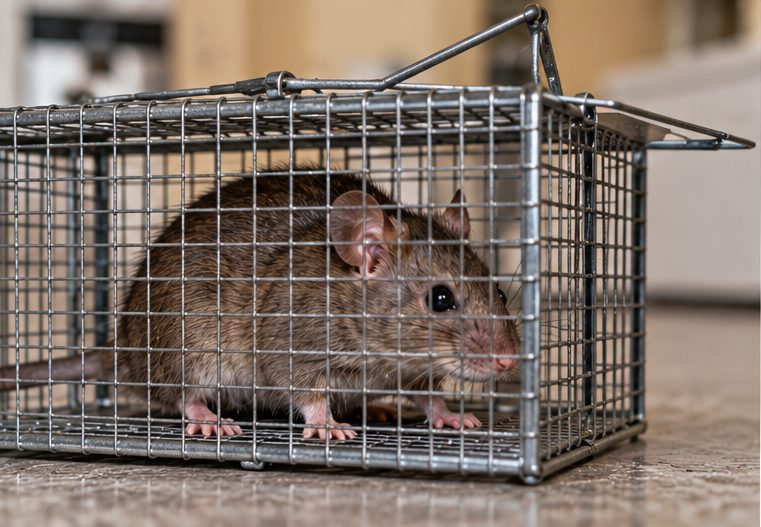
Snap traps, set properly, do catch mice. Place them against the wall along a run rather than in the open, use only a small amount of bait, and check them every day. Enclosed bait boxes sold for home use can reduce activity if the label is followed exactly and they are kept away from children and pets. Live-catch traps are an option too, but they must be checked often so the animal does not suffer. Glue traps are no longer an option for the public: in England, since April 2024, their use has been restricted by law to licensed pest controllers.
What they cannot do
A trap catches the mouse that walks into it. It does nothing about the nest behind the units, the young that are not yet out foraging, or the mice still arriving through an open gap. Mice breed quickly, so a few catches a week can hide a population that is holding steady. Plug-in ultrasonic devices are sold everywhere, but there is little evidence that they clear an established problem; see whether ultrasonic repellers work. Bait left in open voids can also leave a mouse dying out of reach under a floor.
Mistakes to avoid
- Sealing every hole while mice are still inside, so they gnaw a new way out, sometimes into another room
- Moving traps every day before the mice have had a chance to get used to them
- Leaving food on worktops overnight, or the pet bowl down after the evening meal
- Pulling the kitchen apart to look for the nest
- Counting on a cat, which may catch a few but will not stop more arriving
Start with the kitchen

The kitchen is where mice usually feed, and the void under and behind the units is where many of them live. Empty the cupboard under the sink, shine a torch behind the plinth, and move dry food into glass, metal or hard plastic with tight lids. Mice behind kitchen units takes you through the steps in order, and where mice nest helps if the signs are somewhere else.
When to call us
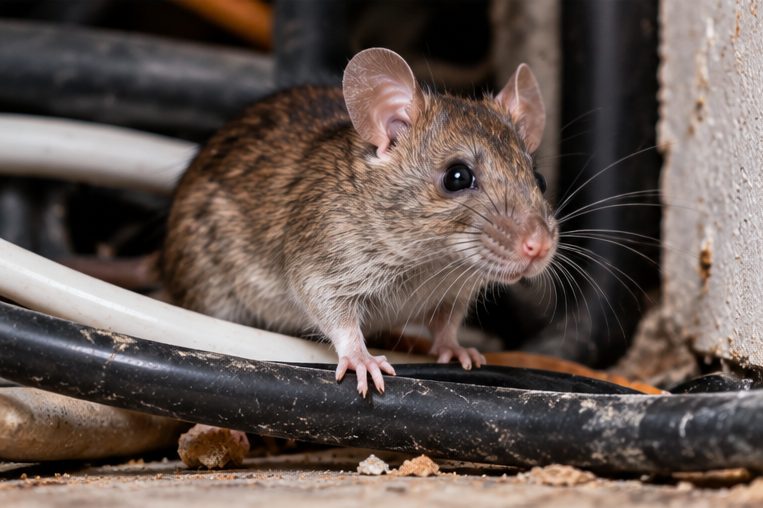
Call if droppings are still appearing after a couple of weeks of trapping, if you can hear mice in more than one room or in the ceiling, if someone in the home is vulnerable, or if mice return every autumn, which why mice keep coming back looks at. Call too if you find chewed cable. Leave it alone and have an electrician check it, because damaged wiring can be a fire risk, as mice chewing wiring and pipes explains. A business that handles food should act at the first sign.
Preparing, and closing up afterwards
Before a visit, clear under the sink and around appliances, take off kickboards if they unclip easily, and put food away. How long it takes depends on the property and the number of mice; how long mouse treatment takes explains why. Once activity has stopped, close the gaps you found with materials mice cannot chew, in the order set out in how to mouse-proof a property. Mouse control in London is £190 for a flat and £240 for a house.