What a rat looks for in a nest site
A nest needs three things: shelter from people and predators, soft material to build with, and a short trip to food and water. In a building that means the hidden spaces between rooms — the parts of a house nobody sees from one year to the next.
Under the floor

The void beneath a suspended timber floor is the classic rat nest site in older London housing. It is dark, dry, undisturbed and often connected to the drains or the garden through gaps in the brickwork. Many terraced houses and conversions across Harlesden, Kilburn and Kensal Green have exactly this construction.
Inside cavity walls and boxed-in pipes
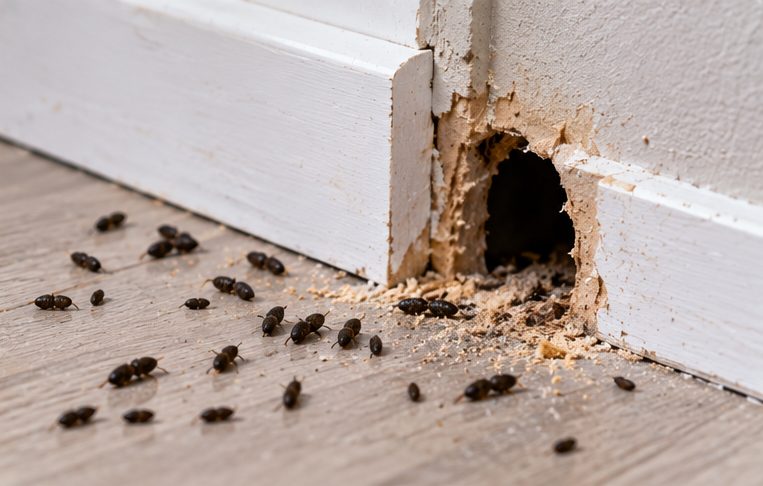
Cavity walls give rats a vertical highway, and boxing around soil pipes and heating runs gives them a sheltered corridor straight into kitchens and bathrooms. A nest here often shows up as scratching at one point in a wall and a smell that seems to come from behind it.
Behind kitchen units and bath panels

The space behind the kickboards of kitchen units stays warm from appliances and is close to food. Bath panels hide the void around the waste pipe. Both are favourite nesting spots, and both are easy to check with a torch once the panel or kickboard is removed.
In the loft
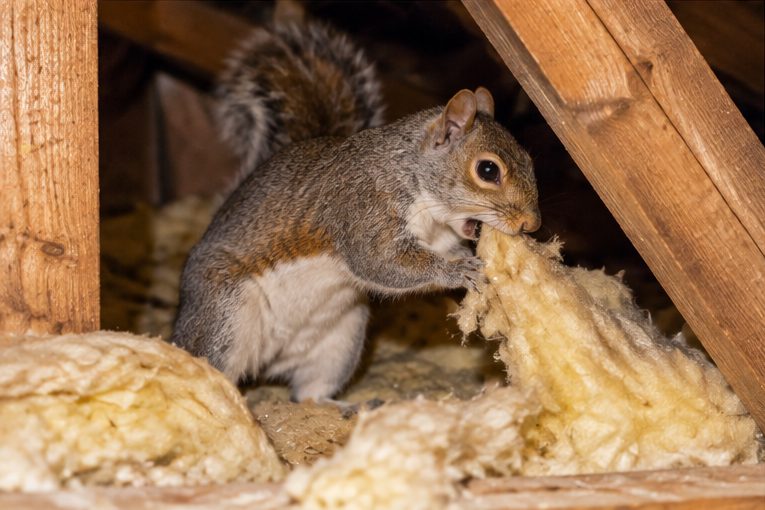
Brown rats are good climbers and will reach a loft through a cavity wall, along a soil stack or via a nearby tree. Loft insulation makes excellent nesting material. If the activity is overhead, it is worth reading what to do about rats in the loft, because squirrels cause similar noise for different reasons.
Outside, close to the building

- Burrows under sheds, decking and garden rooms
- Compost heaps and piles of stored timber or rubble
- Along the base of boundary walls and fences
- Beneath paving where the soil has been undermined
A nest outside does not always mean rats in the house, but it is often where an indoor problem starts. Our guide on rats in the garden explains how to tell.
Flats and shared buildings
In a block, nests are usually in communal spaces — bin stores, service risers, ground-floor voids — rather than inside an individual flat. That changes who needs to act, which is covered in can rats get into flats.
Should you go looking for the nest?
Do not pull up floors or open walls to find it. Disturbing a nest can scatter rats further into the building. Note where the signs are strongest and book rat control; once the rats have gone, the gaps that led to the nest can be closed with rodent proofing.