Why the early signs matter
Rats are cautious animals that avoid people and move mostly after dark. By the time one is seen crossing a kitchen floor in daylight, it has usually been living nearby for a while. Catching the problem at the first signs makes it smaller, cheaper to deal with and far less likely to have spread into walls and floors.
Droppings
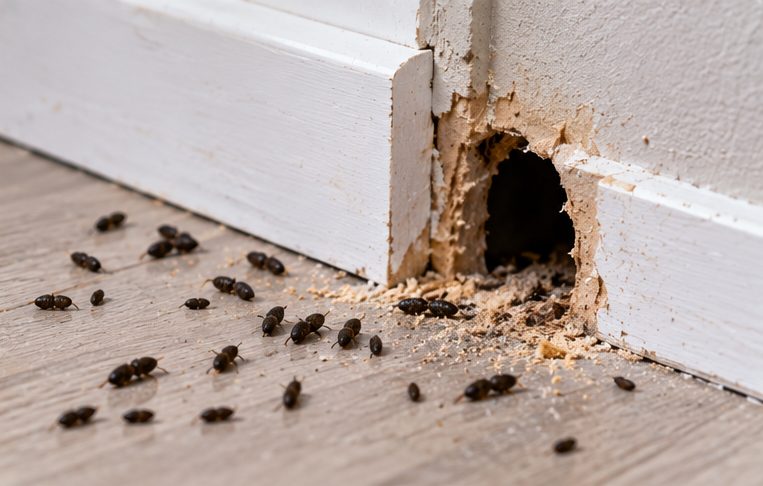
Rat droppings are the most reliable sign. They are dark brown, roughly 1–2cm long and spindle-shaped, like a large grain of rice with blunt ends, and they tend to appear in small groups along the routes rats use: behind appliances, along skirting boards, in the cupboard under the sink and around the bins. Fresh droppings are soft and shiny; old ones are dry and crumble.
If the droppings you are finding are much smaller — around the size of a grain of rice with pointed ends — you are more likely looking at mice. Our guide rats or mice: how to tell the difference goes into this in detail.
Smear marks and runs
Rats follow the same routes night after night, keeping close to walls. The oil and dirt in their fur leave dark, greasy smudges along skirting boards, on pipes and around the edges of holes they squeeze through. Outside, regular routes flatten narrow paths through grass and along the base of fences.
Gnawing and damage
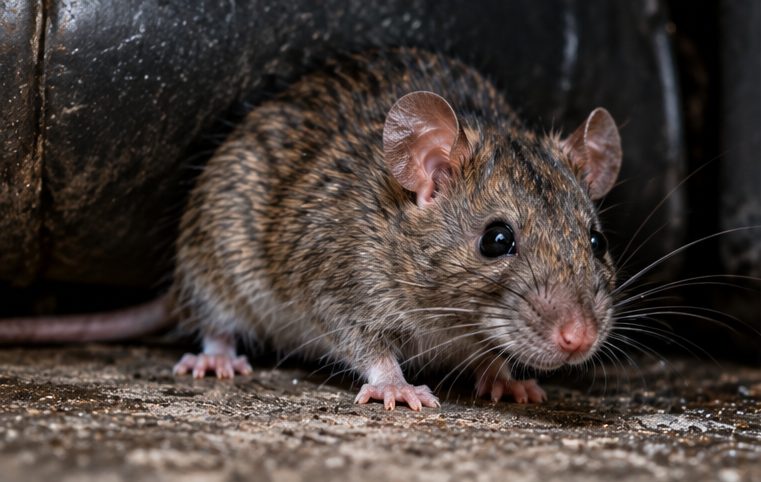
A rat's teeth never stop growing, so it gnaws constantly. Look for chewed corners on doors and skirting, holes in food packaging, damaged plastic pipes and, most worryingly, chewed cable insulation. Fresh gnaw marks look pale and rough; older ones darken.
Noises at night
Scratching, scurrying or a gnawing sound in ceilings, walls or under the floor, mostly in the evening and at night, is how many Brent residents first realise something is wrong. In the Victorian terraces of Willesden and Kensal Green, the sound usually comes from under the floorboards; in the 1930s houses further north, it is just as likely to be in the loft — see rats in the loft.
Smells, burrows and nests
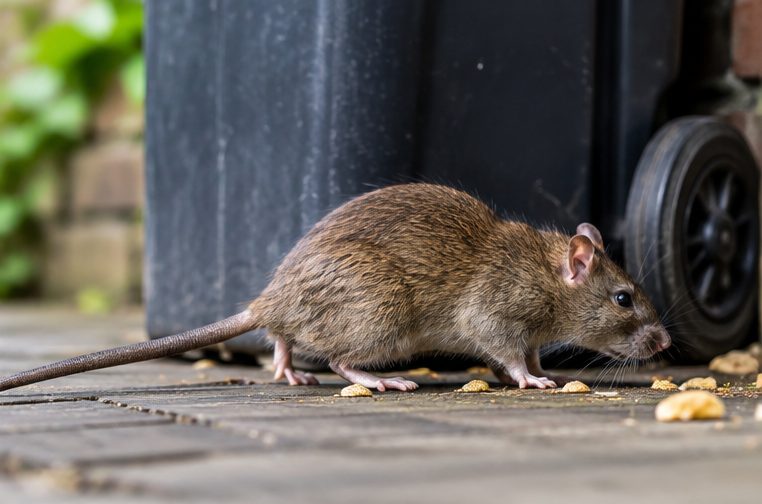
- A stale, ammonia-like smell in enclosed spaces such as cupboards and under the stairs
- Burrow entrances a few centimetres across in soil, under paving slabs, beside sheds or under decking
- Shredded paper, fabric or insulation gathered into a nest — our guide on where rats nest explains where to look
- Pets staring at, sniffing or pawing at one spot on a wall or floor
What to do once you have spotted the signs
Do not block holes straight away: a rat trapped inside a wall or floor can cause more damage getting out, or die where you cannot reach it. Put food away in sealed containers, keep bins closed, and make a note of where the signs are. That information helps work out how the rats are getting in, which matters as much as the treatment.
Then get it dealt with. Rat control in Brent is £190 for a flat and £240 for a house, and if the signs are in the garden rather than the house, read what rats in the garden mean first.