Why London lofts attract grey squirrels
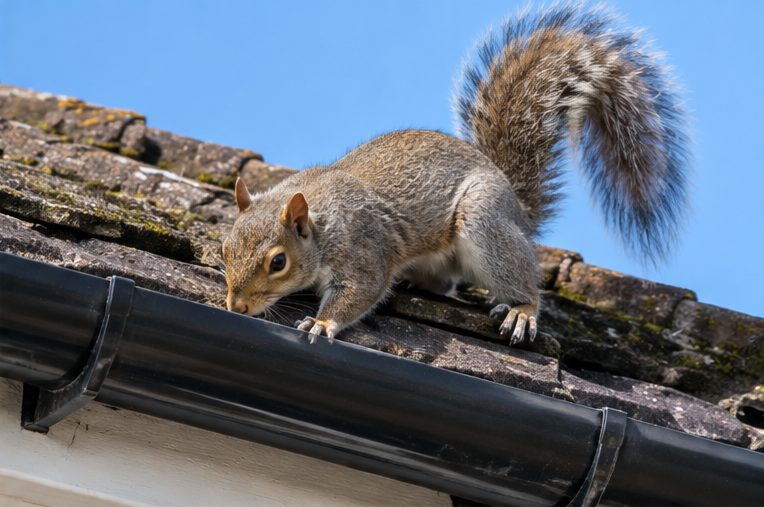
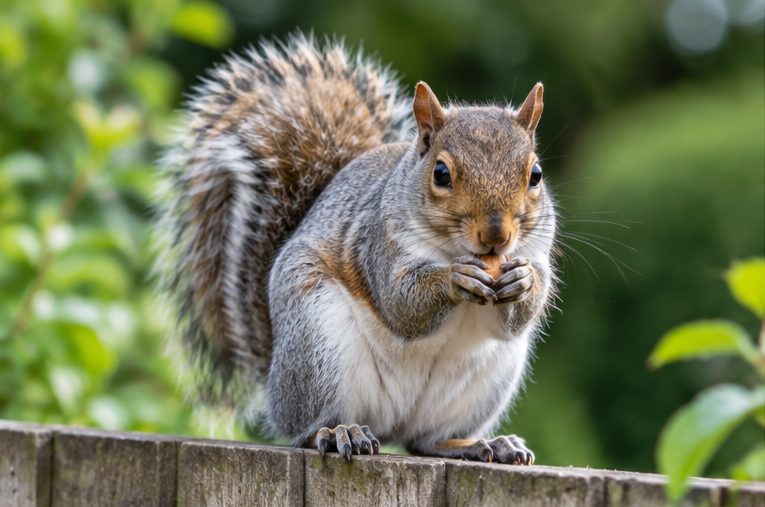
Grey squirrels live wherever there are mature trees, and London has them in parks, along streets, in cemeteries and in rows of back gardens that join into one long green strip. Victorian and Edwardian roofs have timber fascias and soffits that soften with age, and many terraces have bay roofs, dormers and rear extensions that leave awkward joints. A warm, dry loft makes an ideal nest site, especially in late winter and again in summer, when females are looking for somewhere to raise young. Bird feeders and fallen fruit in gardens bring squirrels right up to the back of the house as well.
Signs of squirrels overhead
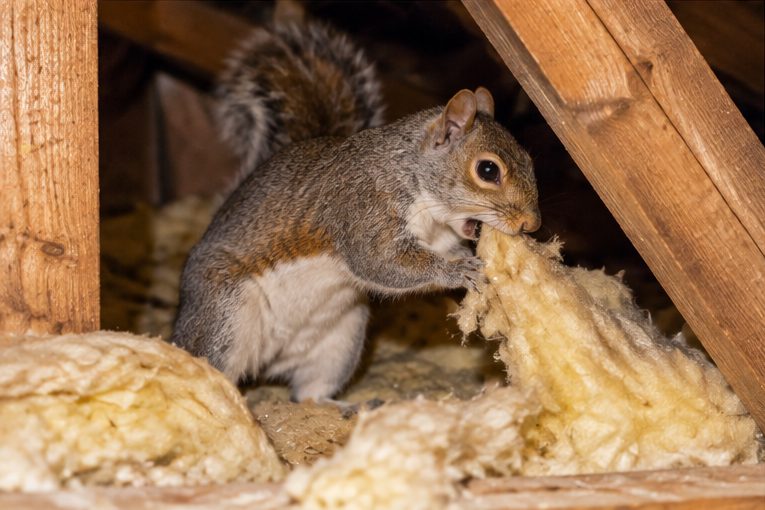
Squirrels are active in daylight, so noise that starts around dawn and carries on through the day points to them rather than to rats or mice, which are mostly heard at night. Listen for running, thuds as they land on the roof, a rolling sound and scratching. In the loft, look for torn insulation, droppings and chewed timber or boxes. Outside, watch the roof line early in the morning, when you may see a squirrel slip into a gap at the eaves. How to know if squirrels are in your loft and what squirrels sound like go further.
Squirrels, rats or mice?
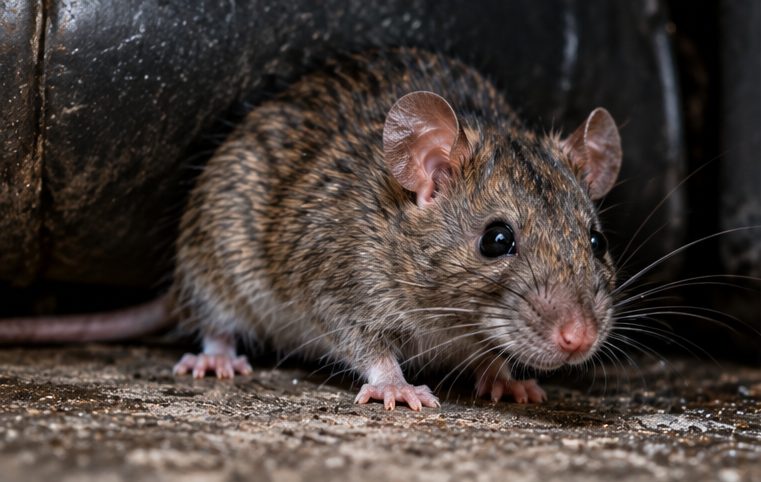
The difference matters, because each animal is dealt with differently. Scratching mainly at night, smaller droppings and greasy marks on timbers suggest rats or mice climbing up through the building. Squirrels or rats in the loft lays out the clues, and if it turns out to be rats, read getting rid of rats.
Where they get in
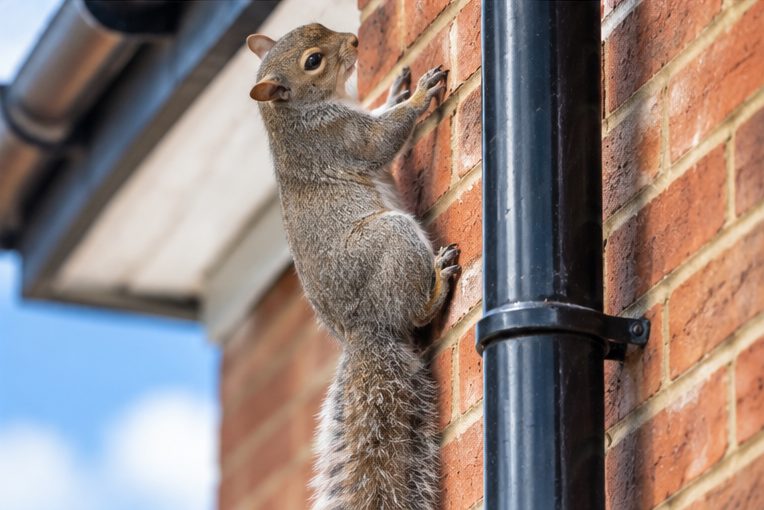
Squirrels climb brickwork, drainpipes, ivy, fences and overhanging branches with ease, then look for a weak point. Common ones are:
- Gaps behind fascia boards and at the ends of soffits
- Slipped, cracked or missing tiles and slates
- The joint where a bay or extension roof meets the main wall
- Plastic roof and gable vents that can be chewed through
- Gaps around dormer windows and where a neighbour's roof meets yours
How squirrels are getting into your roof explains how to find the gap they are actually using.
What not to do
- Block the hole while squirrels are inside; a trapped squirrel may chew through into the house, or die in the loft
- Go up into the loft to chase them out, particularly in spring and summer when there may be young
- Put down poison, which puts pets and wildlife at risk and can leave an animal dying out of reach
- Catch one and let it go somewhere else, because releasing a grey squirrel is an offence
The law is summarised in whether it is legal to release a grey squirrel.
While you wait
Keep the loft hatch closed and stay out of the roof space. If you have already spotted chewed cable, do not touch it, and have an electrician check it before anyone uses the loft; squirrels and electrical wiring explains why it is taken seriously. Make a note of other damage you can see from the hatch, such as insulation, pipework and stored boxes; the damage squirrels cause in a loft lists what to look for.
Make sure they are out first
Proofing only works once the loft is empty. Squirrel control is a trapping service, and how long it takes depends on how many animals are using the roof, the time of year and the building itself; how long squirrel control takes explains the factors. Quiet days, no fresh droppings and no squirrels seen at the gap are the signs they have gone. Do not rely on silence alone, because squirrels can stay tucked in their nest for a day or two in cold or wet weather.
Proofing the roof once they are out
Close the entry point with something a squirrel cannot chew, such as galvanised steel mesh or metal sheet behind a repaired fascia, rather than plastic, foam or wood alone. Slipped tiles and rotten timber are work for a roofer. Cut back branches that let squirrels jump onto the roof, but check with the council first if a tree may be protected or you live in a conservation area. Look along the whole roof line, not only the gap you know about. How to stop squirrels getting back into your roof sets out the order to work in.
Terraces and neighbours
In a terrace, lofts are divided by party walls that may have gaps near the top, and a squirrel shut out of one roof can move along to the next. If neighbours hear the same noises, it makes sense to tackle it together. In a converted house, the loft may belong to the top-floor flat or be shared under the lease, so check who is responsible before any roof work is arranged. Why squirrels keep returning covers why the same roof gets chosen again.
Booking
Squirrel control in London is £280 for the trapping service. Book squirrel control and tell us when you hear the noise, where you think they are getting in and whether the loft has a hatch you can reach. If you rent, tell your landlord as well, since repairs to the roof are normally theirs to arrange.