The order matters
The entry point should be closed once the squirrels are gone, not before. Sealing a gap with a squirrel still inside traps it, and a trapped squirrel causes far more damage getting out than it did living there. Everything below assumes the loft is already empty. Rushing this step is the usual reason a repair ends up being redone.
Be sure the loft is empty
Wait until the dawn and dusk noise has stopped, there is no new chewing, and nothing has been seen using the gap for a while. In late winter, spring and late summer, bear in mind that young may still be in a nest. What affects that wait is in how long squirrel control takes.
Close the gap with something they cannot chew
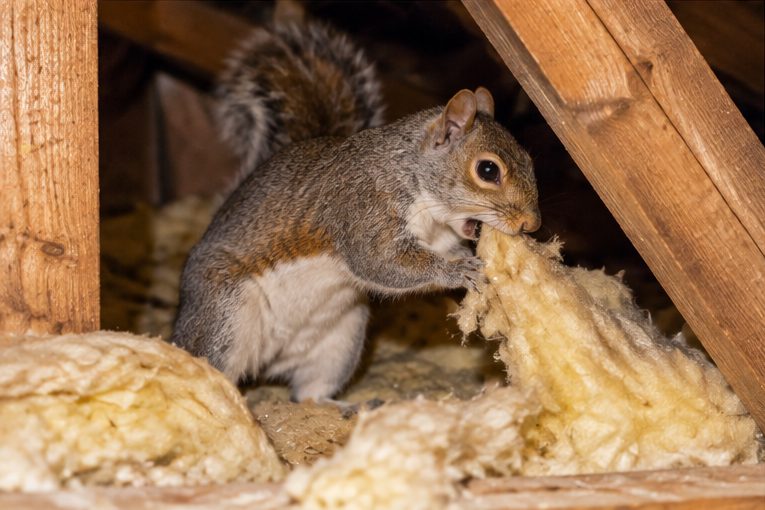
Squirrels gnaw through expanding foam, thin plastic, soft timber and loose mortar with ease. A lasting repair uses sound materials: new timber where boards have rotted, properly bedded tiles, and galvanised mesh behind vents that need to stay open for airflow. Close every gap you know about, not just the one you saw them use. Clear out old nest material and soiled insulation at the same time, so the loft no longer smells like somewhere squirrels have lived.
Roof repairs need a roofer
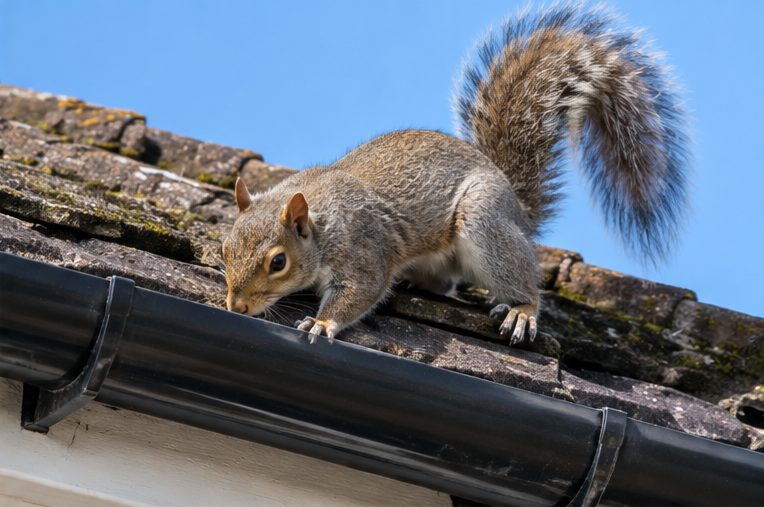
Slipped tiles, rotten fascias, split soffits and chewed lead flashing are roofing work. Get a roofer to repair them, and ask them to look along the whole roof edge while they are up there. A pest control visit does not include roof repairs. Working at height is dangerous, so do not attempt it from a ladder yourself. A roofer can also tell you whether the squirrels have let water in anywhere, which is easy to miss until the next heavy rain.
Cut back the routes up
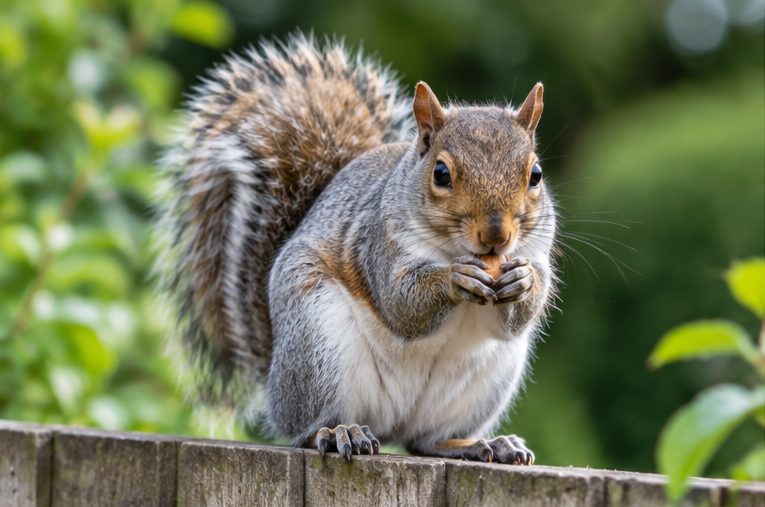
- Trim branches that overhang the roof or come within jumping distance of it
- Cut ivy and other climbers back from the eaves and gutters
- Move anything stacked against the house that makes a step up to a lower roof
- Check with the council before cutting a tree that may be protected
Look at the whole roof line
Squirrels go for weak points, so check corners, bays, dormers, porch roofs and anywhere an extension joins the house. Look at gable ends and the ends of ridges too, where mortar and verge fittings often work loose. Houses with rear extensions, like many in Queensbury, and the interwar homes of Kingsbury with their long runs of timber eaves both reward a careful look. The most common gaps are in how squirrels are getting into your roof.
What rodent proofing covers
Our rodent proofing service is for rats and mice: small holes around pipes, air bricks and kitchen units. It is not a roof repair and is not designed for squirrel entry points at the eaves. If you also have rats or mice lower down, the timing of rodent proofing follows the same principle: treatment first, sealing after.
Keep an eye on it
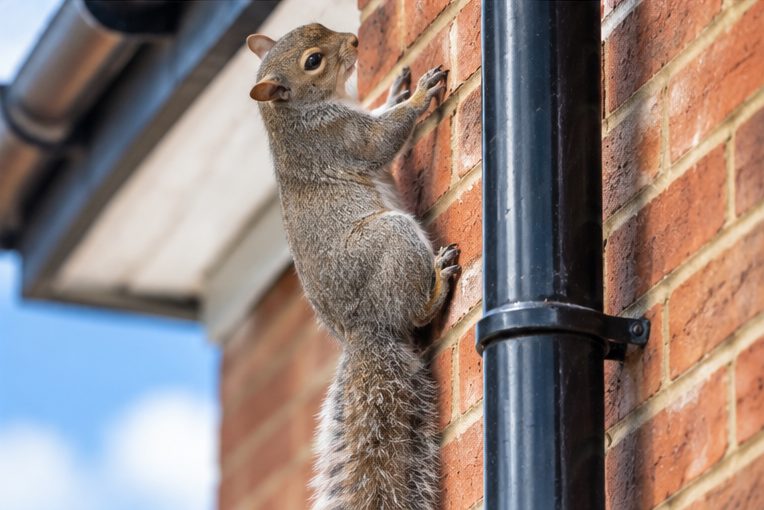
Walk round the house once a year, ideally in midwinter before the breeding season starts, and again after storms. Look for lifted tiles, fresh chewing and new rub marks. Keep branches trimmed each year, since a tree that was well clear of the roof can grow back within jumping distance. Listen out in the early morning in spring and late summer. The reasons squirrels are drawn back are covered in why squirrels keep returning to the same loft.
If they are already back
Leave the new gap open and get the loft emptied again before any further repair. Squirrel control in Brent is a £280 trapping service. Book online and tell us what repairs have already been done.