Why it matters which one
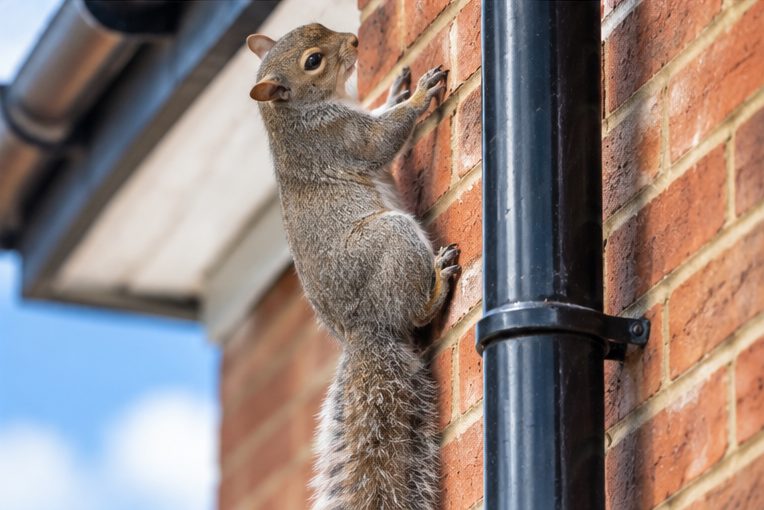
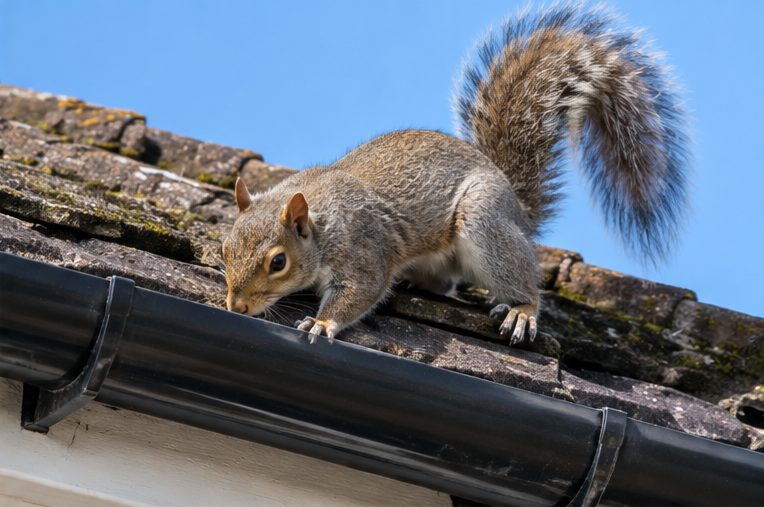
Squirrels almost always come in from the roof, while rats more often climb up from inside the building or from the ground. That changes where the entry point is, what needs repairing and which service you need. Proofing a roof edge will not stop rats coming up a wall cavity, and sealing pipe gaps will not keep a squirrel off the eaves. Getting the identification right first saves time.
Seeing the animal
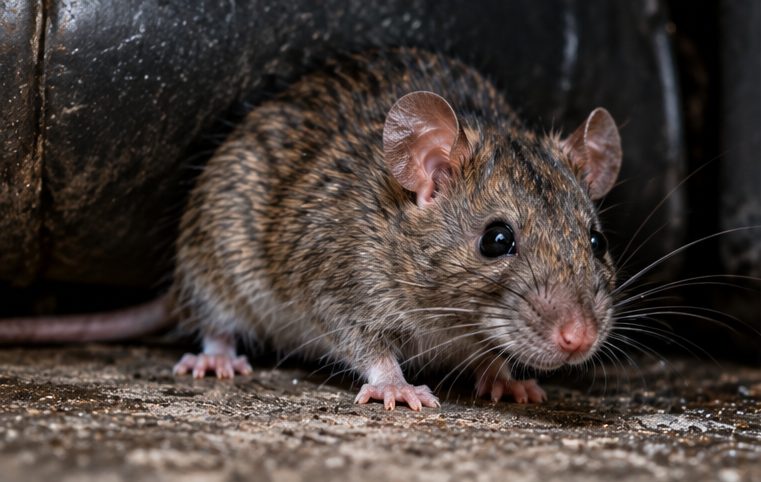
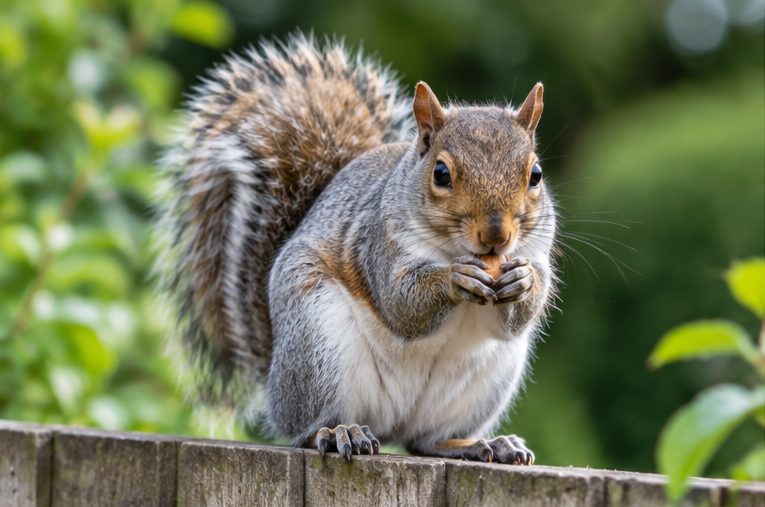
A grey squirrel has a big, bushy tail and is usually seen in daylight, on the roof, in trees or on fence tops. A brown rat has a long, thick, almost hairless tail, a blunt nose and small ears, and tends to be glimpsed at dusk or after dark, running along walls or near bins. A single clear sighting often settles the question. If you only catch a glimpse, notice how it moved: squirrels bound and leap with the tail held up, while rats scurry low along edges and tend to keep close to cover.
Listen to the clock
Timing is the most reliable clue from below. Squirrels are noisy early in the morning and in the late afternoon and quiet overnight. Rats are mostly heard once the house has gone quiet in the evening and through the night. Keep a simple note for a few days of when the sounds start and stop; a pattern tied to daylight points firmly one way, and a pattern tied to darkness points the other.
The kind of noise
Squirrels make bolder sounds: running, thumping as they jump down, and sometimes a rolling noise. Rats tend to scuttle, scratch and gnaw, often in bursts, and can be heard moving inside walls as well as above the ceiling. The full squirrel sound profile is in what squirrels sound like.
Droppings side by side
- Rat droppings: dark, sausage-shaped with blunt ends, often left in groups along a route
- Squirrel droppings: rounder, more barrel-shaped and usually a little smaller
- Mouse droppings: much smaller, thin and pointed, scattered widely
- Wear gloves if you clear any up, and wash your hands afterwards
Nests, runs and damage
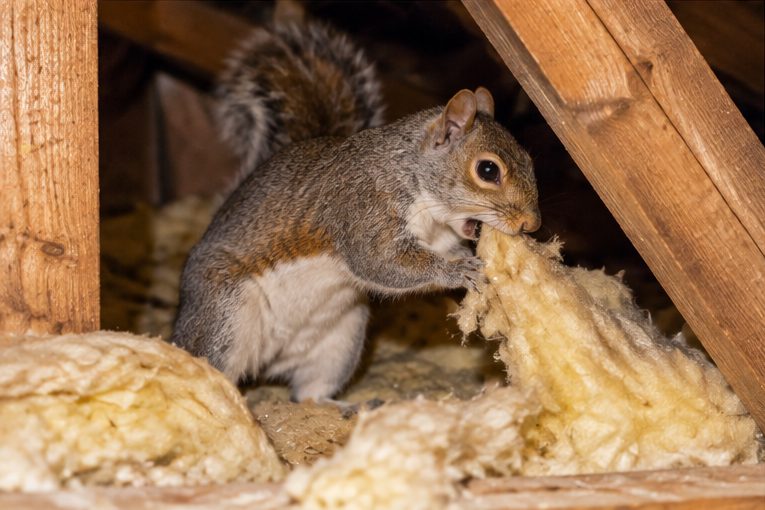
Both tear up insulation. A squirrel nest is a bulky pile of shredded material, often with leaves and twigs mixed in, usually near the eaves. Rats tend to tunnel through insulation, leave worn runs along joists, and can leave dark, greasy smear marks where their bodies rub against timber or brick. Both gnaw, so chewed cables or pipes do not tell you which animal is responsible; if you find any, read about chewed wiring before anyone touches them.
How each one gets up there
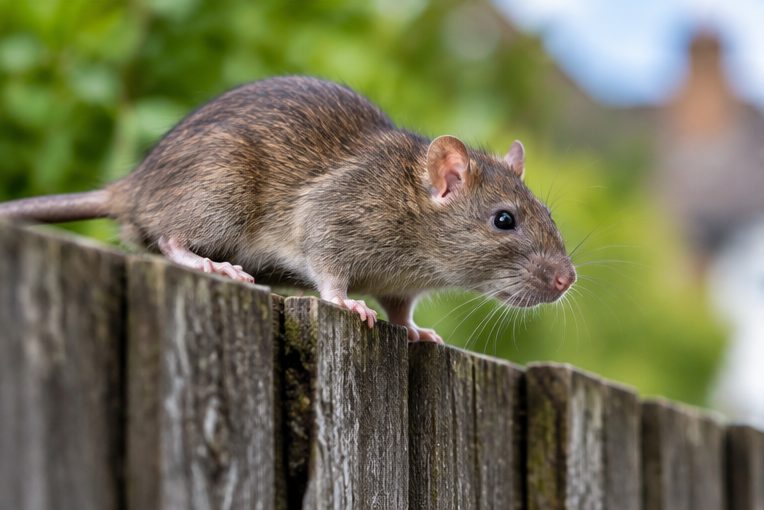
A squirrel climbs the outside of the house and gets in at the roof line; see how squirrels get into a roof. Rats use cavity walls, soil stacks, boxed-in pipes and climbing plants, and can also run along fence tops to reach a low roof. The rat side of the story is in rats in the loft.
What about mice?
Mice in a loft are lighter, quicker and almost entirely nocturnal, with much smaller droppings. If that sounds closer, read rats or mice. It is possible, though less common, for a loft to have more than one visitor, so do not stop at the first clue that fits.
Still not sure?
Tell us the times you hear the noise, what the droppings look like and anything you have seen on the roof, and we will help work out which it is. Lofts in the interwar houses of Kingsbury and Preston can attract either. If it is rats, see rat control in Brent. If it is squirrels, squirrel control in Brent is a £280 trapping service, and you can book squirrel control straight away.