Start with the time of day
Squirrels keep daylight hours. Movement overhead that starts around first light, eases off in the middle of the day, returns in the late afternoon and stops after dark fits a squirrel well. Rats and mice keep the opposite routine, so a loft that is busiest at midnight is probably holding something else. The noises themselves are described in what squirrels sound like in a roof space.
Watch the roof line from the garden
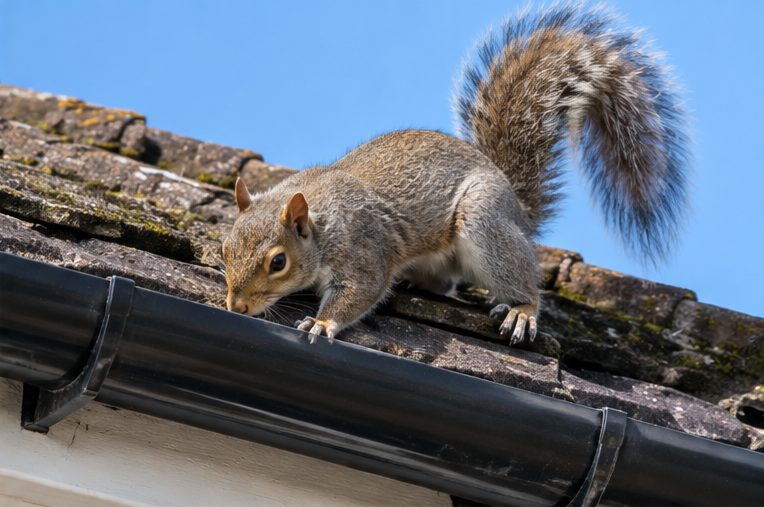
Pick a dry, calm morning and stand where you can see the eaves, the gutters and the corners of the roof. A squirrel living in a loft will usually run along a gutter, a fence top or a branch and then disappear at one particular spot, coming back to it later in the day. Note exactly where. The usual gaps are listed in how squirrels get into a roof.
Clues on the outside of the house
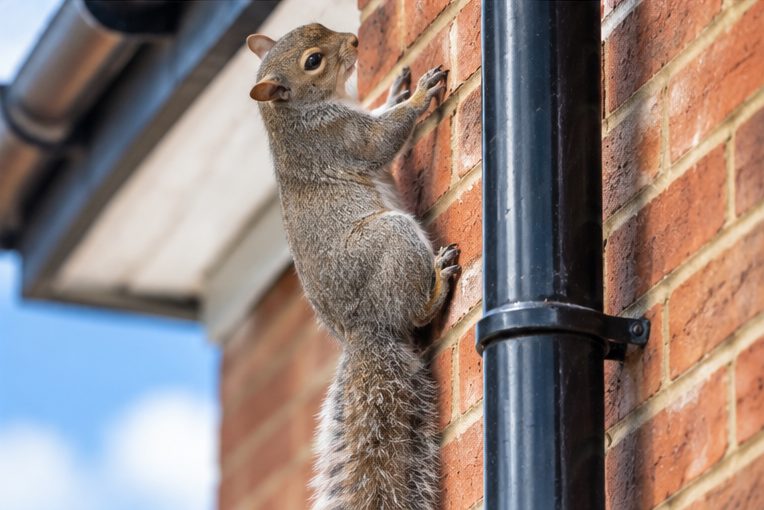
- A splintered or gnawed corner on a fascia or soffit board
- A slipped or cracked tile leaving a dark gap under the edge of the roof
- Dirty rub marks around a hole, where fur brushes the same edge every day
- Nibbled edges on plastic vents or on the soft ends of lead flashing
Any one of these could have another cause, from old storm damage to birds. Several together, on the side of the house where you hear the noise, make a much stronger case. A photo taken from the ground is useful to have when you call.
What you might find in the loft
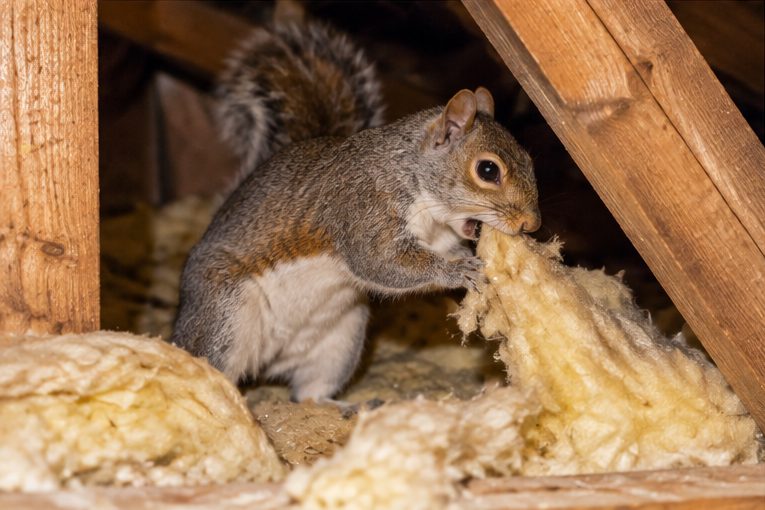
If you can reach the hatch safely, look in with a torch rather than climbing across the joists. Insulation that has been dragged into a heap or stripped back to the plasterboard is a strong sign, as is a bulky ball of shredded material with leaves and twigs worked into it. Cardboard boxes with their corners torn off and scattered droppings near the eaves complete the picture. Squirrel droppings are rounded, larger than a mouse's and usually smaller than a rat's.
Smells and marks on the ceiling
Over weeks, urine soaks into insulation and can leave a stale smell around the hatch or a yellowish patch on the ceiling below. A stain on its own is just as likely to be a roof leak, so treat it as one clue among several. A strong, sickly smell that appears suddenly can mean an animal has died in the roof space, which is worth mentioning when you call.
Pets and next door
A cat that stares at the same patch of ceiling each morning, or a dog that barks at the loft hatch, is a hint rather than proof. Talking to the neighbours helps too. Attached houses share a roof line, and a squirrel that has been heard next door may simply have moved along it. In the interwar houses of Kingsbury and Kenton, with their big lofts and long runs of eaves, that conversation is well worth having.
Could it be something else?
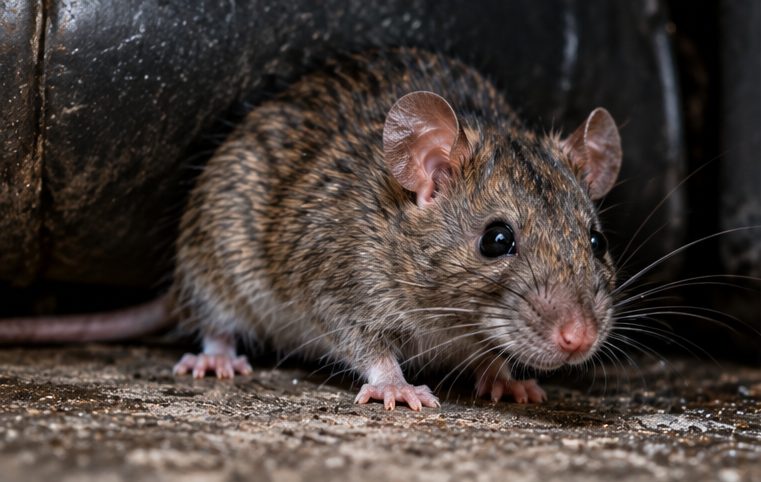
Rats climb into lofts as well, and a large wasp nest can make a dry, papery scratching in late summer. When the noise is mainly at night, read squirrels or rats in the loft. When insects are going in and out of a gap, see a wasp nest in the loft instead.
If the signs add up
Leave the hole open for now, because a squirrel shut inside will chew its way out somewhere new. Keep the hatch closed, take anything precious out of the loft if you can do it safely, and book squirrel control. Squirrel control in Brent is a £280 trapping service. When you get in touch, tell us what you have heard, at what time of day, and where on the roof you have seen them.