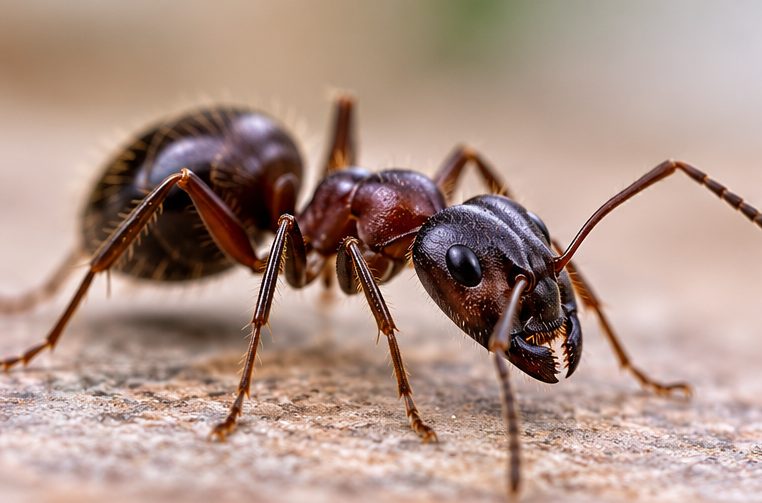
Which ants you are likely to have
In most London homes, the ants on the worktop are black garden ants, which nest outdoors under patios, paths and front steps and come inside looking for sugar and protein. Far less often, and mainly in large heated buildings and blocks of flats, the culprit is the Pharaoh ant: tiny, pale yellow-brown, and nesting indoors in warm voids. The two need very different handling, so check before doing anything. Pharaoh ants and garden ants shows how to tell them apart.
Why the trail keeps coming back
The ants you see are foragers, a small share of the colony. The queen stays in the nest laying eggs, and workers mark a scent trail to any food they find so that others can follow. Kill the foragers and the nest simply sends more along the same scent. Why ants keep coming into the kitchen covers what draws them.
Following the trail back to the nest
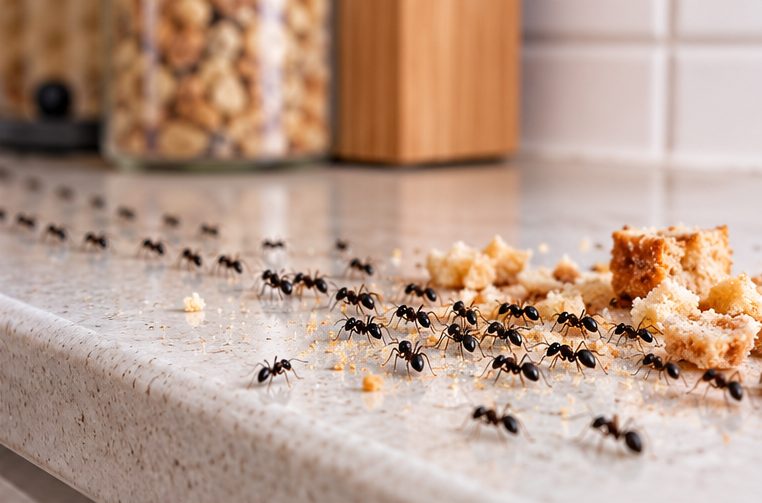
Choose a warm, dry afternoon, when ants are busiest. Put a drop of honey or jam on a scrap of card where they appear, wait for a strong line to form, then follow it backwards with a torch: along the skirting, under the back door, down the outside wall and across the paving. The entrance is often a small hole or crack with a little heap of fine soil beside it. How to find an ant nest gives the method in full.
Where London trails usually lead
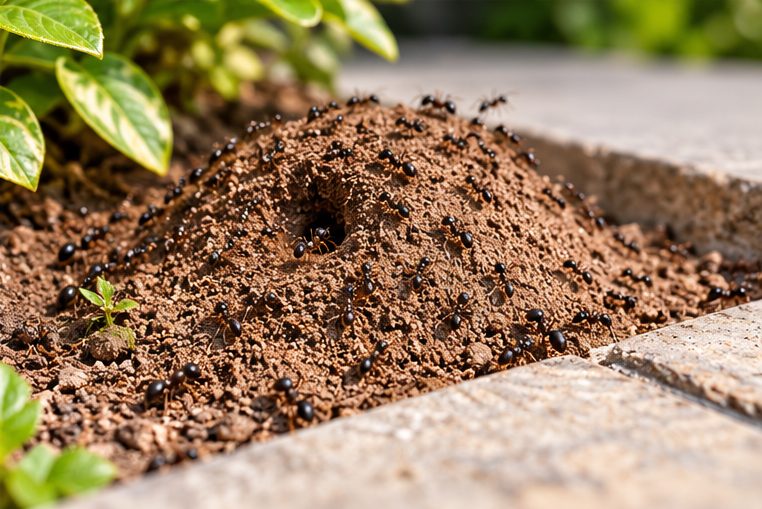
Terraced houses with small paved yards often have the nest under the patio slabs or along the joint between the yard and the back wall. A tiled front path, planters on a balcony and the base of a kitchen extension are other common ends to the line. In older houses with suspended timber floors, the trail may vanish under a skirting board into the void, and now and then a colony settles in a wall or under a warm floor. In a block of flats, a trail on an upper floor may start at ground level or in the building's warm voids, so mention it to the managing agent if neighbours are seeing ants too. Where ants nest around houses and ants nesting inside walls cover both.
Dealing with the colony, not just the workers
For garden ants, the aim is to reach the nest rather than the trail. Ant bait stations and gels from the shop work, when they do, because workers carry the bait home. Put them beside the trail, let the ants feed undisturbed, and do not spray nearby, since a dead forager carries nothing back. Follow the label and keep baits away from children and pets. Sprays and powders on the trail kill whatever they touch and leave the nest as it was. Why ants come back after DIY treatment explains why the line so often returns.
Mistakes to avoid
- Spraying or dusting what may be Pharaoh ants, which can split the colony into several new nests
- Pouring boiling water into a nest beside a wall, path or plant; it rarely reaches the queen and can damage what is nearby
- Sealing the entry gap while the nest is still active, which only pushes the trail to a new way in
- Blocking weep holes or air bricks, which the building needs for ventilation
- Leaving sweet drinks, fruit and pet food out while trying to clear a trail
Give them less reason to come in
While you track down the nest, make the kitchen less rewarding. Wipe worktops and floors with warm soapy water, which clears crumbs and the scent trail at the same time. Rinse cans and jars before they go into the recycling, keep sugar, honey, cereal and biscuits in sealed containers, and put the pet bowl away between meals if ants keep reaching it. None of this removes a colony, but it slows new trails forming while you work on the source.
Flying ants
On a few warm, humid days each summer, winged ants stream out of nests, often in many gardens at once. It looks alarming but is short-lived and normal. If they are coming out indoors, from a skirting board or a gap in the floor, that tells you the nest is inside the structure. Why flying ants appear indoors explains what to do while it lasts.
When to call us
It is time to call if the trail is back within days despite baiting, if you cannot find or reach the nest, if ants are active indoors in the middle of winter, which can mean they are nesting inside the heated building, if you suspect Pharaoh ants, or if you run a food business. When an ant problem needs professional treatment goes into each of these situations.
Keeping them out
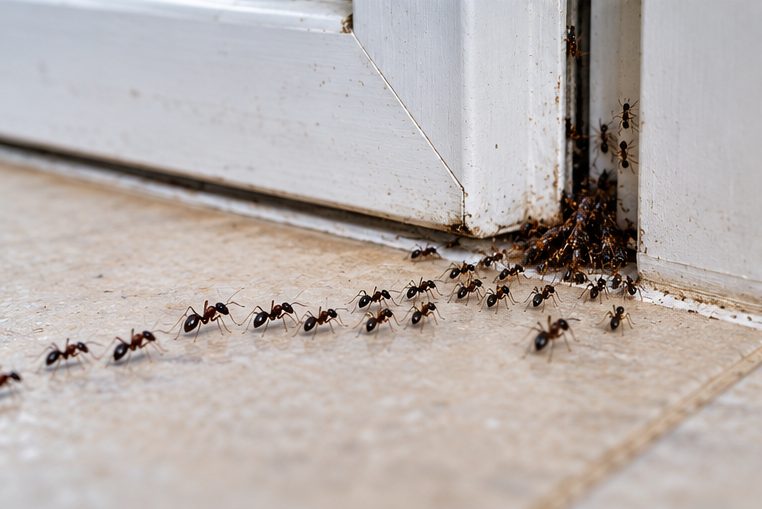
Once the colony has been dealt with, seal the small gaps the trail used, such as round pipes, under thresholds and in cracked mortar, and keep food sealed. How to stop ants entering your home lists the usual gaps. Ant control in London is £190 for a flat and £220 for a house. Book ant control and tell us where the trail goes. If the insects are larger and mostly seen at night, read getting rid of cockroaches.