Carpet moths
Stair Runners in Terraced Houses
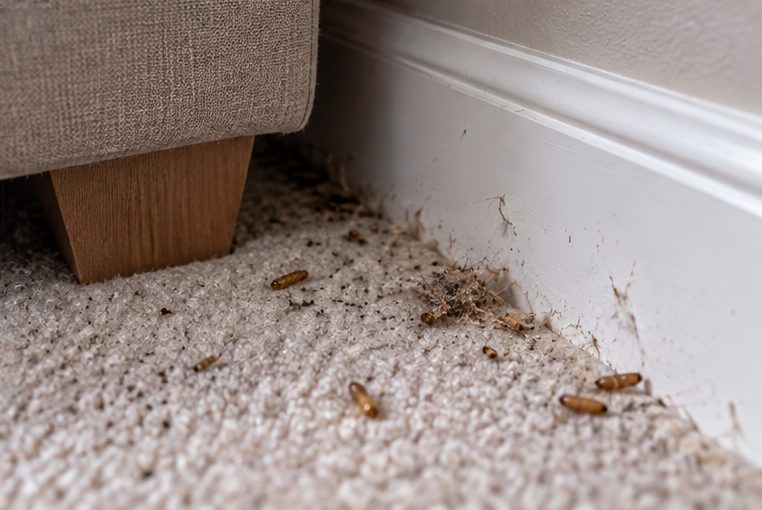
Many Victorian and Edwardian houses have a narrow wool runner up the middle of the stairs. The larvae feed where the runner is least disturbed: at the back of each tread under the stair rod, in the fold over the nosing, and along the edges where the vacuum rarely reaches. By the time bare patches show at the front of a step, they have often been feeding at the back for months.
The runner on a common stair
In a mansion block, the carpet on the shared staircase and landings belongs to the building. If you see small moths rising from it, or thinning at the edges, tell the porter or managing agent; arranging treatment for it is for them, as the Childs Hill area page explains. Moths from the stair can reach the carpet just inside your front door.
Rugs on Period Floors
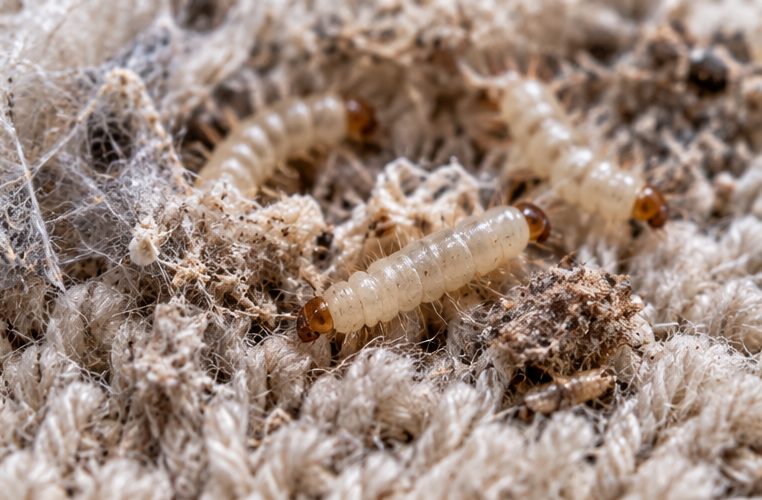
A wool rug on floorboards is fine where people walk every day. The damage happens underneath furniture that sits on the rug, and on the underside of the rug itself, where larvae work in the dark between the pile and the boards. Rolled rugs in storage are at even more risk. Why moths favour the spaces under furniture explains the pattern.
Fitted carpets in older flats
Wool fitted carpet in a mansion flat bedroom is often eaten along the skirting, behind doors and under beds and wardrobes. Why holes appear in carpet helps you tell moth damage from wear.
The long hall of a mansion flat
Mansion flats often have a long entrance hall with a runner or fitted wool carpet that is walked down the middle and never touched at the sides. Moths feed along both edges, behind the front door and under a hall table or coat stand. Halls are not counted as rooms in the price, but mention the hall when you book so it is looked at. Where carpet moths hide lists other quiet spots, such as the back of a wardrobe.
Signs to Check
- Small, pale, straw-coloured moths that run or flutter low rather than flying to the light
- Thin silk tubes or webbing at the back of a stair tread or the edge of a rug
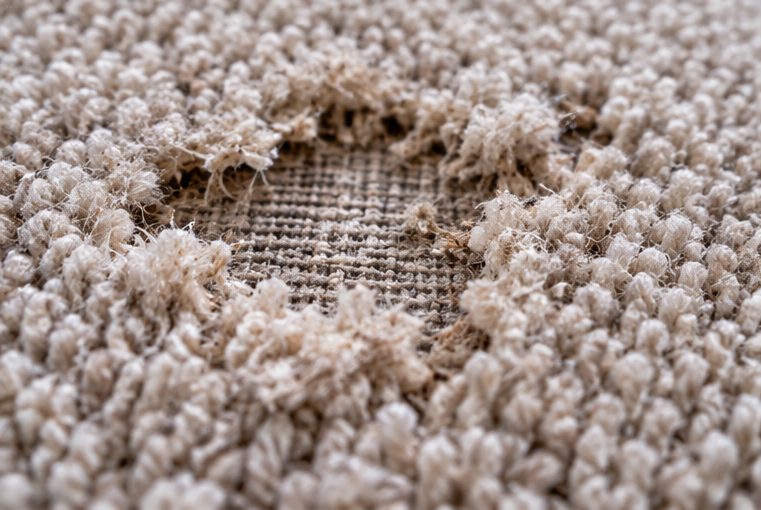
- Tufts that come away in your hand, or pile eaten down to the backing
- Cream-coloured larvae under a rug when you lift it
- Holes in wool clothes or blankets stored nearby
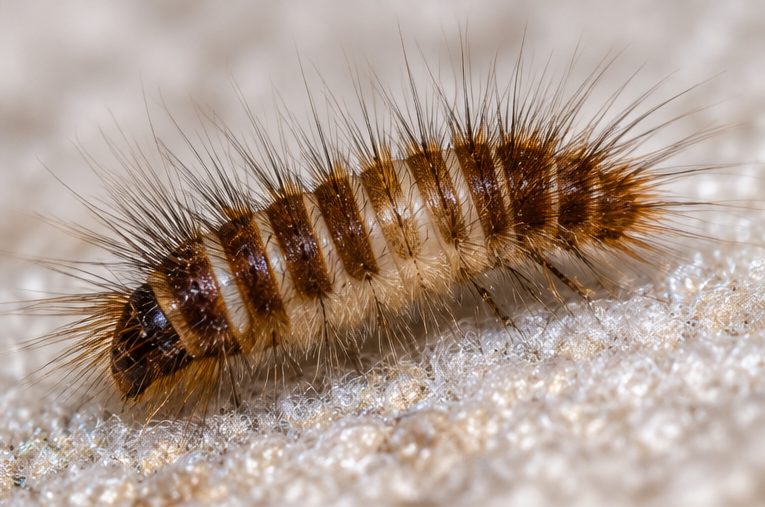
The signs of carpet moths has pictures. If you find small bristly larvae instead, it may be carpet beetles.
Before the Visit
- Vacuum thoroughly, including the edges of the runner and under the rugs, and empty the vacuum outside
- Clear furniture back from the carpet edges where you can
- Do not throw rugs out before the visit; they may be treatable
- Put affected wool clothing in sealed bags until you know what is happening
When you book carpet moth control, say which rooms are affected and whether the stair runner is involved. How to prepare for carpet moth treatment has the details. You will be told what was found and what happens next, and the time it takes depends on how widespread the moths are. Get in touch if you still see moths after a while.
Keeping Moths Off a Runner
Lift the stair rods once or twice a year and vacuum under the runner, turn rugs over and vacuum the back, move furniture now and then, and keep stored wool sealed. Stopping carpet moths coming back has more ideas, and Carpet Moth Control Barnet covers larger homes across the borough. Moths and bed bugs are very different problems, but both are worth checking for when second-hand furniture comes in.