Carpet moths
Carpet Moths on Finchley's Shared Stairs
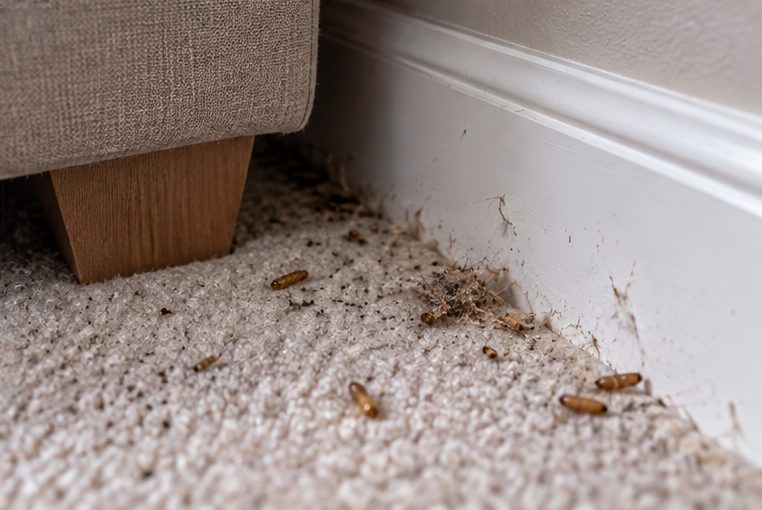
When a period house was divided into flats, the original staircase usually became the shared way up, with a front hall and landings serving every flat. Those areas are often carpeted, sometimes in an old wool carpet that has been there since the conversion. Carpet moth larvae feed on wool and other animal fibres, and they choose places that are dark and left alone: along the edges of each tread, under the nosing, and in the corners of landings where the vacuum does not reach. Where carpet moths hide explains their choice of spots.
Why nobody notices
Everyone uses the stairs, but in many converted houses nobody is responsible for cleaning them day to day. A bare strip along the edge of a tread or small moths fluttering up from the landing is easy to walk past, and by the time someone mentions it the larvae may have spread along several flights.
From the stairs into the flats
The moths fly, and the flats that open off the landings have their own carpets, rugs and wardrobes. A flat with wool carpet and a rug that is rarely moved is where they are likely to go next. It works the other way too: moths from a flat can seed the stair carpet. A rug laid on the landing outside one flat's door, or a wool runner fitted over the original stair carpet, gives the larvae another undisturbed layer to feed in.
Checking the Stairs and Your Flat
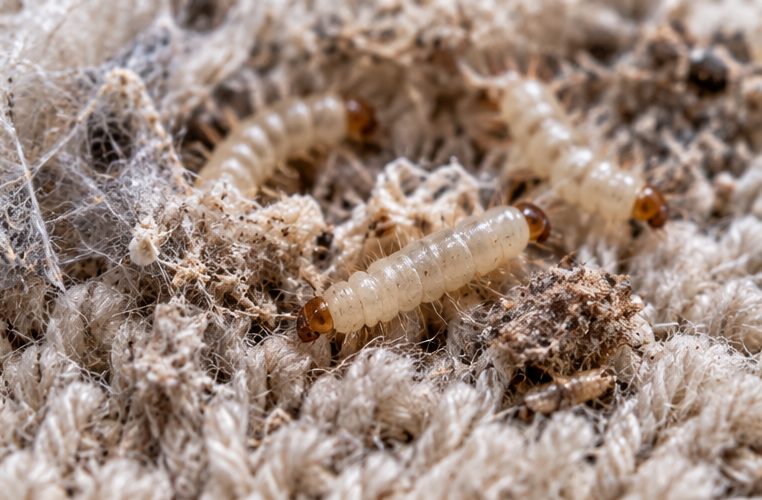
- Bare or thinning patches along the edges of treads and at the corners of landings
- Small, pale, buff moths fluttering low rather than towards the light
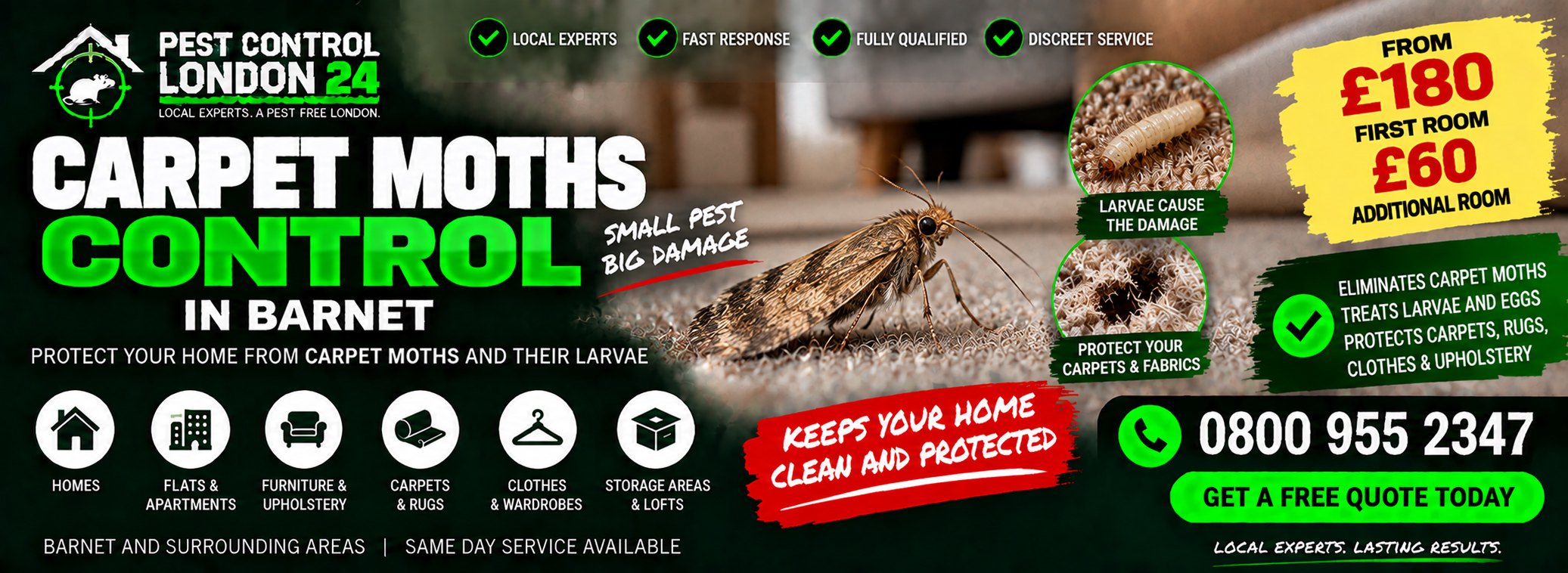
- Tiny cream larvae or silky tubes in the pile under the stair nosing
- In your flat, damage along skirtings and under beds or heavy furniture
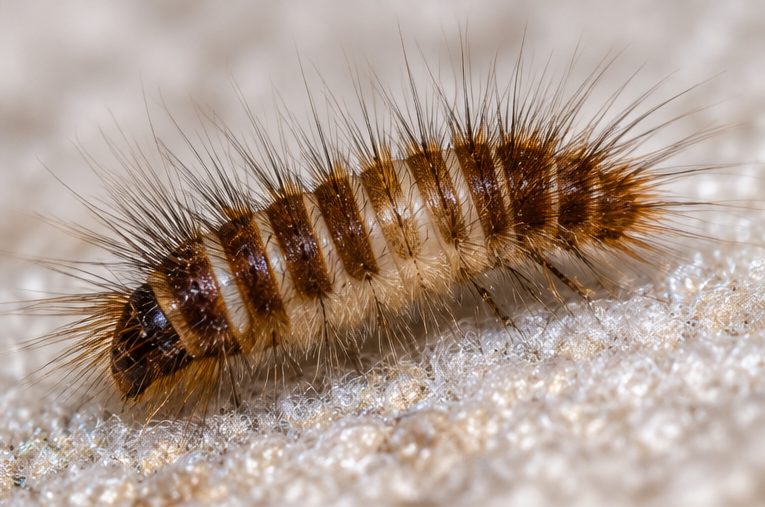
The signs of carpet moths and why holes appear in a carpet go into this. Small bristly larvae on windowsills or along carpet edges may be carpet beetles instead.
Who Arranges What: Stairs or Flat
The shared stairs and hall are common parts, so in a leasehold conversion they are normally the freeholder's to look after, often through a managing agent; the area page explains how that usually works. Inside your own flat, the carpets and rugs are yours. If you rent, tell your landlord.
- Tell the freeholder or managing agent about damage to the communal carpet, with photos if you can
- Let the other flats know, so they can check their own carpets and wardrobes
- Book treatment for the affected rooms in your flat
- Ask whoever manages the building to arrange the stairs at about the same time
Getting Ready and Afterwards
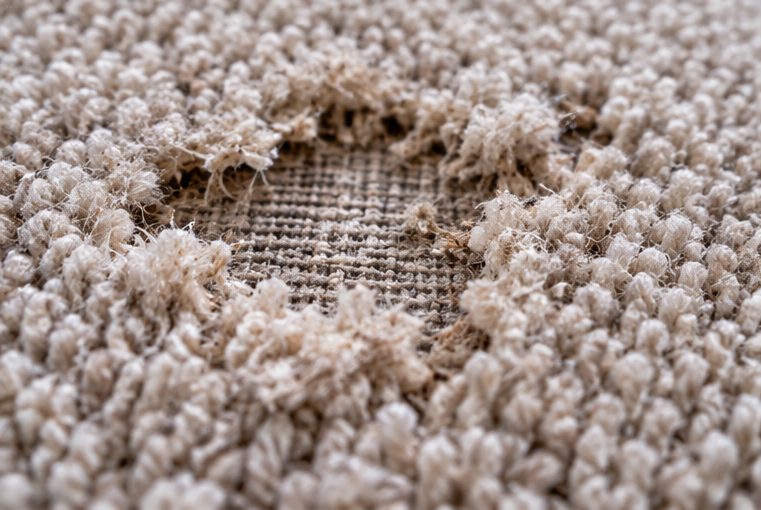
When you book, tell us which rooms in your flat are affected and whether the communal stairs have damage. Vacuum thoroughly, including edges and under furniture, and clear the floor. Preparing for carpet moth treatment has the full list. You may still see a few moths for a while; how long depends on the flat and how established the larvae were. Get in touch if damage keeps spreading.
Keeping Moths Off the Stairs
Regular vacuuming of the stair edges, landings and under the nosings is the single most useful habit, and it helps if the flats agree who does it or the managing agent includes it in the building's cleaning. Inside flats, move rugs and heavy furniture now and then and store woollens in sealed bags. Stopping carpet moths coming back has more, and Carpet Moth Control Barnet covers the borough.