Where Mill Hill Gardens Meet the Woods
In much of suburban London a back garden is bordered by other back gardens. In Mill Hill, a good share of them run up against woodland, hedgerow, meadow or a playing field instead. Between the older houses along The Ridgeway, the streets that fall away down the slopes and the land around Arrandene and Moat Mount, the boundary between a tended garden and somewhere wild is often a single fence panel.
Animals that live in that wilder ground do not treat the fence as a boundary. They use the garden as the nearest part of their range, and the house as the nearest shelter. Three of them account for most of the trouble at this edge: grey squirrels, field mice and wasps.
Branches over the roof
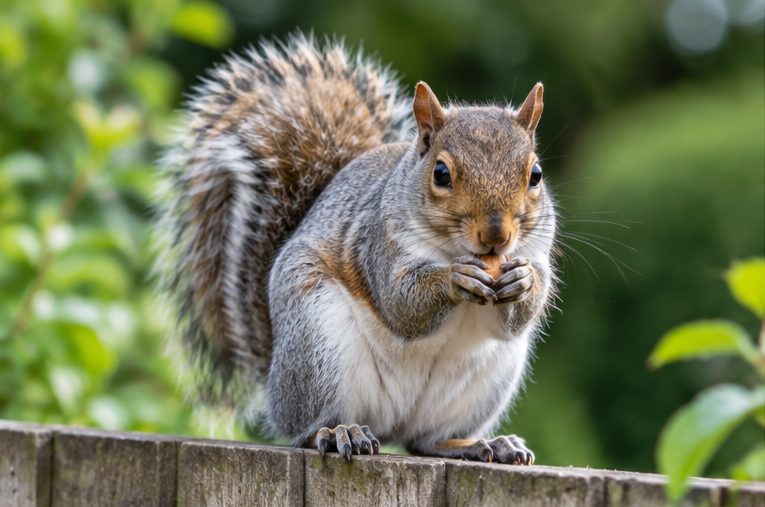
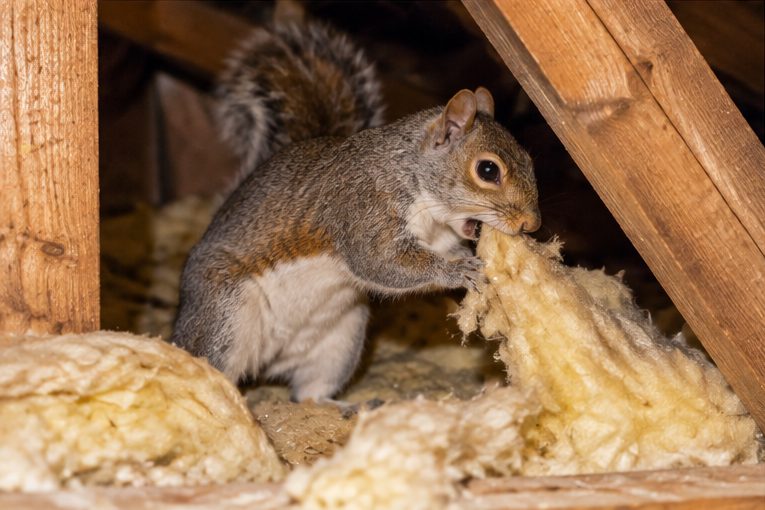
Trees on open land, and the big garden trees planted beside it, have often grown for decades with nobody cutting them back from the houses. A limb that reaches over a gutter, or stops a short jump from the eaves, gives a squirrel a way onto the roof without crossing open ground. Once up there, any soft board or lifted tile is worth investigating, and a dry loft beats a drey in a tree.
Where the tree is on your own land you can have it cut back. Where it stands on public open space or a neighbour's plot, it is a conversation with the owner first, and in the Mill Hill village conservation area trees are protected in a way that generally means giving Barnet Council notice before any work.
Field mice in the autumn
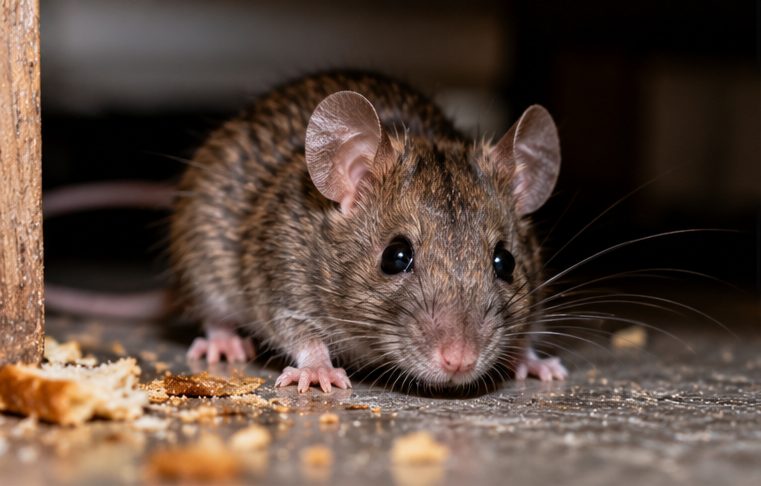
The mouse that comes in from a woodland edge is often not the house mouse at all but the wood mouse, usually called the field mouse. It is a little larger, with big ears, prominent dark eyes and a long tail, and it jumps rather than scuttles. Through the summer it lives in hedge bottoms, leaf litter and the long grass at the end of the garden.
When the nights cool and the food outside thins, field mice move towards buildings: first the shed, the garage and the compost heap, then the house if a gap allows. They climb well, so they are found in lofts and cupboards as well as at floor level, and they are very fond of stored bird seed, bulbs and apples.
Wasps at the bottom of the garden
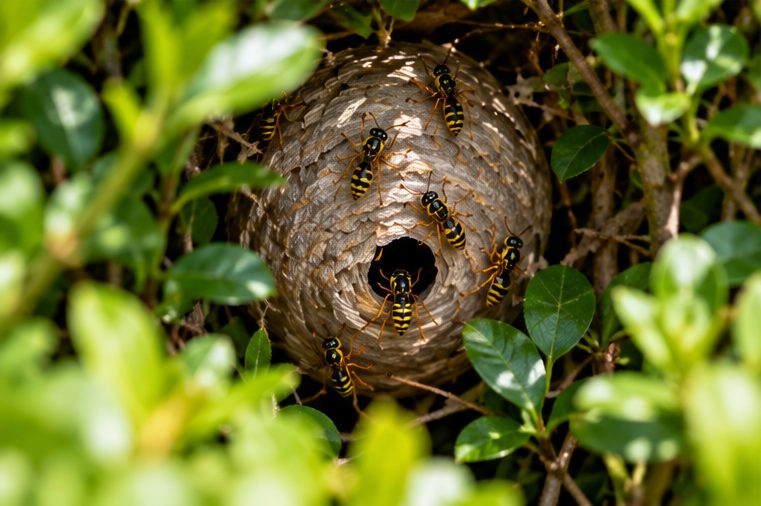
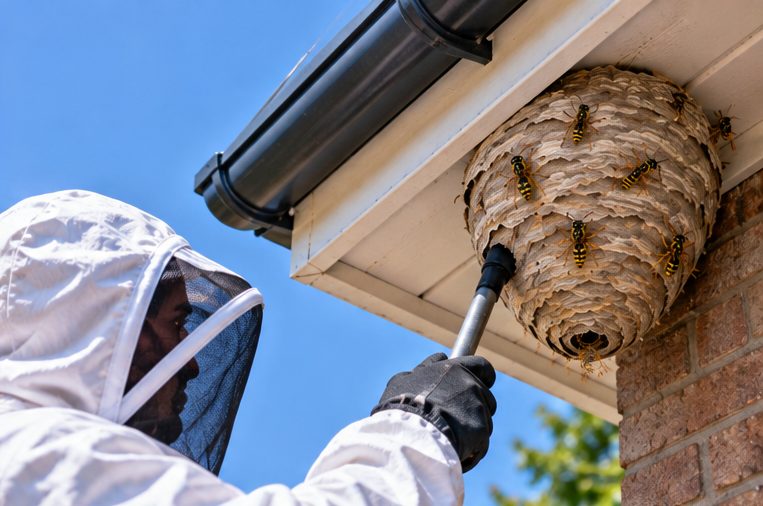
Hedges, holes in old trees, grassy banks and unused bird boxes all suit a nesting queen, and a garden against open land has more of them than most. A nest in a hedge forty metres from the back door can grow all summer without anyone noticing, until the lawn is mown near it or the workers start coming to the kitchen for sugar in August.
What the Hill Itself Changes
The slope matters more than people expect. Gardens here are often stepped, with retaining walls, banks and flights of steps, and the back of a house can sit at a different level from its garden. That leaves ventilation bricks and pipe entries close to the soil, gives wasps dry banks to dig into, and means the damp, sheltered base of a retaining wall makes a good run for small mammals.
It also matters on the day. If the affected part of the garden is at the top of a steep flight or reached only through the house, say so when you ring, so the visit is planned around it.
Older houses and newer streets
The houses around The Ridgeway and Mill Hill village are older, with more roof edge, more chimneys and more mature trees close by. Millbrook Park at Mill Hill East is newer, with younger planting and far less woodland against the back fences, although it still sits near open land. The edge presses hardest on the older houses, but no part of Mill Hill is far from it.
Living Alongside the Edge
Nobody can move the woods, and for most people they are the reason for living here. What can be controlled is the gap between the edge and the house: branches kept back from the roofline, bird food stored in metal bins, compost heaps kept away from the house wall, and the small openings at ground level and along the eaves closed before the autumn rather than after it. Once an animal has taken up residence, the price for dealing with it is published below.