Carpet beetles
Where Carpet Beetles Come From in a Block
Carpet beetle larvae feed on feathers, hair, wool and the fluff that gathers in quiet corners. The adults feed on pollen and fly in through open windows and balcony doors in spring and early summer. In a modern block, a bird's nest nearby is the most likely place for them to have been breeding.
Pigeon nests on balconies and ledges
Pigeons use balconies that are left quiet, particularly behind stored items, in corners under the balcony above and on ledges and sills. An abandoned nest holds feathers, droppings and dead material, and carpet beetles can breed in it for months. From there the adults come indoors through a door or window left open. Nests on communal ledges and roofs are for the managing agent to deal with, often through a bird-proofing contractor.
Stored textiles in cupboards
Once indoors, larvae look for quiet places with natural fibres: boxes of wool clothes, blankets in a storage cupboard, a duvet with a feather filling, or the fluff under a bed. Where carpet beetles hide lists the likely spots in a flat.
Beetles on big windows
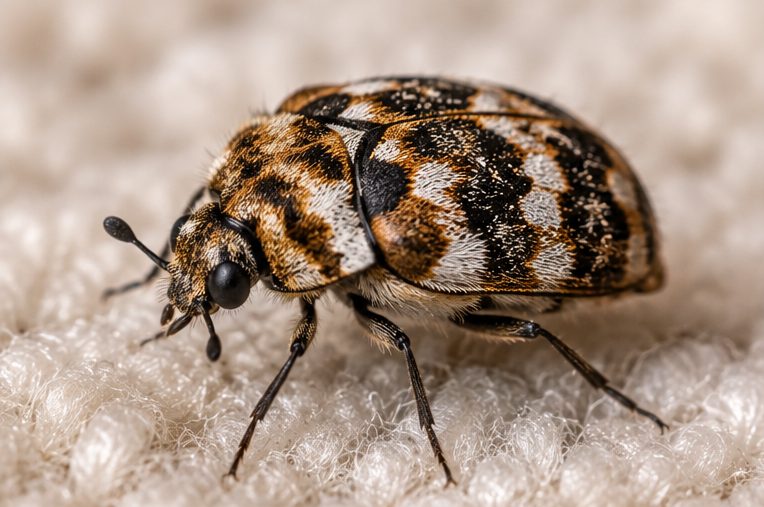
Adult beetles are drawn to light, and the large windows and glazed balcony doors of new flats are where they end up. Small round beetles, mottled brown, black and cream, on the inside of the glass in spring are usually the first thing people notice. Why beetles appear on windowsills explains why.
Flats that have just been moved into can also bring beetles in with them, in boxes of clothes or a feather duvet that sat in storage. If the balcony has never had a nest, look at what came with you.
Signs to Check
- Small round mottled beetles on window frames and sills, especially in spring
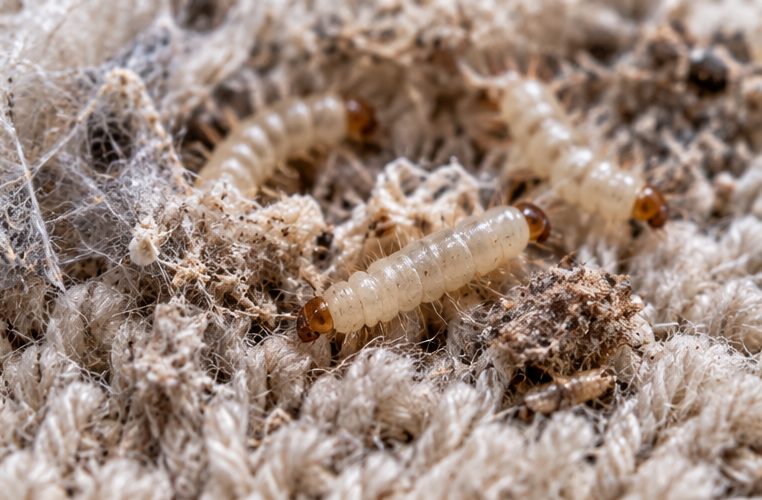
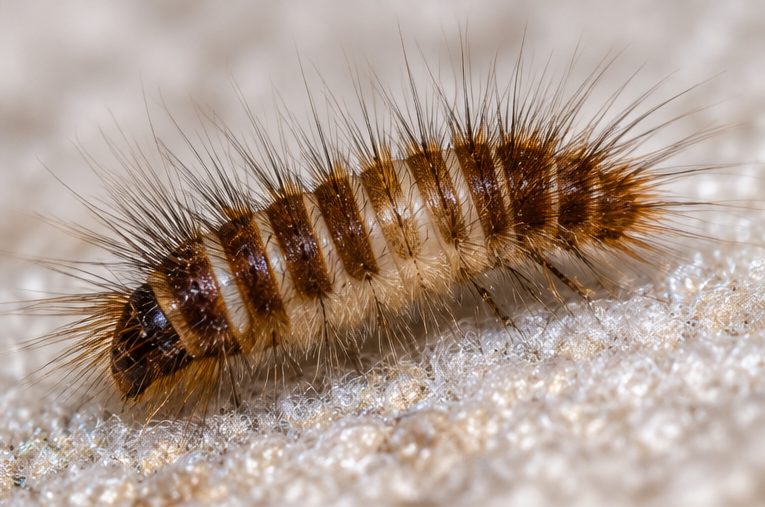
- Brown, bristly larvae, a few millimetres long, along carpet edges or in stored clothes
- Shed larval skins in drawers, storage boxes or under the bed
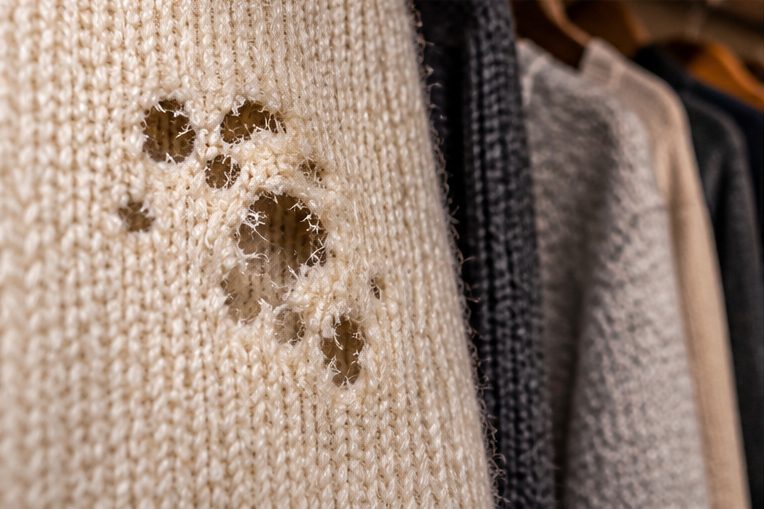
- Small, irregular holes in wool clothes, blankets or rugs
- An old pigeon nest on your balcony or a ledge close to your windows
What the larvae look like helps you tell them from carpet moths, whose larvae are cream and smooth.
Skin Irritation
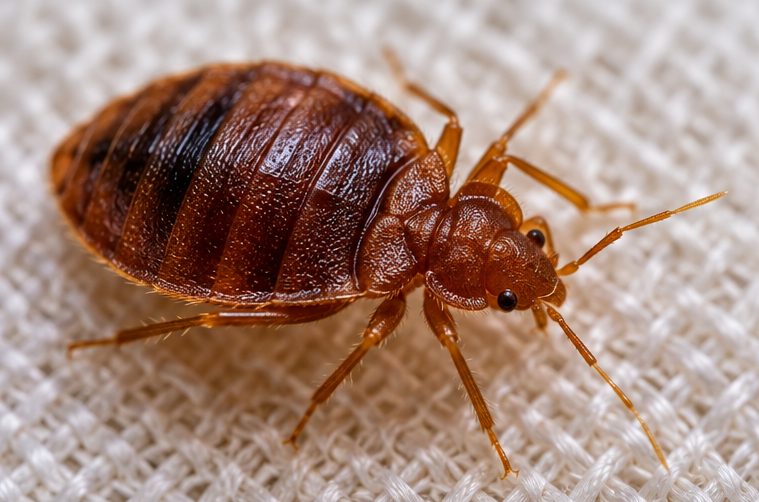
Some people get an itchy rash from contact with the tiny hairs on carpet beetle larvae, which is sometimes mistaken for bites. Carpet beetle larvae and skin explains more. Speak to a pharmacist or GP about a rash, and call 999 for signs of a severe allergic reaction. If the marks are in lines on skin exposed in bed, see bed bug control instead.
What to Do Now
- Report nests on communal ledges and roofs to the managing agent
- Clear an old nest from your own balcony with gloves on, bag it and put it in an outside bin
- Check stored wool, feather duvets and cushions for larvae and skins
- Vacuum under beds, along skirting and inside wardrobes, and empty the vacuum outside
- Keep balcony storage to a minimum so pigeons have nowhere to settle
Booking Carpet Beetle Control
When you book carpet beetle control, tell us which rooms have larvae or damage, whether there has been a bird nest on your balcony, and what is stored in cupboards. Halls are not counted as rooms. How long it takes depends on the flat and on whether the outside source has gone, so get back in touch if larvae keep appearing. Preventing carpet beetles returning covers the long term, and Carpet Beetle Control Barnet covers the interwar roofs elsewhere in the borough.