Carpet beetles
From Birds' Nests to Bedrooms
Carpet beetle larvae feed on feathers, hair, fur, wool and dust rich in skin flakes. An old nest is ideal, and once they have used it up they wander in search of more. The woodland edge described on Pest Control Mill Hill supports a lot of birds, and older houses have more places for them to nest.
Chimneys
Many older houses have chimneys that are no longer used, and some birds, such as jackdaws, readily nest in unused chimney pots and flues. Nests can build up over several years. Larvae move from the old nesting material down the flue and out into the room around a boarded or blocked fireplace, or into the gaps at the edge of the floor.
Eaves and lofts
Sparrows, starlings and other birds nest behind gaps in fascias and soffits. The larvae work into the loft, feed on debris in the insulation and on anything stored, and drop through gaps around light fittings and loft hatches into the rooms below. Where carpet beetles hide covers the other spots.
What is stored up there
A loft in a long-owned house often holds exactly what larvae like: old eiderdowns and feather pillows, bags of wool clothes, rolled rugs, a fur coat or a box of children's knitted toys. Stored in cardboard or open bags, they can feed a population for years without anyone noticing, and the larvae then spread downstairs. Check stored textiles each year and move anything you want to keep into sealed plastic boxes.
Signs, and the Spring Windowsill
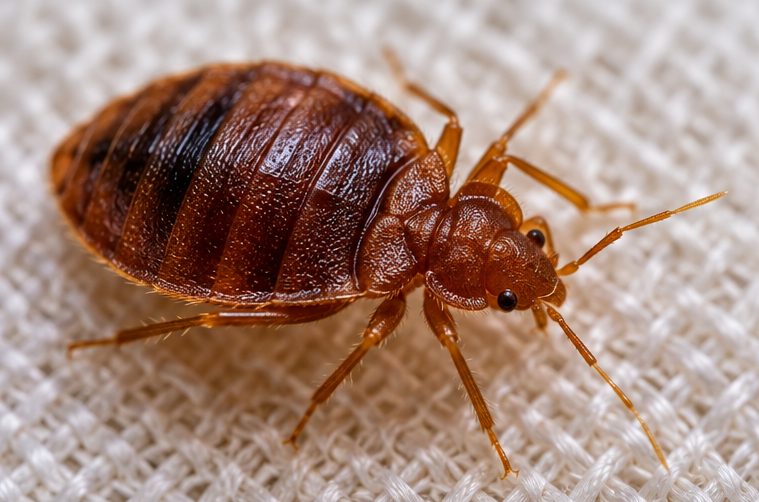
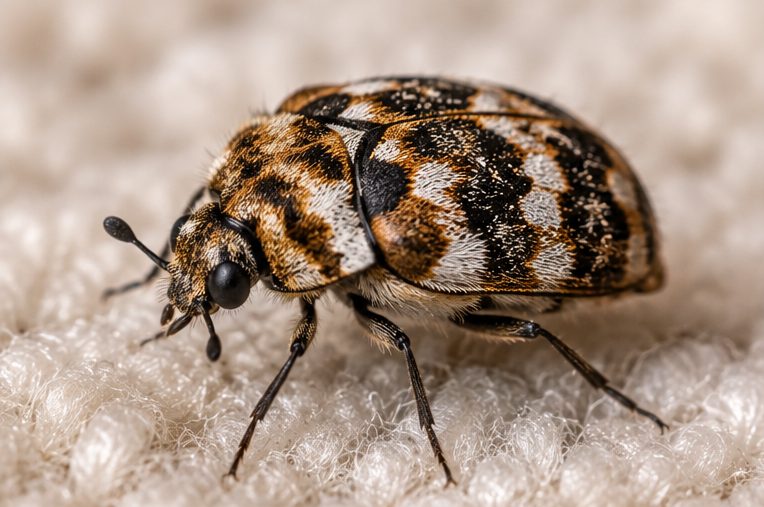
Adult carpet beetles are tiny, round and mottled. In spring and early summer they head for the light to fly out and feed on pollen from flowers, so they turn up on windowsills. A garden full of flowering shrubs next to open land gives them plenty to feed on, and the next generation of eggs is laid back indoors. Why carpet beetles appear on windowsills explains.
- Small round beetles on windowsills in spring
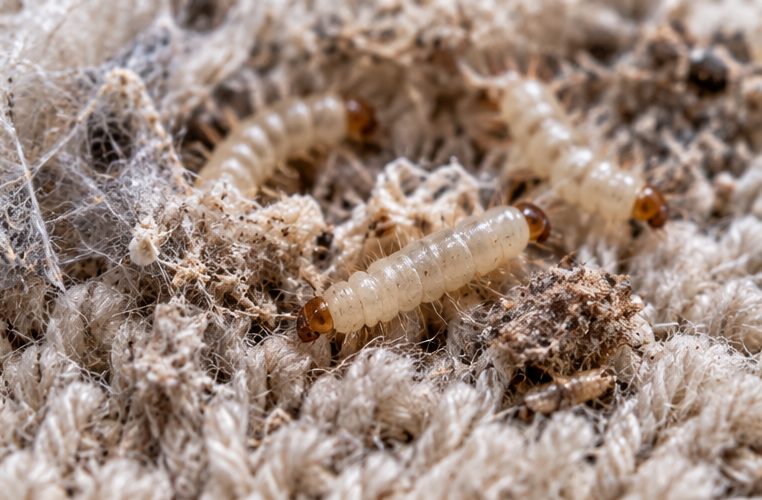
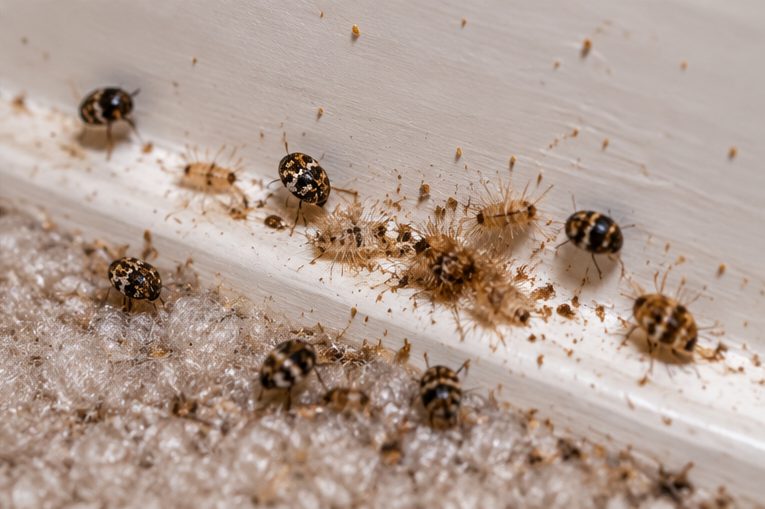
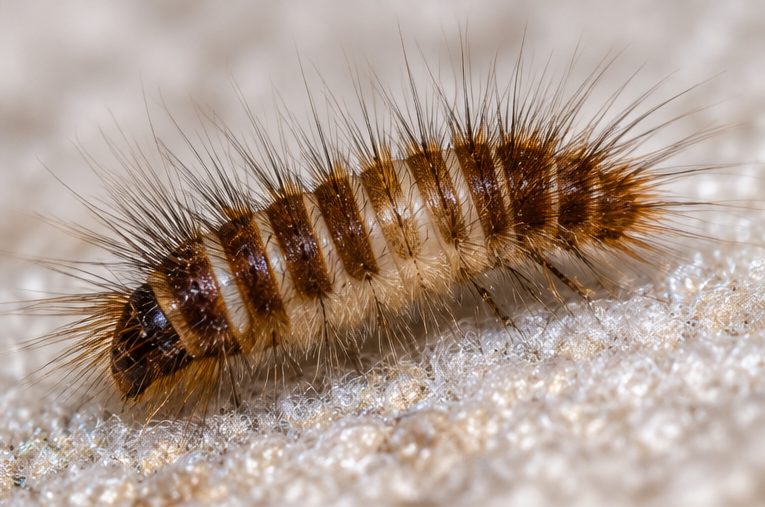
- Short, bristly, brown larvae along carpet edges, in wardrobes or under furniture
- Shed larval skins in drawers or along skirting boards
- Irregular holes in wool, felt or feather items
- Damage near a fireplace or below a loft hatch
What the larvae look like helps confirm it, and if the larvae are smooth and cream with silk tubes, it may be carpet moths instead.
Nests and the Law
Wild birds' nests are protected while they are in use or being built, and it is an offence to damage or destroy one then. Old nests can be removed once the birds have finished nesting, usually from autumn. A chimney sweep can clear old nesting material from a flue, and a roofer can close the gaps in the eaves once any birds have left.
Skin Irritation
The hairs on carpet beetle larvae can cause an itchy rash in some people, which can be mistaken for bites. If you have a rash, speak to a pharmacist or GP; call 999 if there are signs of a severe allergic reaction. Whether larvae irritate the skin has more.
Booking and Keeping Them Away
When you book carpet beetle control, say which rooms are affected, whether there are unused chimneys or birds nesting in the roof, and what you have found. Clear floors and wardrobe bottoms so edges can be reached. You will be told what was found and what happens next; timing depends on the house and the source.
Afterwards, deal with old nests at the right time of year, keep the loft tidy, vacuum edges and under furniture, and store wool and feathers sealed. How to prevent carpet beetles returning has more. For the borough-wide picture, see Carpet Beetle Control Barnet.