Carpet beetles
From Birds' Nests to Bedrooms
The brook corridor, covered on Pest Control Whetstone, brings rats and foxes up the garden, but for carpet beetles it is the birds that matter. House sparrows and starlings nest in gaps at the eaves and under tiles, and blue tits use holes in soffits and old walls. Once the young have flown, the nest stays behind: feathers, down, droppings and dead insects, which is exactly what carpet beetle larvae eat.
Semis and their eaves
Interwar semis have long runs of eaves and soffit, and where a board has shrunk or a tile has slipped, birds get into the roof edge. The nest sits just behind the fascia, above the insulation, and larvae that hatch there wander across the loft and down into the bedrooms beneath, usually the rooms along the eaves line.
Cottage roofs and walls
In the older cottages, birds also nest in holes in old brickwork, behind loose render and under the ridge. Larvae can reach a room through gaps in the ceiling, round a light fitting or along the edge of the floorboards, so the damage is not always directly under the nest.
Loft storage
Boxes of blankets, old coats, woollen jumpers, soft toys and suitcases in the loft feed the larvae on their way down. Where carpet beetles hide around the home lists other places, including airing cupboards and the space under beds.
Spring on the Windowsill
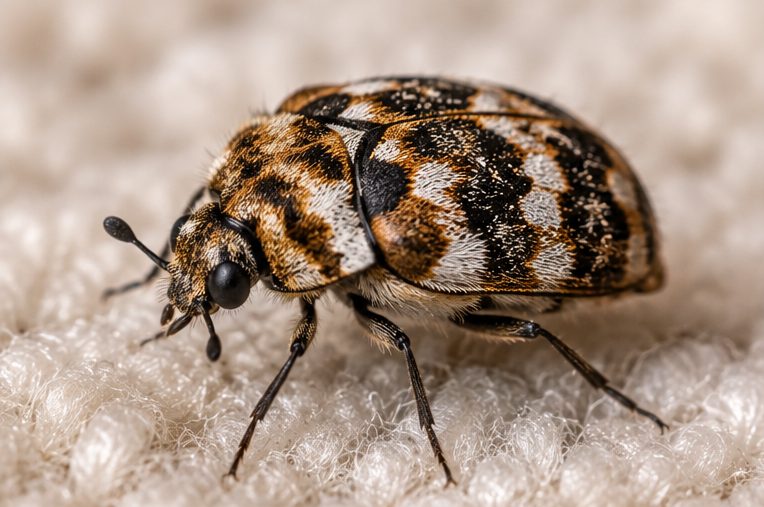
The first thing most people notice is a few small, round, mottled beetles, only millimetres long, on the inside of an upstairs window in April or May. Adults are drawn to light and feed on pollen outdoors, so they make for the glass; in a house backed by hedges and flowering shrubs, the garden gives them every reason to come and go. Why carpet beetles appear on windowsills explains what it tells you about the house.
Signs to Check in the Rooms Below
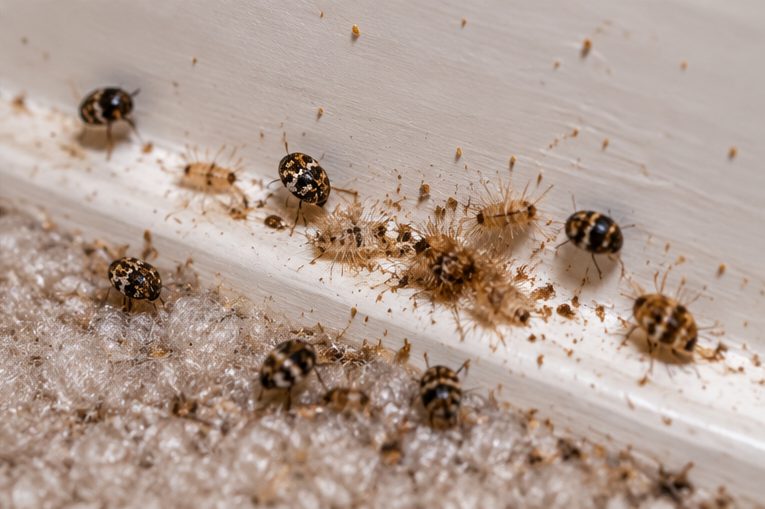
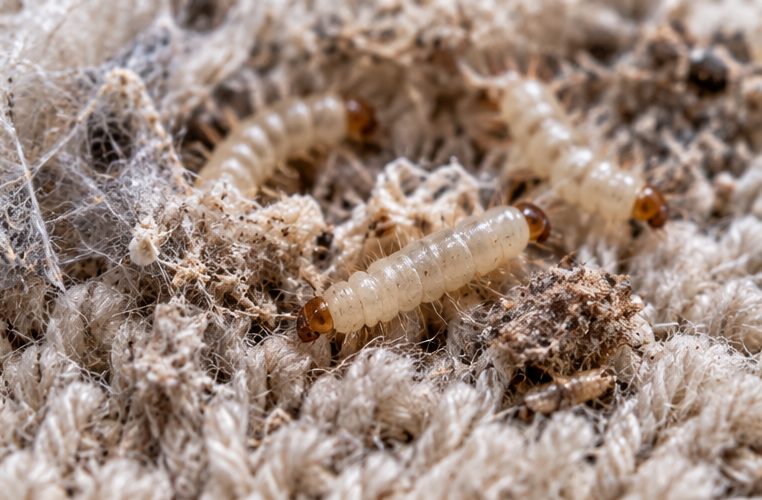
- Short, bristly brown larvae, the 'woolly bears', along carpet edges or in the airing cupboard
- Empty bristly skins left behind as the larvae grow
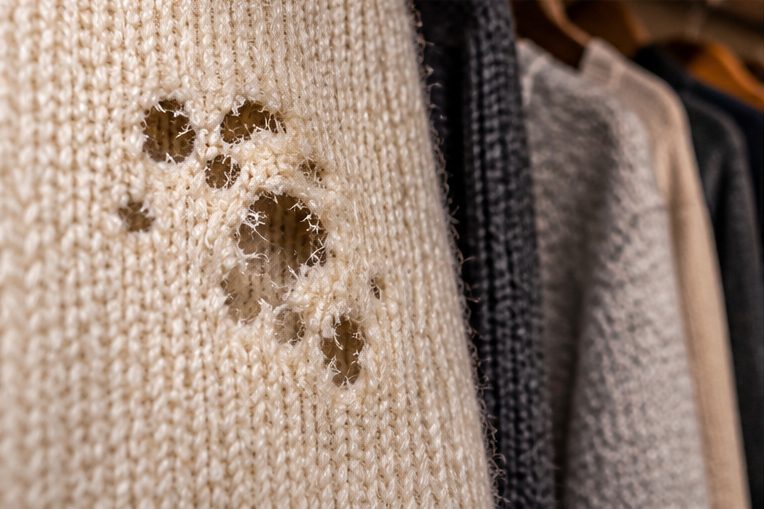
- Small holes in wool jumpers, blankets or felt
- Adult beetles on the sills of rooms under the eaves
- Damage in the corners of upstairs carpets rather than downstairs
What carpet beetle larvae look like helps rule out other insects. Smooth cream larvae in silky tubes point to carpet moths instead.
Skin Irritation
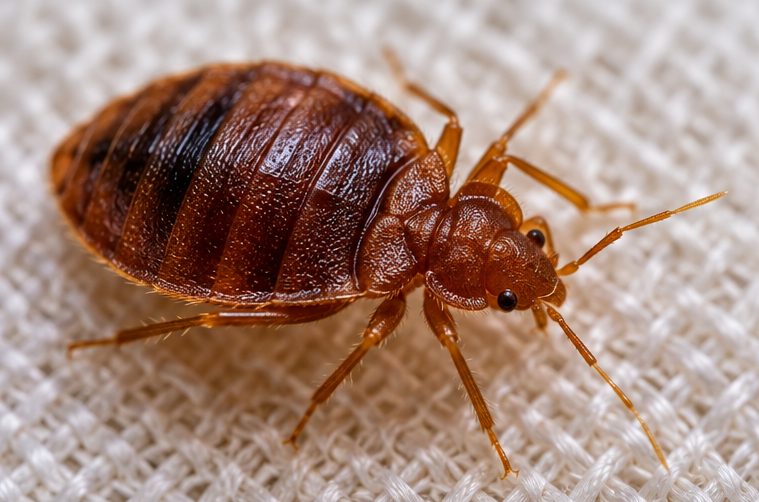
The hairs on carpet beetle larvae can irritate some people's skin, causing an itchy rash that is easily mistaken for bites. If you are unsure what is causing a rash, speak to a pharmacist or GP. Whether carpet beetle larvae irritate skin explains more, and bites in lines along the arms after sleeping are more typical of bed bugs.
Before and After the Visit
- Vacuum along skirting boards, carpet edges, under beds and inside wardrobes, and empty the vacuum into an outside bin
- Bag stored woollens and bedding from the loft that show damage
- Clear the edges of the affected rooms so they can be reached
- Tell us if you know of a bird's nest in the eaves or loft
When you book carpet beetle control, list the upstairs rooms with larvae or damage. How long things take to settle depends on the house and the source, and how long carpet beetle treatment takes covers what affects it.
Stopping the Next Nest
Wild birds' nests are protected by law while they are being built or used, so an old nest in the eaves should only be cleared once it is empty, usually in autumn or winter. After that, have the gap closed by a roofer or carpenter so birds cannot use it next spring. Keep loft textiles in sealed boxes and vacuum the rooms under the eaves regularly. Preventing carpet beetles returning has more, and Carpet Beetle Treatment Barnet covers the rest of the borough.