Ants
Why the Ground-Floor Flat Gets the Ants
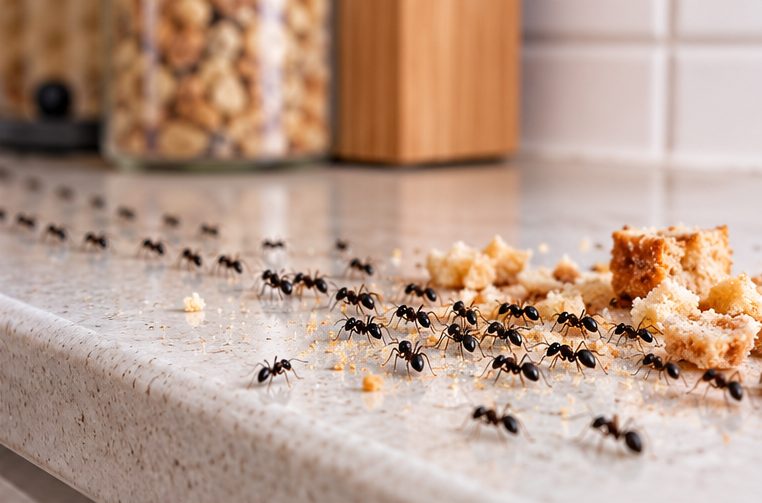
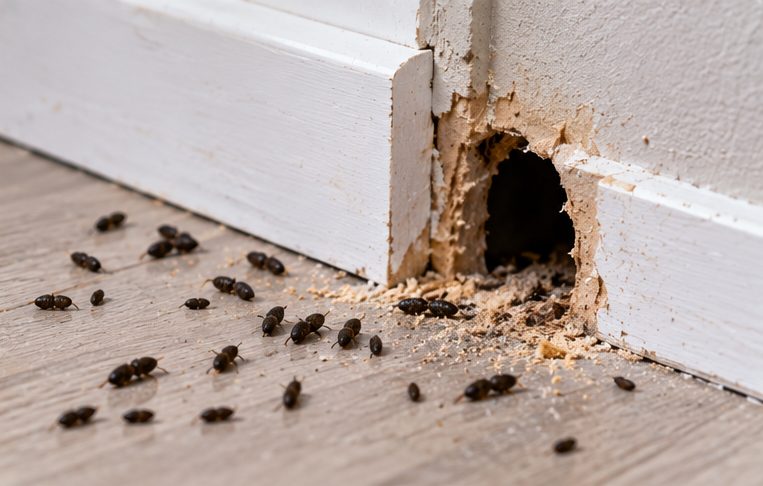
Black garden ants nest in the soil and sand under paving, along the foot of warm walls and in the edges of lawns. The ground-floor flat of a converted Victorian or Edwardian house sits right against that. Its kitchen is often in the rear addition at the back of the house, with a door or French windows onto a small patio, and the trail from the nest to the kitchen can be a couple of metres. Why ants keep coming into the kitchen explains what draws them in.
Patio doors, back steps and thresholds
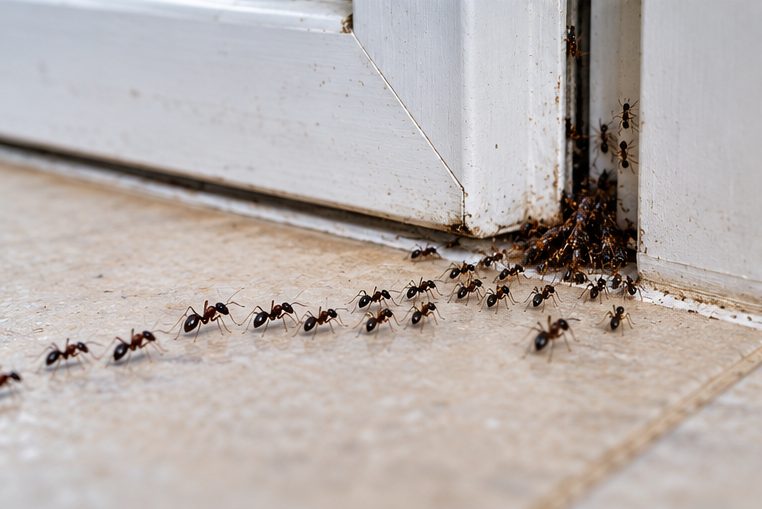
Many garden flats have had French windows or bifold doors fitted where a sash window used to be, and the threshold and the joint beneath it are common ways in. Old stone or brick back steps, with gaps where they meet the wall, give ants a sheltered route to the door. In the warm months, a trail that runs along the outside wall and turns in under the door frame is the pattern to look for.
Under the floor
A period ground floor is often suspended timber, with a void beneath and air bricks at the front and back. Ants can nest in the ground under the house and appear through gaps in the floorboards or at the skirting, well away from any outside door. If the trail comes up in the middle of a room, say so when booking. Where ants nest around houses lists the likely spots.
Flying Ants in a Finchley Garden Flat
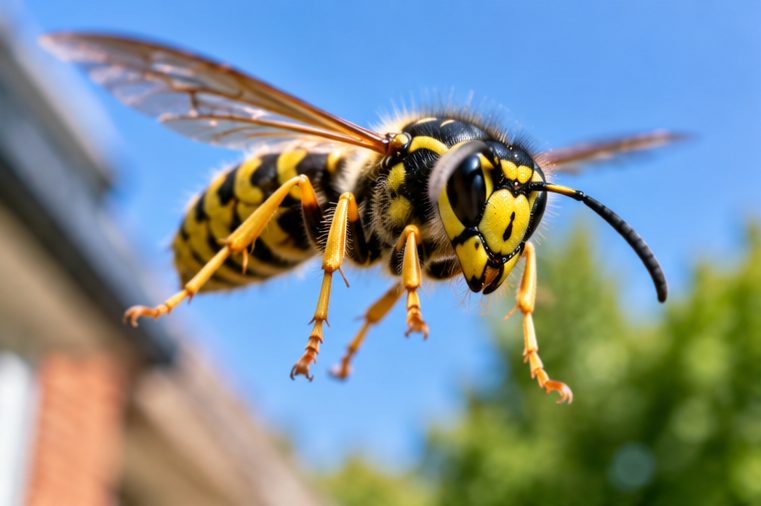
On a few warm, humid days in summer, colonies release winged ants. If they pour from a crack by the back door, the nest is right there; if they come up through the floor, it is under the flat. Why flying ants appear indoors explains the swarm. Insects using one hole in the eaves for weeks are a wasp nest, not ants.
Garden Ants or Pharaoh Ants?
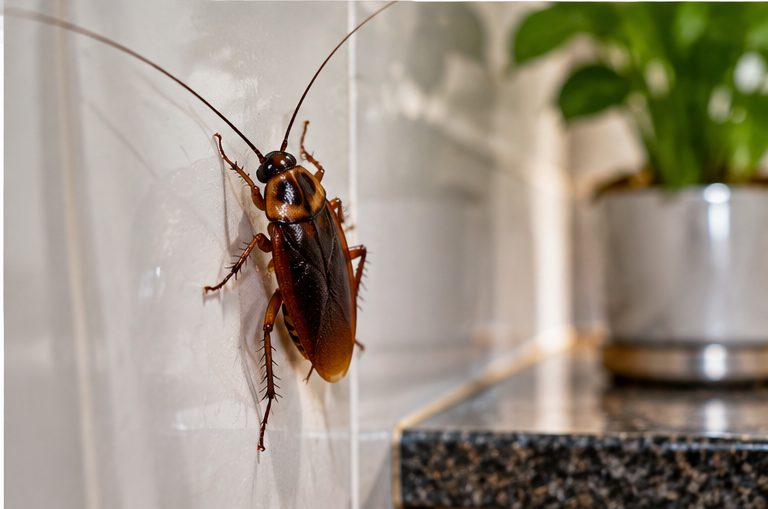
Pharaoh ants are tiny and pale, and they nest indoors in warm buildings. They are rare in converted houses; where they do appear, it is more likely in a heated purpose-built block, where they can move between flats along pipe runs. Sprays can make their colonies split, so if your ants are very small and yellowish, read Pharaoh ants vs garden ants first. Small insects in a flat over a High Road food shop may be cockroaches rather than ants.
Before the visit
- Tell us it is the ground-floor flat, and whether the garden is yours or shared with the flats above
- Note where the trail comes in: patio door, back step, floorboards or skirting
- Stop spraying the trail and wipe surfaces with warm soapy water, so the route is still visible
- Keep food sealed and pet bowls lifted at night
- If the garden is shared, let the other flats know someone will be looking round it
Ants may still be around for a while afterwards; how long depends on the colony and where it is. How long ant treatment takes explains what affects it. Call back if activity has not dropped off.
Keeping Ants Out of a Garden Flat
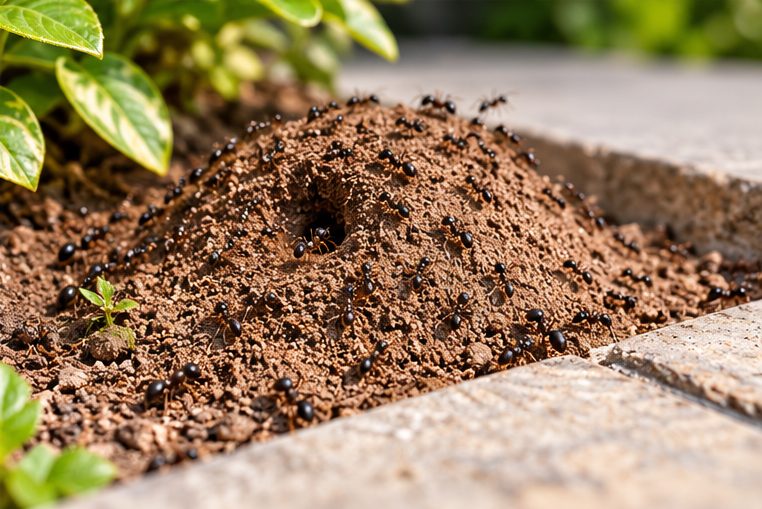
- Seal the gap under the patio door threshold and along the foot of the frame
- Fill cracks where the back steps meet the house wall
- Keep pots and planters a little away from the wall, so nests are not sheltered against it
- Brush sand back into patio joints each spring
- Do not block air bricks: they ventilate the floor
For ants elsewhere in the borough, see Ant Control Barnet.