Rats
Rats at the Far End of a Mill Hill Garden

The woodland and open space around Mill Hill are described on Pest Control Mill Hill; for rats, what counts is the strip where your garden meets it. A thick hedge, a bank of brambles or a boundary ditch gives a rat cover to move along, and the ground beyond is rarely disturbed. The garden supplies what that land lacks: seed under a feeder, fallen apples and pears, and a compost bin that stays warm through winter.
The shed and the compost bin
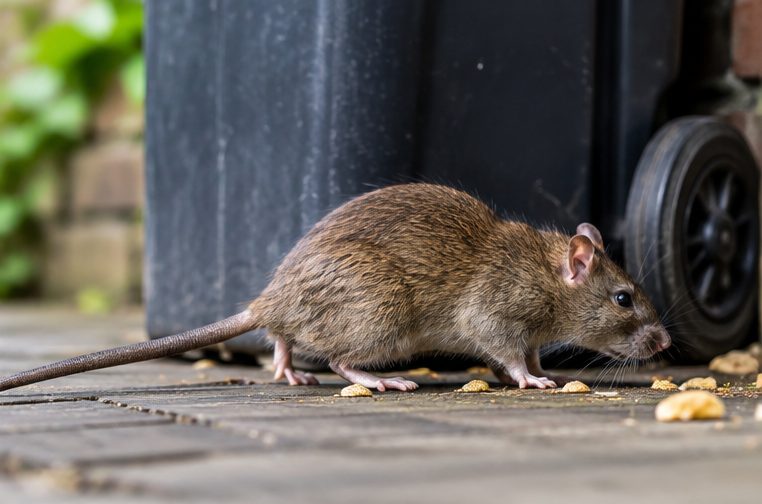
In a long garden, the shed and the compost usually sit at the far end, closest to the boundary and furthest from the house. That makes them the first place rats settle. The dry gap under a shed floor, a pile of old paving slabs, a stack of logs or a bin of garden waste each offer somewhere to burrow within a few metres of food.
Why the slope matters
Many houses on the hill have gardens stepped above or below the house, with retaining walls and banks between the levels. Rats dig readily into loose soil behind a retaining wall, and where the house sits lower than the garden its air bricks and pipe entries can end up close to ground level at the back. That is often where they move from garden to building. How rats get into homes goes through the other routes.
Signs Worth Checking Before You Book
- Holes about the width of a fist in the bank, beside the shed base or under the compost bin
- A worn path along the foot of the hedge or retaining wall, often with droppings beside it
- Gnawed fruit left under trees, or seed husks scattered well away from the feeder
- Soil pushed out from below an air brick at the back of the house
- Scratching under the kitchen floor or in the garage after dark
A single rat seen at dusk by the fence may simply be passing. Whether a garden sighting means an infestation explains how to tell. Very small droppings in the loft or cupboards in autumn are more likely to be field mice coming indoors.
What to Do Now
- Take feeders down or switch to a tray that catches spilled seed, and stop feeding on the ground
- Collect windfalls every few days while the trees are dropping
- Keep bird seed, chicken feed and pet food in lidded metal bins in the shed
- Leave burrows alone rather than filling them in or flooding them
- Keep poison out of the garden, where foxes, birds and pets on the open land can reach it
When the rats live over the fence
If the burrows are on open space or a neighbour's side of the boundary, a treatment booked for your property deals with your property. It is worth telling the owner of the land, and speaking to the neighbours along the same hedge line, so that food and shelter are reduced on all sides.
Booking and Preparing for the Visit
When you book rat control, say whether it is a house or a flat, how far the garden runs and what lies beyond it, and where you have seen activity. If the far end of the garden is up a flight of steps or only reached through the house, mention it so the visit can be planned around it. Clear a route to the shed and compost, and keep pets indoors while the technician is working.
You will be told what was found and what happens next. The time it takes depends on the property and how settled the rats are, which how long rat control takes explains. Get back in touch if new burrows open up or fresh droppings appear after things had gone quiet.
Keeping the Far End Less Inviting

You cannot close a garden off from the land behind it, so the aim is to give rats less reason to stay. Stand compost bins on fine wire mesh, lift the shed off the ground or close the gap beneath it, keep log piles and stored slabs off the soil, and cut dense planting back from the house wall. Small gaps into the building itself can be sealed with rodent proofing in Mill Hill, and why rats come back after treatment is worth reading if they have returned before.
For rats across the rest of the borough, including the brook corridors further east, see Rat Control Barnet.