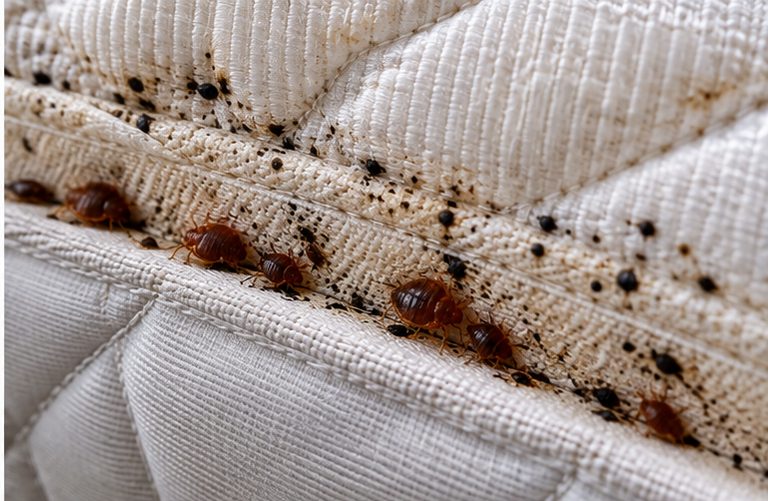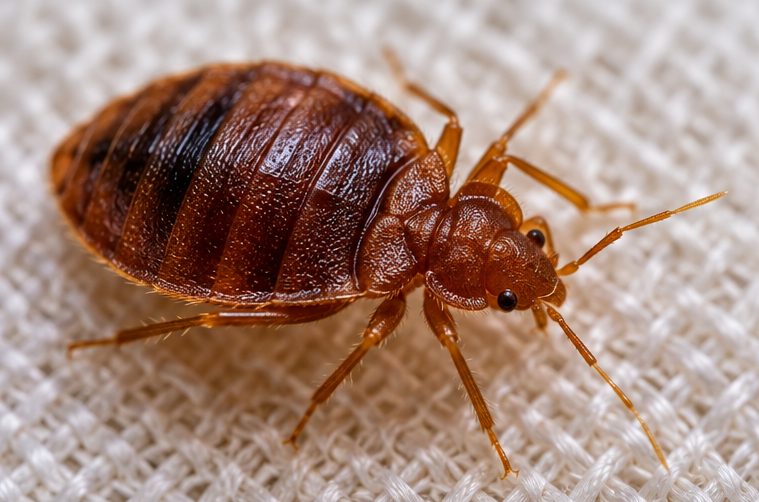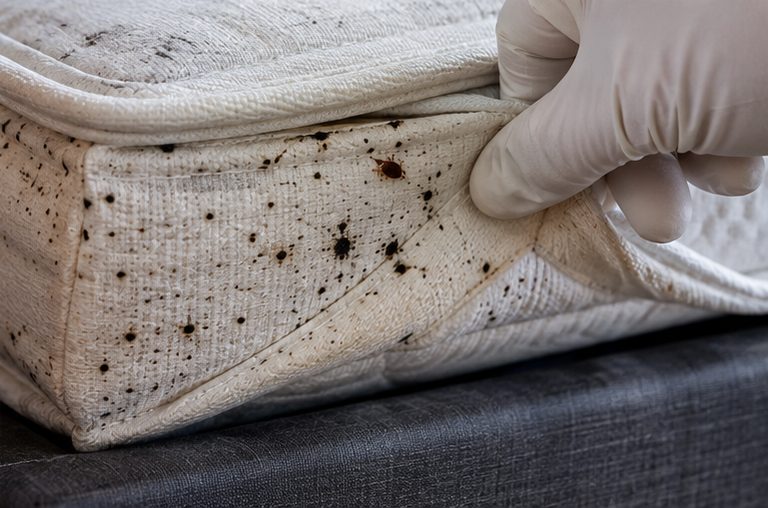
Look at the insect
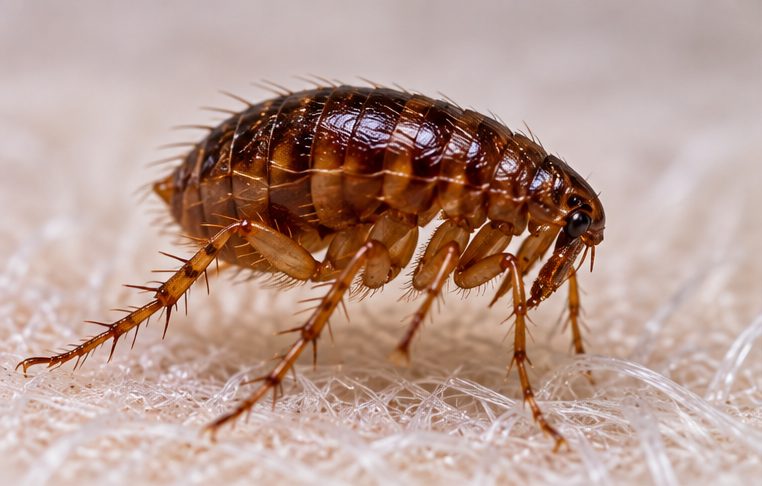
- Bed bug: flat and oval seen from above, like an apple seed, reddish-brown, around 5mm as an adult
- Flea: tiny, roughly 1–3mm, dark brown, and narrow from side to side rather than flat
- Bed bug: no wings, and it cannot jump
- Flea: long back legs and a leap that makes it seem to vanish
Crawling or jumping
If the insect springs away as you reach for it, it is almost certainly a flea. A bed bug walks off steadily, often heading for a seam or crack. Wearing white socks and walking slowly across a carpet is an easy way to catch sight of fleas before they jump off again. A bed bug is also big enough, once fed, to see clearly with the naked eye on a pale sheet, whereas a flea is usually just a dark dot that disappears.
Where the bites are
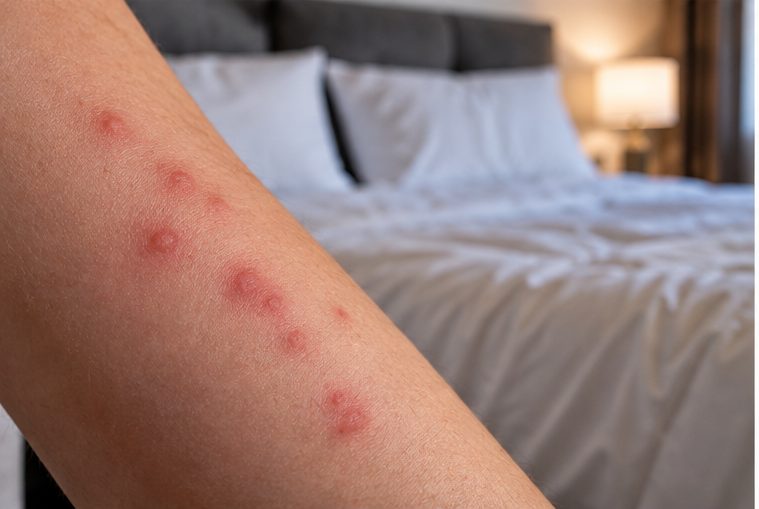
Flea bites usually cluster around the ankles, feet and lower legs, because fleas jump up from the floor. Bed bug bites tend to be on skin left uncovered in bed, such as arms, shoulders, neck and face, sometimes in a short line or group. Treat these patterns only as a guide: reactions vary between people, some show no marks at all, and bites alone cannot confirm either insect. If bites are troublesome or look infected, a pharmacist or GP can advise; call 999 for signs of a severe allergic reaction.
When the bites happen
Bed bug bites happen at night, in bed or wherever someone sleeps, and are usually noticed in the morning. Flea bites can come at any hour, including while you are sitting down or crossing a carpet. Being bitten in daylight while moving around the home leans towards fleas.
Spots and specks
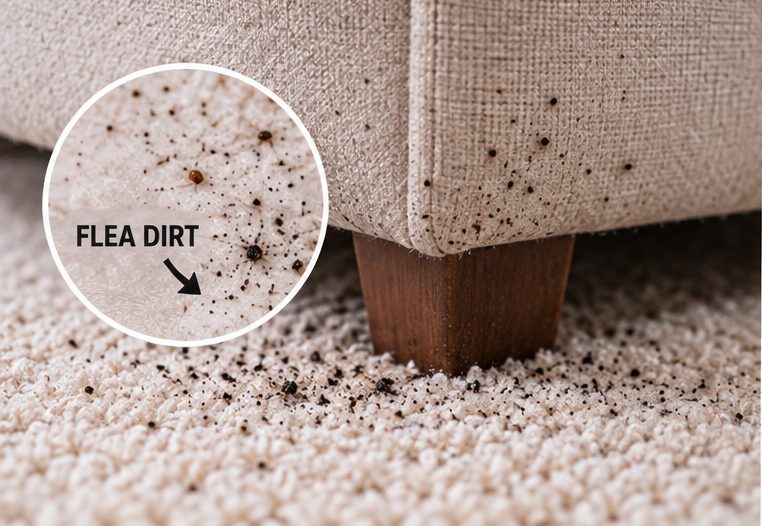
Both leave dark specks of digested blood, and both will show red on damp white kitchen paper, so colour alone settles nothing. Bed bug spotting is concentrated on mattress seams, sheets and the bed frame and looks like marks from a fine pen. Flea dirt is loose and gritty, scattered through pet bedding, rugs and the sofa cushions where animals lie.
Pets in the picture
Household fleas are nearly always cat fleas, which rely on a cat or dog to breed. A pet scratching more than usual makes fleas much more likely, whereas bed bugs do not live on animals. If you think your pet has fleas, speak to your vet about treating it; flea control in Brent covers the home. Family homes with cats or dogs, in Sudbury or anywhere else, should rule out fleas first.
No pets, but still bitten?
Fleas can still appear without an animal, particularly where a previous occupant kept one; see can you have fleas without pets. With no pet history and bites that happen overnight, look at the bed first. Fleas can also be found in beds and on sofas, so a bite in bed is not proof of bed bugs; can fleas live in beds and sofas explains when.
Where each one lives
Fleas develop in carpets, rugs, pet beds and the gaps between floorboards. Bed bugs hide in the bed frame, mattress, headboard and nearby furniture, and where bed bugs hide during the day has the full list. Flat, slow, crawling insects in a mattress seam point firmly to bed bugs.
Getting the right treatment
The two are prepared for and priced differently, so identification matters. Bed bug treatment in Brent is £220 for the first room and £120 for each additional room. If you are still unsure, take a clear photo of an insect and describe where you found it when you send an enquiry. What confirms bed bugs is set out in the first signs of bed bugs.